Quick answer:
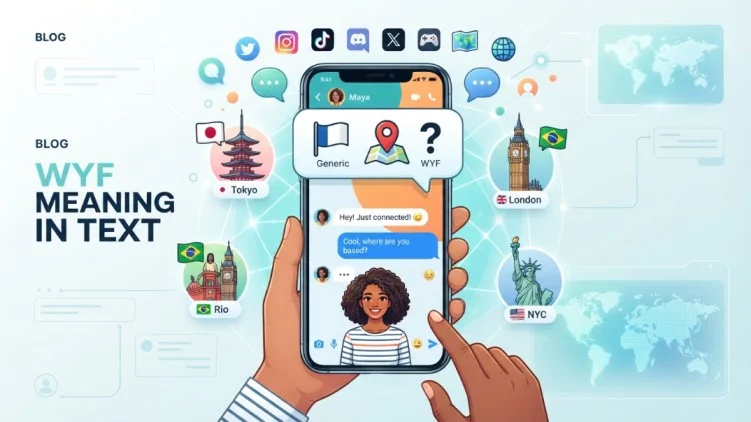
WYF usually means “Where You From?” in texting and online chat.
It is a casual way to ask someone where they are from or where they live.
One short message can start a whole conversation. If someone suddenly texts you “WYF?”, you may wonder what those three letters mean. WYF is a common texting abbreviation for “Where You From?” People use it when they want to know where someone comes from, lives, or is connected to.
If you are a student, social media user, gamer, texter, dating app user, or casual chat fan, you may see WYF in messages, comments, profiles, or online communities. It is short, quick, and easy to type.
Understanding WYF helps you avoid awkward replies and keeps your conversations natural. Context also matters because abbreviations can sometimes have different meanings. Let’s explore what WYF means, where it comes from, how people use it, and how you can respond with confidence.
Definition & Meaning
The most common WYF meaning in text is “Where You From?”
It is an informal abbreviation of the question “Where are you from?” or, in some conversations, “Where are you from?”
People usually use WYF to ask about someone’s:
- hometown
- city
- state or province
- country
- cultural background
- current location
The exact meaning depends on the conversation.
Simple example
Alex: “Hey, nice to meet you!”
Sam: “Hey! WYF?”
Alex: “I’m from Chicago.”
Here, Sam is simply asking where Alex is from.
Why do people use WYF?
Texting is often about speed. Typing “WYF?” takes much less time than writing the full question.
This style is common when people are:
- meeting someone online
- chatting with strangers
- making new friends
- using dating apps
- playing online games
- commenting on social media
- joining group chats
WYF can refer to origin or location
Sometimes the question means “Where are you from?”
Person A: “You have an interesting accent. WYF?”
Person B: “I’m from Texas.”
In another conversation, someone might use it to ask about someone’s current place.
Friend: “WYF tonight?”
You: “I’m at home.”
However, this second meaning is less precise. If someone means “Where are you right now?”, they may use WYA, meaning “Where You At?”
WYF vs. WYA
These abbreviations can look similar, but they ask different questions.
WYF: Where are you from?
WYA: Where are you right now?
Knowing this difference can prevent confusion during texting.
Background & History
WYF developed from the same online communication culture that created many other texting abbreviations. As mobile phones, instant messaging, chat rooms, and social media became more popular, users began shortening common phrases.
Early internet communities often favored quick communication. Typing full sentences could take more time, especially on older mobile keyboards. Abbreviations became an easy solution.
Common expressions such as:
- LOL
- BRB
- BTW
- IDK
- TTYL
- WYD
- WYA
became part of online language.
WYF follows this same pattern.
The rise of mobile texting
As SMS texting became common, users looked for shorter ways to communicate. A question like “Where are you from?” contains several words, while “WYF?” reduces the entire message to three letters.
Social media later helped these abbreviations spread even faster.
People began using short forms on:
- Snapchat
- TikTok
- Discord
- gaming chats
- dating platforms
The abbreviation is especially useful in casual conversations where people already understand internet slang.
Modern usage
Today, WYF is most often seen in informal digital communication. Younger users may recognize it quickly, while some people may prefer writing the full question.
Its meaning has remained fairly stable, but context can change how the question is understood.
For example:
“WYF originally?”
clearly asks about someone’s background or hometown.
Meanwhile:
“WYF rn?”
could be interpreted as asking where someone is at the moment, although WYA would usually be clearer.
This shows why online abbreviations should always be interpreted through context.
Usage in Various Contexts
WYF appears in many forms of casual online communication.
In texting
Friends or strangers may use it when starting a conversation.
Mia: “Hey! I saw your comment.”
Lena: “Oh hey!”
Mia: “WYF?”
Lena: “I’m from Atlanta.”
It is a quick conversation starter.
On social media
Someone may comment “WYF?” after seeing a new profile or post.
Commenter: “Your photos are amazing. WYF?”
Creator: “Thanks! I’m from Canada.”
The question can help people find common interests or connections.
In gaming
Gamers may ask WYF when meeting someone from another region.
Player 1: “Good game!”
Player 2: “GG!”
Player 1: “WYF?”
Player 2: “Pakistan. You?”
This can lead to conversations about time zones, servers, games, or local communities.
In dating conversations
Someone might ask WYF early in a chat.
Match: “You seem fun 😂 WYF?”
You: “I’m from Miami. What about you?”
It can be a simple way to learn more about someone.
In group chats
WYF can also help people introduce themselves.
New member: “Hey everyone!”
Member: “Welcome! WYF?”
New member: “I’m from London.”
The phrase is usually friendly and casual.
Common Misconceptions & Clarifications
WYF looks simple, but online abbreviations can create confusion.
Misconception 1: WYF always means “Where You From?”
This is the most common meaning, but context should always guide interpretation.
Abbreviations can sometimes be used differently by different online communities. If the conversation does not make sense, asking for clarification is better than guessing.
Misconception 2: WYF means “Where You At?”
This is a common mix-up.
WYF generally means “Where You From?”
WYA generally means “Where You At?”
For example:
“WYF?” = Where are you from?
“WYA?” = Where are you?
The letters may look similar, but the questions are different.
Misconception 3: WYF is formal English
It is not.
WYF belongs mainly to informal digital communication. You would not normally use it in a business email, academic paper, or formal letter.
Instead, write:
“Where are you from?”
Misconception 4: WYF is always rude
Not usually.
The abbreviation itself is generally neutral and casual. However, asking someone where they are from can feel personal if you are talking to a stranger.
Tone and context matter.
Misconception 5: You must reveal your exact location
You do not.
If someone asks WYF, you can give a broad answer.
“I’m from California.”
You do not need to provide your street, neighborhood, home address, or live location.
Similar Terms & Alternatives
Several abbreviations are related to WYF.
| Term | Meaning | Common use |
|---|---|---|
| WYF | Where You From? | Asking about origin |
| WYA | Where You At? | Asking current location |
| WYD | What You Doing? | Asking what someone is doing |
| HBU | How About You? | Returning a question |
| HRU | How Are You? | Asking about someone’s condition |
| WDYLL | What Do You Look Like? | Asking about appearance |
| WBU | What About You? | Asking the same question back |
Natural alternatives to WYF
You can also write:
- “Where are you from?”
- “Where do you live?”
- “What city are you from?”
- “What part of the world are you from?”
- “Are you from around here?”
These sound more natural in formal or unfamiliar settings.
When should you use the full question?
Use “Where are you from?” when you want to sound clear, polite, or professional.
Use WYF when the conversation is casual and the other person is comfortable with texting slang.
How to Respond to This Term
There is no single correct response to WYF. Your answer can match the situation.
Casual response
Them: “WYF?”
You: “I’m from Boston. You?”
This is short and friendly.
Friendly response
Them: “WYF?”
You: “I’m from Toronto! What about you?”
This invites the other person to continue the conversation.
Funny response
Them: “WYF?”
You: “Earth 😂 You?”
This can work with friends or someone who enjoys playful conversations.
Professional response
If someone uses WYF in a professional setting, you can answer normally.
Them: “Where are you from?”
You: “I’m based in Seattle.”
There is no need to copy the abbreviation.
Privacy-conscious response
You can keep your answer general.
Them: “WYF?”
You: “I’m from the UK. I prefer not to share my exact location.”
This is completely reasonable when speaking with strangers online.
Regional or Cultural Differences
WYF is primarily an English-language internet abbreviation, so its use is strongest among people who communicate online in English.
People from different English-speaking regions may understand it, but their preferred wording can differ.
For example:
- Americans may say “Where are you from?”
- British users may ask “Where are you from?”
- Australians may use the same phrase.
- Canadian users may use either the full question or WYF online.
Non-native English speakers who spend time on social media, gaming platforms, or international chat communities may also recognize WYF.
Cultural context matters
Asking where someone is from can be completely normal in one conversation and more personal in another.
For example:
“WYF? I’m trying to see which server you use.”
This is likely harmless in gaming.
But:
“WYF? Give me your exact address.”
is inappropriate and crosses a privacy boundary.
The abbreviation itself is not the problem. How the question is used matters more.
Comparison with Similar Terms
WYF is often confused with other location-related abbreviations.
| Abbreviation | Full form | Main meaning |
|---|---|---|
| WYF | Where You From? | Origin or hometown |
| WYA | Where You At? | Current location |
| WBU | What About You? | Returns a question |
| WYD | What You Doing? | Current activity |
| HRU | How Are You? | Asking how someone feels |
| HBU | How About You? | Asking the other person’s answer |
WYF vs. WYA
This is the most important distinction.
“WYF?”
“I’m from New York.”
“WYA?”
“I’m at the mall.”
The first asks about origin.
The second asks about current location.
WYF vs. WBU
These are completely different.
“WYF?” = Where are you from?
“WBU?” = What about you?
If someone asks:
“WYF?”
You might respond:
“I’m from Dallas. WBU?”
Here, WBU means you are asking the same person about themselves.
Usage in Online Communities & Dating Apps
WYF is useful in online spaces where people meet strangers and quickly exchange basic information.
On dating apps such as Tinder, someone may ask:
Match: “Hey! WYF?”
You: “I’m from Denver. You?”
It can be a simple icebreaker.
On social platforms, users may ask WYF after seeing a person’s content.
Follower: “Your accent is cool. WYF?”
Creator: “I’m from Ireland.”
Gaming communities also use it to learn where teammates or opponents are located.
Be careful with personal information
Online conversations involve strangers, so you do not have to reveal private details.
A broad answer is enough:
“I’m from Texas.”
You do not need to provide:
- your home address
- exact neighborhood
- workplace
- school location
- live location
Tips for responding
- If you know the person, a detailed answer may be fine.
- If you do not know them, keep it general.
- If their questions become too personal, change the subject or stop responding.
Hidden or Offensive Meanings
WYF does not normally have a hidden offensive meaning. Its standard internet meaning is “Where You From?”
Still, context can change how the question feels.
Some people may feel uncomfortable if they are repeatedly asked about their nationality, ethnicity, or background.
For example:
“WYF?”
can be an innocent conversation starter.
But repeatedly asking:
“No, but where are you really from?”
can make someone feel singled out.
Tone matters online
Text has no facial expression or voice tone. A short message can therefore feel different depending on the relationship.
“WYF 😂”
may feel friendly.
“WYF?”
from a stranger may feel more direct.
If you are asking someone this question, adding a little context can make it friendlier.
“Hey, I’m trying to find people from different places. WYF?”
That makes your intention clearer.
Suitability for Professional Communication
WYF is generally not suitable for formal professional communication.
Avoid it in:
- business emails
- job applications
- academic writing
- official documents
- client messages
- formal reports
Instead, use the full question.
Informal workplace chat
In a relaxed team chat, abbreviations may sometimes be acceptable if everyone communicates casually.
Still, “Where are you based?” is usually clearer.
For example:
“Where are you based?”
sounds more professional than:
“WYF?”
Professional alternatives
Use phrases such as:
- “Where are you based?”
- “Which city are you located in?”
- “Where are you originally from?”
- “Which region are you from?”
- “What is your current location?”
Choose the wording based on what information you actually need.
If you need someone’s work location, “Where are you based?” is usually better than asking where they are personally from.
FAQs
1. What does WYF mean in text?
WYF usually means “Where You From?” It is a casual way to ask someone where they are from.
2. Is WYF the same as WYA?
No. WYF usually asks where someone is from, while WYA asks where someone is currently located.
3. Is WYF slang?
Yes. WYF is an informal texting and internet abbreviation. It is not normally used in formal writing.
4. How do I reply to WYF?
You can simply say, “I’m from [place]. You?” If you want privacy, give only a broad location.
5. Can WYF mean something else?
It can have different interpretations in rare contexts, but “Where You From?” is the standard texting meaning.
6. Is WYF rude?
Not usually. It is normally a casual question. However, asking personal location or background questions repeatedly can make someone uncomfortable.
7. Should I use WYF at work?
It is better to avoid WYF in formal professional communication. Use “Where are you based?” or another clear, professional phrase instead.
Conclusion
Understanding WYF meaning in text is easy once you know the basic abbreviation. WYF usually means “Where You From?”, and people use it as a quick way to ask about someone’s hometown, country, city, or general background.
You will most often see it in texting, social media, gaming chats, dating conversations, and other informal online spaces. Remember that WYF is different from WYA, which usually asks about someone’s current location.
The best response depends on the situation. You can answer casually, make a joke with friends, or keep your location broad when talking to strangers. You should also avoid using WYF in formal writing when a clearer phrase would work better.
Most importantly, context matters. A three-letter abbreviation can be friendly, direct, or confusing depending on who sends it and why. Once you understand that context, WYF becomes an easy and useful part of online conversation.
Read More Related Articles:
Cougar Meaning | Definition, Slang, Dating Context, Examples …
What Does “Curated” Mean in Simple English in 2026
What Does “Mhm” Mean in Texting and Chat in 2026