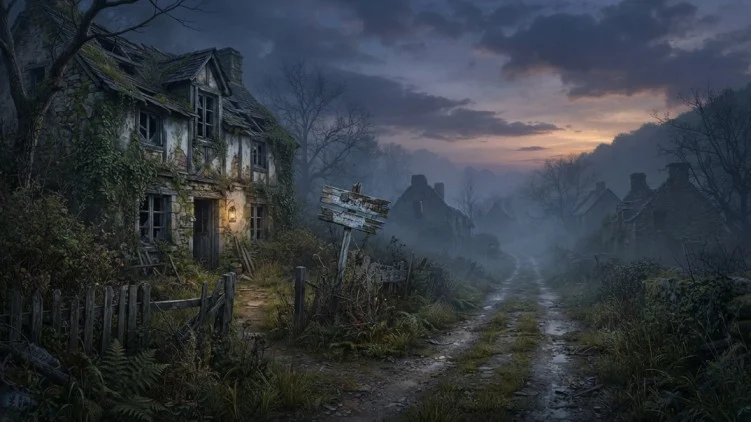
Quick answer:
Forsaken means abandoned, left behind, or completely given up by someone or something.
It often describes a person, place, hope, or belief that has been left without care or support.
Some words carry a feeling far deeper than their basic definition. Forsaken is one of them. It can describe someone who has been abandoned, a place left empty, or a hope that has been completely given up. The word often creates a strong feeling of loneliness, sadness, or loss.
If you are a student, writer, teacher, gamer, social media user, reader, or English learner, knowing the forsaken meaning can help you understand conversations, books, songs, movies, games, and online posts more easily. You may see it in dramatic stories or hear it when someone talks about feeling forgotten.
The word is also useful in everyday English, although it sounds more formal and emotional than simple words like left or abandoned. Let’s explore its meaning, history, common uses, similar words, and the different ways people use forsaken today.
Definition & Meaning
The basic forsaken meaning is abandoned, deserted, neglected, or left behind.
Forsaken is the past participle of “forsake.” To forsake someone or something means to leave it completely, abandon it, or give it up.
Simple definition
Forsaken = abandoned or completely left behind.
For example:
“The old house stood forsaken at the edge of the village.”
This means the house had been abandoned and was no longer cared for.
The word can describe people too.
Lena: “Why does he look so sad?”
Mark: “He feels forsaken by his friends.”
Here, forsaken means that he feels abandoned or forgotten by people he trusted.
Forsaken can describe feelings
The word often has a strong emotional meaning.
Someone might say:
“She felt forsaken after everyone left.”
This does not simply mean that people walked away. It suggests that she felt alone, forgotten, unsupported, or rejected.
Forsaken can describe places
You may also see the word in descriptions of empty places.
Examples include:
- a forsaken village
- a forsaken house
- a forsaken road
- a forsaken island
- a forsaken garden
These phrases usually create an image of something that has been deserted for a long time.
Forsaken can describe ideas or beliefs
The word does not only apply to physical things.
“He had forsaken his old beliefs.”
Here, it means he gave up or abandoned those beliefs.
So, depending on context, forsaken can mean abandoned, deserted, rejected, neglected, or given up.
Background & History
The word forsaken has a long history in English. It comes from the verb forsake, which has Germanic roots and has been part of the English language for many centuries.
The older idea behind forsake was connected with leaving, abandoning, or giving something up. Over time, the word became strongly associated with emotional abandonment and complete rejection.
The past form of forsake is unusual:
- Present: forsake
- Past: forsook
- Past participle: forsaken
For example:
“He forsook his home.”
and:
“His home was forsaken.”
The second form is especially common in descriptions and literature.
Forsaken in older writing
The word became widely recognized through religious texts, poetry, classic literature, and formal writing.
It often appears in expressions connected to abandonment or spiritual loneliness.
For example:
“Why have I been forsaken?”
This kind of wording creates a powerful feeling of being abandoned or left without help.
Forsaken in literature
Writers often choose forsaken instead of abandoned because it sounds more dramatic and poetic.
Compare:
“An abandoned castle.”
with:
“A forsaken castle.”
Both describe a castle that has been left behind. However, forsaken creates a darker and more emotional image.
Modern use
Today, forsaken is less common in casual speech than abandoned or left behind. Still, it remains popular in:
- books
- fantasy stories
- horror
- poetry
- movies
- video games
- religious writing
- dramatic social media posts
Its emotional and dramatic tone makes it especially useful for storytelling.
Usage in Various Contexts
The word forsaken can appear in many settings. Its meaning stays close to abandoned, but the feeling changes with the context.
In texting
People do not use forsaken very often in ordinary texting. It can sound dramatic or poetic.
Alex: “Everyone canceled on me tonight.”
Sam: “You sound completely forsaken.”
Here, Sam is using the word playfully to mean left alone.
Someone might also use it dramatically:
“My friends went out without me. I have been forsaken!”
This is usually humorous rather than serious.
On social media
Social media users may use forsaken in captions, posts, or emotional statements.
“Walking through this forsaken town felt like stepping into another world.”
The word creates a strong visual mood.
It can also appear in memes:
“When your group chat ignores your message, you know you have been forsaken.”
The dramatic word makes the situation sound funnier.
In gaming
Gaming is one place where forsaken appears often.
A game may feature:
- a forsaken kingdom
- a forsaken warrior
- a forsaken village
- a forsaken hero
- a forsaken world
Player A: “Where are we going?”
Player B: “Into the Forsaken Kingdom.”
Player A: “That sounds safe.”
Player B: “It definitely isn’t.”
Fantasy and adventure games use the word because it creates a mysterious and dark atmosphere.
In casual conversation
People may use forsaken when they want to sound dramatic.
Mia: “Nobody came to my party.”
Noah: “You were forsaken!”
Mia: “Exactly. I demand snacks and an apology.”
The word adds humor because it sounds more serious than the situation really is.
Common Misconceptions & Clarifications
The word forsaken can be confusing because it has several related meanings.
Misconception 1: Forsaken only means lonely
Not exactly.
Loneliness can be part of the meaning, but forsaken mainly suggests abandonment or being left behind.
Someone may be lonely without being forsaken.
For example, a person might enjoy spending time alone. That does not mean they have been forsaken.
Misconception 2: Forsaken always describes people
It can describe people, but it can also describe places, objects, ideas, hopes, and beliefs.
Examples:
“A forsaken village.”
“A forsaken dream.”
“A forsaken belief.”
“A forsaken child.”
Each example involves something that has been abandoned or given up.
Misconception 3: Forsaken and forgotten mean exactly the same thing
They are related but different.
Forgotten means something is no longer remembered or kept in mind.
Forsaken suggests that someone or something has been deliberately or completely abandoned.
A forgotten book may simply have been overlooked.
A forsaken book might suggest that nobody cares for it anymore.
Misconception 4: Forsaken always has a religious meaning
No.
The word can appear in religious writing, but it is not limited to religion. Modern writers use it in stories, games, poetry, descriptions, and everyday jokes.
Misconception 5: Forsaken means dead
Not necessarily.
A forsaken place may still exist. It is simply abandoned or neglected.
Similar Terms & Alternatives
Several words are close to forsaken, but each has a slightly different meaning.
| Term | Meaning | Example |
|---|---|---|
| Abandoned | Left behind or no longer cared for | “The building was abandoned.” |
| Deserted | Empty because people have left | “The street was deserted.” |
| Neglected | Not given proper care | “The garden was neglected.” |
| Forgotten | No longer remembered or considered | “The old story was forgotten.” |
| Rejected | Refused or turned away | “His proposal was rejected.” |
| Alone | Without other people | “She was alone.” |
| Isolated | Separated from others | “The village was isolated.” |
| Forsaken | Completely abandoned or left behind | “The forsaken village was silent.” |
Forsaken vs. abandoned
These are the closest alternatives.
Abandoned is more common and neutral.
Forsaken is more emotional, dramatic, or literary.
“An abandoned house.”
sounds factual.
“A forsaken house.”
sounds darker and more mysterious.
Forsaken vs. deserted
Deserted often focuses on a place being empty.
Forsaken can focus on both abandonment and emotional loss.
How to Respond to This Term
If someone uses the word forsaken with you, your response depends on the context.
Casual response
“Yeah, I guess everyone left!”
This works when someone uses the word jokingly.
Funny response
“Forsaken? I prefer ‘temporarily snackless.’”
This gives the conversation a playful tone.
Supportive response
If someone says:
“I feel forsaken by everyone.”
A caring response could be:
“I’m sorry you feel that way. You don’t have to deal with it alone.”
This is better than making a joke when the person sounds genuinely upset.
Professional response
If the word appears in a formal discussion, respond clearly.
“I understand. You mean the project was abandoned and is no longer being developed.”
This confirms the meaning without adding confusion.
Privacy-conscious response
If someone uses dramatic language while asking for private information, you can separate the emotion from the request.
Person A: “You have forsaken me! At least send me your private details.”
Person B: “I can help, but I don’t share private information.”
A dramatic statement does not create an obligation to reveal personal details.
Regional or Cultural Differences
Forsaken is a standard English word and is understood across many English-speaking regions. However, its frequency varies.
American English
American speakers understand the word well, but casual speakers often choose simpler alternatives such as:
- abandoned
- left behind
- deserted
- forgotten
Forsaken is more common in books, entertainment, poetry, and dramatic speech.
British English
British speakers also use forsaken, especially in formal, literary, historical, or religious contexts.
In everyday conversation, simpler words are usually more natural.
Australian English
The word is understood in Australian English and may appear in literature, media, storytelling, and dramatic descriptions.
Religious and cultural writing
The word has a strong presence in religious traditions and translations of religious texts. Because of this, some people may associate forsaken with spiritual abandonment.
Still, its meaning is broader than religion.
Online culture
Internet users often use the word playfully.
A person might describe being ignored by friends as:
“I have been forsaken.”
The dramatic wording can turn a small problem into a humorous statement.
Comparison with Similar Terms
Understanding the difference between similar words makes forsaken easier to use.
| Word | Main Difference | Emotional Tone |
|---|---|---|
| Forsaken | Completely abandoned or given up | Strong |
| Abandoned | Left behind or no longer used | Neutral |
| Deserted | Left empty | Neutral |
| Forgotten | No longer remembered | Mild to strong |
| Neglected | Not properly cared for | Negative |
| Rejected | Refused or turned away | Strong |
| Isolated | Separated from others | Neutral to negative |
| Alone | Without company | Neutral |
Example comparison
Consider an old building.
“The building is empty.”
This gives a basic fact.
“The building is abandoned.”
This tells us nobody is using it.
“The building is deserted.”
This emphasizes that the place is empty.
“The building is forsaken.”
This adds a dark, emotional, or dramatic feeling.
That emotional difference is one of the most important things to remember.
Usage in Online Communities & Dating Apps
The word forsaken sometimes appears in online communities, dating discussions, gaming groups, and social media.
On dating apps such as Tinder, someone might use the word humorously after being ignored.
“My match disappeared after two messages. I have been forsaken.”
This is usually a dramatic joke about being ghosted.
On social platforms such as X, users may use forsaken in posts about being ignored, forgotten, or left out.
Gaming communities use it more naturally because fantasy worlds often contain characters, locations, or kingdoms described as forsaken.
Tips for responding online
Always consider the tone.
If someone is joking:
“The forsaken era begins!”
can match the playful mood.
If someone sounds genuinely hurt:
“That sounds really difficult. I hope things get better.”
is more appropriate.
Do not assume every dramatic use is serious. Online language often exaggerates feelings for humor.
Hidden or Offensive Meanings
Forsaken does not normally have a hidden offensive or vulgar meaning. It is a standard English word.
Still, it can carry a powerful emotional tone.
Calling someone forsaken may suggest that they have been abandoned or rejected.
For example:
“The forsaken child sat alone.”
This creates a sad image.
In another context:
“You are forsaken.”
could sound harsh, threatening, or deeply negative because it suggests the person has been abandoned by everyone or left without hope.
Tone matters
The same word can feel different depending on how it is used.
“This forsaken old computer!”
This may simply be playful frustration.
“You have been forsaken.”
This can sound serious or dramatic.
In poetry, horror, fantasy, and storytelling, the darker tone is often intentional.
Suitability for Professional Communication
The word forsaken is grammatically correct in professional communication, but it is not always the best choice.
It sounds formal, literary, and emotional. In a business email, a simpler word may communicate your meaning more clearly.
Instead of:
“The project has been forsaken.”
A professional writer might say:
“The project has been abandoned.”
Or:
“The project is no longer active.”
Instead of:
“The old system has been forsaken.”
You could write:
“The old system is no longer supported.”
These alternatives are more precise.
When can you use forsaken professionally?
It can work in:
- creative writing
- literary analysis
- historical writing
- storytelling
- marketing with a dramatic tone
- discussions of religious texts
For standard business communication, choose abandoned, discontinued, outdated, unused, or no longer supported when those words express the idea more clearly.
FAQs
1. What does forsaken mean in simple English?
Forsaken means abandoned, deserted, neglected, or completely left behind.
2. Is forsaken a negative word?
Usually, yes. It often carries a feeling of loss, abandonment, loneliness, or rejection, although it can also be used humorously.
3. Is forsaken the same as abandoned?
They are very similar. Forsaken usually sounds more emotional, dramatic, or literary, while abandoned is more common in everyday English.
4. What is the opposite of forsaken?
Possible opposites include supported, protected, cared for, accepted, loved, or accompanied, depending on the context.
5. Can forsaken describe a place?
Yes. You can describe an empty or abandoned place as a forsaken village, forsaken house, or forsaken road.
6. Is forsaken commonly used in texting?
Not very often in ordinary texting. When people use it in texts, it may sound dramatic, poetic, or humorous.
7. What is the past tense of forsake?
The past tense is forsook, while the past participle is forsaken.
For example:
“He forsook his old life.”
“His old life was forsaken.”
Conclusion
The forsaken meaning centers on the idea of being abandoned, left behind, neglected, or completely given up. It can describe people, places, dreams, beliefs, relationships, and even fictional worlds.
The word is more emotional and literary than simple alternatives such as left or abandoned. That is why it appears often in novels, poetry, fantasy games, horror stories, religious writing, and dramatic online posts. In casual conversations, people may also use it as an exaggerated joke.
Remember the key difference: abandoned usually gives you a fact, while forsaken often gives you a feeling. It suggests more than someone simply leaving. It can create a sense of loneliness, rejection, neglect, or loss. Once you understand that emotional layer, you can recognize and use forsaken with much greater confidence.
Read More Related Articles:
Cougar Meaning | Definition, Slang, Dating Context, Examples …
What Does “Curated” Mean in Simple English in 2026
What Does “Mhm” Mean in Texting and Chat in 2026