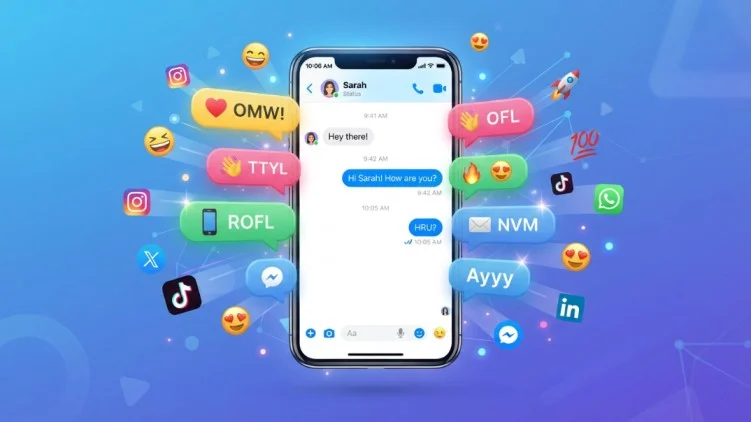
Some text abbreviations are easy to guess, while others can leave you wondering what the sender actually meant. HRU meaning in text is one of those common chat shortcuts that appears in everyday conversations across messaging apps and social media. Understanding HRU meaning in text makes it much easier to follow casual chats and respond naturally without missing the tone of the conversation.
From Snapchat and Instagram to WhatsApp and online gaming, people use HRU meaning in text to start friendly conversations in a quick and informal way. Once you know what it stands for, when to use it, and how others typically reply, you’ll notice it appearing in messages more often than you expected. The sections below explain its meaning with clear examples and real conversation scenarios.
What Does HRU Mean?
The HRU meaning in text is “How Are You?”
People use HRU as a quick and informal way to check on someone or begin a conversation. Instead of typing the full question, they shorten it to save time while keeping the message friendly.
| Detail | Explanation |
|---|---|
| Most Common Meaning | How Are You? |
| Full Form | How Are You |
| Tone | Friendly and casual |
| Common Platforms | Text messages, Snapchat, Instagram, WhatsApp, TikTok |
| Formal or Informal | Informal |
What Does HRU Stand For?
HRU stands for “How Are You?”
It is one of the most common internet abbreviations used in texting and online chats. Rather than asking the complete question, people simply type HRU to greet someone or check how they are feeling.
For example:
Person A: “Hey! HRU?”
Person B: “I’m doing great! Just got home from work. HRU?”
Meaning: Person A is simply asking how Person B is doing and starting a friendly conversation.
Unlike some internet slang, HRU has only one widely accepted meaning in texting.
Does HRU Have Other Meanings?
For everyday texting, social media, and messaging apps, HRU almost always means “How Are You?”
Outside casual conversations, the same letters may represent different phrases in specific industries or organizations. However, those meanings are unrelated to internet slang and rarely appear in personal messages.
| Meaning | Context | Tone | Example |
|---|---|---|---|
| How Are You? | Texting and social media | Friendly | “HRU today?” |
| Other organizational abbreviations | Professional or technical contexts | Context dependent | Rare in personal chats |
If someone sends you HRU on Snapchat, Instagram, WhatsApp, or in a text message, you can safely assume they mean “How Are You?”
How Context Changes the Meaning
Even though HRU usually means the same thing, the conversation around it changes how the message feels.
Friendly Greeting
Message:
“Hey! HRU?”
Meaning:
The sender is simply checking on you and starting a casual conversation.
After a Long Time
Message:
“Long time no talk! HRU?”
Meaning:
The sender wants to reconnect and catch up after some time apart.
During a Difficult Situation
Message:
“I heard about your interview today. HRU?”
Meaning:
Here, HRU expresses genuine care and concern rather than serving as a simple greeting.
Context, previous messages, and your relationship with the sender all influence the emotional meaning.
HRU Meaning on Different Platforms
Text Messages, WhatsApp, and Instagram
Across these platforms, HRU simply means “How Are You?”
Example:
“HRU? Haven’t talked in a while.”
The tone is relaxed and conversational.
Snapchat
On Snapchat, HRU is commonly used when beginning a chat or replying to a Snap.
Example:
“HRU 😊”
Adding an emoji often makes the message feel warmer and friendlier.
TikTok
On TikTok, HRU usually appears in comments, direct messages, or livestream chats.
Example:
“HRU today?”
The meaning stays the same, although the conversation is often shorter and more casual.
Discord and Gaming Chats
Players sometimes type HRU before starting a game or while chatting between matches.
Example:
“HRU? Ready for another round?”
It works as both a greeting and a conversation starter.
Real Conversation Examples
Friends
Person A: “HRU?”
Person B: “Doing great! Just finished my exams.”
Meaning: A casual greeting between friends.
Family
Person A: “Hi! HRU today?”
Person B: “Feeling much better now. Thanks for asking.”
Meaning: A caring check-in from a family member.
Classmates
Person A: “HRU? Ready for tomorrow’s presentation?”
Person B: “A little nervous, but I think I’ll be okay.”
Meaning: Starting a conversation before discussing school.
Dating Conversation
Person A: “Hey 😊 HRU?”
Person B: “I’m doing well. How’s your day going?”
Meaning: A friendly way to begin chatting.
Workplace Chat
Person A: “Morning! HRU?”
Person B: “Doing well, thanks. Ready for today’s meeting.”
Meaning: An informal greeting between coworkers who already know each other.
Tone and Emotional Meaning
The HRU meaning in text is usually friendly and positive, but the tone can change depending on the conversation.
Is HRU Friendly?
Yes. Most people use HRU as a warm, casual greeting. It shows interest in the other person without sounding too formal.
Example:
Person A: “Hey! HRU?”
Person B: “I’m doing well! Thanks for asking.”
Is HRU Flirty?
Sometimes. By itself, HRU is not flirty. However, it can feel flirtatious when paired with emojis, compliments, or ongoing romantic conversations.
Example:
“HRU 😊 I’ve been thinking about you.”
In this case, the extra message creates the flirty tone, not the abbreviation itself.
Is HRU Rude?
No. HRU is generally considered polite in casual conversations. It may only seem rude if someone expects a formal message or if the sender ignores the response and changes the subject immediately.
How to Reply to HRU
There is no single correct response. Your reply should match the conversation and your relationship with the sender.
Friendly Replies
- I’m doing great! How about you?
- Pretty good. Thanks for asking!
- I’m doing well. HRU?
- Not bad. Just relaxing.
- Everything’s going well. How are you?
Funny Replies
- Surviving on coffee and snacks!
- Still waiting to win the lottery.
- Better than my alarm clock this morning.
- Busy pretending to be productive.
- Running on good vibes today.
Polite Replies
- I’m doing well, thank you. How are you?
- Doing fine. Hope you’re doing well too.
- Thanks for checking in. I’m good.
- I’m okay today. How about yourself?
- Everything’s been going smoothly.
When to Use HRU
HRU works best in relaxed conversations where abbreviations feel natural.
Good situations include:
- Text messages with friends
- Snapchat conversations
- Instagram direct messages
- WhatsApp chats
- Casual conversations with classmates
- Gaming chats
- Group chats
- Informal conversations with coworkers
Using HRU can make your messages feel quick, friendly, and conversational.
When to Avoid HRU
Although HRU is common online, there are situations where writing the full question is a better choice.
Avoid using HRU in:
- Job applications
- Professional emails
- Client communication
- Academic papers
- Business proposals
- Formal announcements
- Messages to someone you have never spoken with before
In professional settings, writing “How are you?” looks more polished and respectful.
Common Mistakes
| Common Mistake | Correct Understanding |
|---|---|
| Thinking HRU has many slang meanings | It almost always means How Are You? in texting. |
| Using HRU in formal emails | Write the complete phrase instead. |
| Ignoring the conversation context | The tone changes depending on the relationship and situation. |
| Assuming HRU is rude | It is generally a friendly greeting. |
| Believing HRU is platform-specific | The meaning stays the same across most messaging apps. |
Similar Slang Terms
| Term | Meaning | Main Difference |
|---|---|---|
| HBU | How About You? | Usually follows your own answer. |
| WYD | What Are You Doing? | Asks about current activity instead of well-being. |
| WSG | What’s Good? | Casual greeting asking what’s happening. |
| SUP | What’s Up? | General greeting that focuses on what is happening. |
| HYD | How’s Your Day? | Specifically asks about someone’s day rather than their overall well-being. |
These abbreviations are often used together but ask slightly different questions.
Origin and Popularity
The exact origin of HRU is unclear, but it became common as text messaging and instant messaging encouraged shorter messages. Today, it remains one of the most widely recognized texting abbreviations because it is simple, easy to understand, and works naturally across nearly every messaging platform.
Quick Recap
- HRU stands for How Are You?
- It is mainly used as a casual greeting in text messages and online chats.
- The meaning stays the same across Snapchat, Instagram, WhatsApp, TikTok, and most messaging apps.
- Context, emojis, and previous messages influence how friendly or caring it feels.
- A simple reply such as “I’m good! How about you?” is usually the most natural response.
Frequently Asked Questions
What does HRU mean in text?
HRU means “How Are You?” and is commonly used as a casual greeting in text messages and online chats.
What does HRU stand for?
HRU stands for “How Are You?” and is an informal abbreviation used to begin conversations.
What does HRU mean on Snapchat?
On Snapchat, HRU usually means “How Are You?” and starts a friendly conversation with another user.
How should you reply to HRU?
Reply with a brief update about how you’re doing and ask the other person the same question.
Can HRU have different meanings?
Outside texting, HRU may represent other abbreviations, but in everyday online conversations it almost always means “How Are You?”
Final Thoughts
The HRU meaning in text is simple yet useful. It stands for “How Are You?” and serves as a friendly way to start conversations across text messages, Snapchat, Instagram, WhatsApp, Discord, and other social platforms. While the abbreviation rarely changes meaning, the tone can vary based on context, emojis, and your relationship with the sender. Knowing when to use HRU and how to reply naturally helps you communicate more confidently and avoid misunderstandings in casual online conversations.
Discover More Post:
What Is OML in Text | Meaning, Examples, Snapchat, TikTok …
IG Meaning in Text Messages | Definition, Uses, and Real …
SB Meaning in Text | What It Means and How to Use It