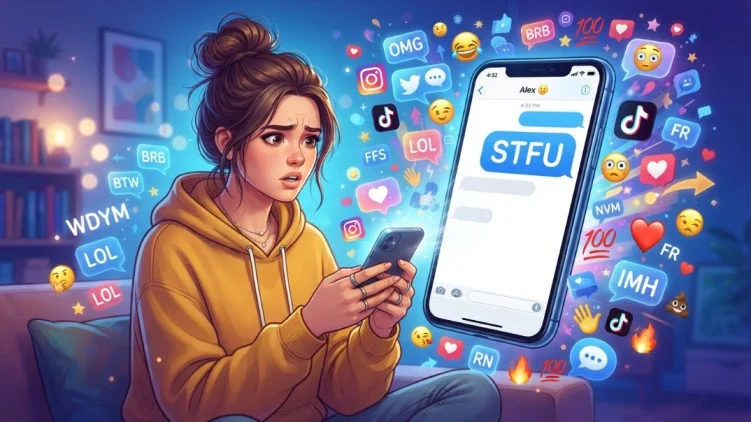
Receiving a message that says “STFU” can be confusing, especially if you’re unsure whether it’s meant as a joke or an insult. In most text conversations, STFU means “Shut The F* Up.”** It is a slang abbreviation used to tell someone to stop talking, but its meaning and tone depend heavily on the relationship between the people involved and the conversation itself.
You might see STFU in text messages, memes, gaming chats, TikTok comments, or group conversations. Understanding the context helps you decide whether it’s playful banter or something more offensive. Below, you’ll learn exactly what STFU means, how people use it, when it’s appropriate, and how to respond.
What Does STFU Mean?
The most common meaning of STFU is “Shut The F* Up.”**
It is an internet slang abbreviation that tells someone to stop talking. Depending on the situation, it can sound funny, sarcastic, excited, annoyed, or openly rude.
| Detail | Explanation |
|---|---|
| Most Common Meaning | Shut The F*** Up |
| Full Form | Shut The F*** Up |
| Tone | Usually rude, sometimes playful |
| Common Platforms | Text messages, TikTok, Snapchat, Discord, Instagram, gaming chats |
| Formal or Informal | Very informal |
What Does STFU Mean in Text?
In texting, STFU is almost always shorthand for “Shut The F* Up.”**
People use it for different reasons:
- They are joking with close friends.
- They are reacting to shocking news.
- They are teasing someone.
- They are expressing frustration.
- They are ending an argument.
Although the wording is harsh, close friends sometimes use it affectionately.
Example:
Friend 1: “I just won free concert tickets.”
Friend 2: “STFU! No way!”
Meaning:
The second friend isn’t asking them to be quiet. They’re expressing surprise because the news sounds unbelievable.
This distinction shows why context matters more than the abbreviation itself.
Other Ways STFU Is Used
While “Shut The F* Up”** is overwhelmingly the most common meaning, people don’t always use it literally.
| Meaning | Context | Tone | Example |
|---|---|---|---|
| Stop talking | Argument | Rude | “STFU already.” |
| I can’t believe it | Exciting news | Playful | “STFU, you actually met her?” |
| You’re kidding | Surprise | Funny | “STFU! That’s hilarious.” |
The abbreviation does not normally have another accepted full form in texting.
How Context Changes the Meaning
The same four letters can sound completely different depending on the conversation.
Friendly Surprise
Alex: “I passed my driving test!”
Jordan: “STFU! That’s amazing!”
Meaning: Genuine excitement and disbelief.
During an Argument
Person A: “You never listen.”
Person B: “STFU.”
Meaning: A direct and rude command to stop talking.
While Watching a Funny Video
Friend: “Look what my dog just did.”
You: “STFU! I can’t stop laughing.”
Meaning: You’re reacting with amusement, not anger.
Understanding the surrounding words, emojis, punctuation, and relationship between speakers makes interpretation much easier.
Meaning on Different Platforms
Text Messages and WhatsApp
STFU usually keeps its original meaning. Friends may use it jokingly, while strangers often sound rude.
Example:
“STFU 😂 You actually bought that?”
Here, the laughing emoji softens the expression.
TikTok and Instagram
People often comment “STFU!” after seeing something unbelievable, funny, or heartwarming.
Example:
“STFU, this is the cutest puppy ever.”
In comments, it usually expresses excitement rather than hostility.
Snapchat
On Snapchat, STFU commonly appears in casual chats between friends.
Example:
“STFU 😂 You really did that?”
The abbreviation often shows surprise mixed with humor.
Discord and Gaming Chats
In gaming communities, STFU can be playful among teammates or aggressive during competitive matches.
The conversation usually reveals which meaning is intended.
Real Conversation Examples
Person A: “I got front-row concert tickets.”
Person B: “STFU! That’s incredible.”
Meaning: Excited disbelief.
Person A: “Stop interrupting me.”
Person B: “STFU.”
Meaning: An offensive response during an argument.
Person A: “Guess who followed me back?”
Person B: “STFU 😂”
Meaning: Happy surprise.
Person A: “We won the tournament!”
Person B: “STFU! No way!”
Meaning: Genuine excitement.
Person A: “I accidentally sent the message to my teacher.”
Person B: “STFU! That’s so embarrassing.”
Meaning: Shock mixed with humor.
Is STFU Rude?
Yes, STFU is generally considered rude because it literally means “Shut The F* Up.”** However, the tone changes based on who says it and the situation.
When It Can Feel Playful
Among close friends, STFU is often used as a reaction to exciting or unbelievable news rather than as an insult.
Example:
Friend: “I just met my favorite actor.”
You: “STFU! That’s amazing! 😂”
Here, the message expresses excitement instead of telling someone to be quiet.
When It Becomes Offensive
If STFU is used during an argument or directed at someone you don’t know well, it usually comes across as disrespectful.
Example:
Person A: “Can we talk about what happened?”
Person B: “STFU.”
In this case, it is clearly meant to dismiss the other person.
Is STFU Offensive?
It can be. Since the abbreviation contains profanity, many people find it offensive, especially in professional or formal conversations.
Adding emojis or using it with close friends may soften the tone, but it is still considered strong language.
How to Reply to STFU
Friendly Replies
If it’s clearly a joke, you can reply with humor.
- “😂 I couldn’t help it!”
- “You know it’s true!”
- “Haha, I had to tell you!”
- “I was waiting for your reaction!”
- “Right? I couldn’t believe it either.”
Funny Replies
If you want to keep the conversation light, try one of these.
- “Too late, I’ve already said it.”
- “I’ll be quiet… for five seconds.”
- “Mission impossible.”
- “Only if you stop laughing first.”
- “I’m taking that as excitement.”
Polite Replies
If the message feels rude or makes you uncomfortable, stay calm.
- “Let’s keep the conversation respectful.”
- “I’d appreciate a kinder response.”
- “Can we talk without insults?”
- “I’d rather have a normal conversation.”
- “Let’s start over.”
Replies When You’re Confused
If you’re unsure what the sender means, ask for clarification.
- “Are you joking or serious?”
- “What do you mean by that?”
- “Just making sure you’re kidding.”
When to Use STFU
STFU is best reserved for informal conversations where everyone understands the humor.
Suitable situations include:
- Casual chats with close friends
- Group chats
- Gaming conversations
- Meme discussions
- Funny social media comments
- Reacting to unbelievable news
Even then, make sure the other person is comfortable with that style of communication.
When to Avoid STFU
Avoid using STFU in situations where it may sound disrespectful or unprofessional.
Examples include:
- Work emails
- Job applications
- Messages to teachers
- Client communication
- Academic writing
- Professional meetings
- Serious family discussions
- Conversations with strangers
In these situations, clearer and more respectful wording is always a better choice.
Common Mistakes
| Common Mistake | Correct Understanding |
|---|---|
| Thinking STFU always means anger | Friends often use it jokingly to express surprise. |
| Assuming it has several official full forms | In texting, it almost always means “Shut The F*** Up.” |
| Using it in professional messages | It is considered too informal and often offensive. |
| Ignoring emojis and context | Emojis and surrounding words can completely change the tone. |
Similar Slang Terms
| Term | Meaning | Main Difference |
|---|---|---|
| GTFO | Get The F*** Out | Usually expresses disbelief or tells someone to leave. |
| IDK | I Don’t Know | Neutral abbreviation, not offensive. |
| OMG | Oh My God | Shows surprise without profanity. |
| BRB | Be Right Back | Indicates a short absence rather than emotion. |
| WTF | What The F*** | Expresses shock or confusion instead of telling someone to stop talking. |
Origin and Popularity
The exact origin of STFU is uncertain, but it has been used in internet chats, online forums, text messaging, and gaming communities for many years. As texting and social media became more common, the abbreviation spread across platforms because it is shorter than typing the full phrase.
Today, STFU remains widely recognized in casual online conversations, although its tone still depends heavily on context.
Quick Recap
- STFU stands for “Shut The F* Up.”**
- It usually sounds rude but can be playful among close friends.
- Context, emojis, punctuation, and relationships determine the intended tone.
- Avoid using STFU in professional or formal communication.
- If you’re unsure whether someone is joking, ask for clarification before reacting.
Frequently Asked Questions
What does STFU mean in text?
STFU most commonly stands for “Shut The F*** Up” and is used to tell someone to stop talking or express shocked disbelief.
What does STFU stand for?
STFU stands for “Shut The F*** Up,” an informal internet slang abbreviation.
Is STFU rude?
Yes, STFU is generally considered rude, although close friends sometimes use it playfully when reacting to surprising news.
How should you reply to STFU?
Reply based on the tone by joking back with friends or responding calmly if the message feels disrespectful.
Can STFU have different meanings?
Its primary meaning stays the same, but the intended tone changes depending on context, relationship, and conversation.
Final Thoughts
The STFU meaning in text is almost always “Shut The F* Up,”** but the tone can range from playful surprise to outright hostility. Looking at the conversation, your relationship with the sender, emojis, and punctuation will usually reveal the intended meaning. While friends sometimes use STFU jokingly, it is still a strong expression that can offend others if used carelessly. When in doubt, choose more respectful language or ask for clarification before assuming the sender’s intent.
Discover More Post:
MBN Meaning in Text Messages| Definition, Examples, and …
IMO Meaning in Text| What It Means and How to Use It