Quick answer:
Demeanor means the way a person looks, behaves, or carries themselves, especially how they appear to others.
For example, “Her calm demeanor made everyone feel comfortable.”
Sometimes, you can learn a lot about someone without hearing a single word. Their facial expression, posture, tone, and overall behavior can create a strong impression. This is where demeanor meaning becomes useful. The word demeanor describes the way a person appears and behaves, especially in front of other people.
If you are a student, writer, teacher, professional, social media user, gamer, or everyday texter, you may come across this word in conversations, books, articles, or workplace discussions. Understanding it helps you describe someone’s behavior in a more precise way.
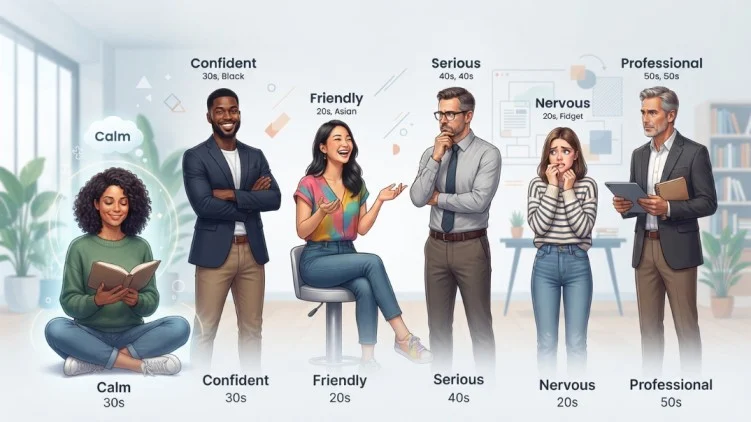
A person’s demeanor can be calm, friendly, serious, nervous, confident, cold, cheerful, or aggressive. The word does not automatically mean something good or bad. Its meaning depends on the person’s behavior and the situation. Let’s explore its meaning, history, examples, online use, and common misunderstandings.
Definition & Meaning
The basic demeanor meaning is a person’s outward behavior, manner, or appearance, especially the way they seem to others.
In simple English:
Demeanor = the way someone behaves or presents themselves.
It often describes the overall impression a person gives through their actions, facial expressions, body language, voice, and attitude.
For example:
“The teacher had a calm demeanor.”
This means the teacher appeared calm and behaved in a calm way.
Another example:
“His friendly demeanor made it easy to talk to him.”
Here, demeanor describes the person’s warm and approachable manner.
Common types of demeanor
A person’s demeanor can be described in many ways:
- Calm demeanor: relaxed and peaceful behavior
- Friendly demeanor: warm and approachable behavior
- Serious demeanor: focused and formal behavior
- Confident demeanor: self-assured behavior
- Nervous demeanor: worried or uneasy behavior
- Cold demeanor: distant or unfriendly behavior
- Cheerful demeanor: happy and positive behavior
- Professional demeanor: polite and appropriate behavior
- Aggressive demeanor: forceful or hostile behavior
- Quiet demeanor: reserved or less expressive behavior
The word usually focuses on what other people observe.
Person A: “Why did you think she was nervous?”
Person B: “Her nervous demeanor gave it away.”
This does not necessarily mean the person openly said, “I am nervous.” Her behavior created that impression.
Demeanor vs. personality
These words are related but different.
Personality refers to a person’s broader character and traits.
Demeanor refers more to how that person appears or behaves in a particular situation.
Someone may have a naturally cheerful personality but display a serious demeanor during a business meeting.
Background & History
The word demeanor has a long history in English. It comes from an older form of the word related to behavior and conduct. Over time, it developed into the modern meaning of a person’s outward manner or behavior.
The word is connected to the idea of how someone conducts themselves.
Historically, words describing conduct were often important in formal writing because people paid close attention to manners, behavior, and social presentation. Demeanor became a useful way to describe these visible qualities without directly describing a person’s entire character.
How the meaning developed
The modern use of demeanor focuses mainly on observable behavior.
For example:
“The witness maintained a calm demeanor.”
This sentence does not prove that the witness was naturally calm. It simply tells us that the person appeared calm while being observed.
This distinction makes the word useful in many settings.
Demeanor in literature
Writers often use demeanor when introducing or describing characters.
Instead of saying:
“He was a strange person.”
A writer might say:
“His quiet demeanor made the room feel uneasy.”
The second sentence gives readers a stronger picture of how the character appeared.
Demeanor in modern English
Today, the word appears frequently in:
- books
- news reports
- workplace communication
- psychology-related discussions
- legal settings
- education
- customer service
- everyday conversations
It is especially useful when describing behavior without making a complete judgment about someone’s personality.
Usage in Various Contexts
The word demeanor can appear in many different situations. Its meaning stays similar, but the type of behavior being described changes.
In texting
People may use demeanor when talking about someone’s behavior during a conversation.
Alex: “Why did you think he was upset?”
Sam: “His demeanor changed after the message.”
Here, demeanor refers to his noticeable change in behavior.
On social media
People may discuss the way a celebrity, influencer, or public figure behaves.
User 1: “She usually seems energetic.”
User 2: “Her demeanor seemed much more serious in that interview.”
The word sounds more polished than simply saying “the way she acted.”
In gaming
Gamers can also use the word when describing another player’s attitude.
Player A: “That player was surprisingly calm after losing.”
Player B: “Yeah, his demeanor never changed.”
Here, the word describes the player’s outward behavior during the game.
In casual conversation
You can use demeanor when describing someone’s general manner.
“I liked his friendly demeanor.”
Or:
“Her serious demeanor made me think she was the manager.”
In professional settings
The word is common when discussing workplace behavior.
“The employee maintained a professional demeanor throughout the meeting.”
This means the employee behaved in a polite, controlled, and appropriate way.
In storytelling
Writers can use the word to create a quick picture of a character.
“Despite the chaos around him, the detective kept a calm demeanor.”
The reader immediately gets a sense of how the detective behaved.
Common Misconceptions & Clarifications
The word demeanor is easy to understand, but some people confuse it with personality, mood, or attitude.
Misconception 1: Demeanor means personality
Not exactly.
A person’s personality describes their broader character.
Their demeanor describes how they appear or behave.
A naturally friendly person may have a serious demeanor during an important meeting.
Misconception 2: Demeanor is always negative
No.
The word itself is neutral.
A demeanor can be:
- pleasant
- calm
- cheerful
- confident
- serious
- nervous
- hostile
- cold
The adjective before the word often tells you whether the behavior is positive or negative.
Misconception 3: Demeanor means facial expression only
A person’s facial expression can be part of their demeanor, but demeanor is broader.
It may include:
- facial expressions
- body language
- tone of voice
- posture
- gestures
- general behavior
Misconception 4: Demeanor shows someone’s true feelings
Not always.
People can control how they appear.
Someone may look calm while feeling nervous inside.
For example:
“Although she was worried, she maintained a calm demeanor.”
The sentence shows why demeanor and internal feelings are not always identical.
Misconception 5: Demeanor and attitude mean exactly the same thing
They overlap, but they are different.
Attitude often refers to someone’s feelings, opinions, or mental approach.
Demeanor focuses more on the person’s outward manner.
Similar Terms & Alternatives
Several words can replace demeanor, depending on the context.
| Term | Meaning | Example |
|---|---|---|
| Behavior | The way someone acts | “His behavior was polite.” |
| Manner | The way someone behaves | “She spoke in a calm manner.” |
| Conduct | The way someone behaves, often formally | “His conduct was professional.” |
| Attitude | A person’s feelings or approach | “She has a positive attitude.” |
| Appearance | How someone looks | “His appearance was formal.” |
| Bearing | The way someone carries themselves | “He had a confident bearing.” |
| Disposition | A person’s usual mood or temperament | “She has a cheerful disposition.” |
| Composure | Calm control of emotions | “He maintained his composure.” |
Which word should you use?
- Use demeanor when you want to describe someone’s overall outward manner.
- Use behavior when focusing on specific actions.
- Use attitude when discussing someone’s feelings or approach.
- Use composure when focusing on emotional control.
- Use personality when discussing someone’s broader character.
How to Respond to This Term
If someone uses the word demeanor in a conversation, you can respond based on the situation.
Casual response
“Yeah, I noticed he seemed pretty serious too.”
This works when someone is discussing another person’s behavior.
Funny response
“My serious demeanor disappears as soon as someone mentions pizza.”
This uses the word in a playful way.
Professional response
“I agree. Her professional demeanor helped keep the meeting focused.”
This is suitable for workplace conversations.
If you disagree
“I saw her behavior differently. I thought she seemed more tired than upset.”
This is useful when you do not want to make a strong judgment about someone’s feelings.
Privacy-conscious response
Sometimes someone may ask you to judge another person’s behavior based on private information.
You can keep your answer limited:
“I can only comment on what I observed. I can’t know how they actually felt.”
This is a thoughtful way to use the concept of demeanor without pretending to know someone’s private emotions.
Regional or Cultural Differences
The word demeanor is widely understood in English, especially in formal and written communication. However, the way people describe behavior can vary across cultures.
American English
In American English, demeanor is common in:
- workplace writing
- news reports
- legal discussions
- education
- everyday descriptions
For example:
“The doctor had a calm demeanor.”
British English
British speakers also use demeanor, although everyday conversation may more often use words such as manner, behavior, or bearing.
The spelling demeanour is common in British English, while demeanor is standard American spelling.
Australian English
Australian English also uses the word, particularly in formal writing and professional contexts.
Cultural differences in behavior
What looks confident in one culture may look aggressive or overly direct in another.
Likewise, quiet behavior may be seen as respectful in one culture but shy or distant in another.
Because of this, describing someone’s demeanor should be done carefully.
A person’s visible behavior does not always tell the whole story.
Comparison with Similar Terms
Understanding the differences between related words makes demeanor much easier to use correctly.
| Word | Main Focus | Example |
|---|---|---|
| Demeanor | Outward manner or behavior | “His calm demeanor helped everyone relax.” |
| Personality | Broader character | “She has a warm personality.” |
| Mood | Temporary emotional state | “He was in a bad mood.” |
| Attitude | Feelings or approach | “She has a positive attitude.” |
| Behavior | Actions | “His behavior was respectful.” |
| Disposition | Usual temperament | “He has a cheerful disposition.” |
| Composure | Emotional control | “She kept her composure.” |
Demeanor vs. mood
A mood is usually an internal emotional state.
A demeanor is the way that state or behavior appears to others.
Someone may be in a bad mood but maintain a friendly demeanor.
Demeanor vs. behavior
Behavior includes specific actions.
Demeanor is more about the overall impression created by those actions.
Usage in Online Communities & Dating Apps
The word demeanor may appear in discussions about profiles, conversations, interviews, and first impressions on online platforms.
On dating apps such as Tinder, someone might describe a match’s demeanor after meeting them.
“He had a relaxed demeanor in person.”
Or:
“Her confident demeanor made the conversation easy.”
On social platforms such as X, users may describe the demeanor of public figures during interviews, debates, videos, or live streams.
Gaming communities may use the word when discussing how players behave under pressure.
Tips for using the word online
Be careful about treating someone’s online demeanor as proof of their true personality.
Online communication can hide:
- facial expressions
- tone
- body language
- private feelings
- personal circumstances
Someone who seems cold in a text may simply be busy.
Someone who seems confident online may feel nervous in real life.
Use demeanor to describe what you observe, rather than claiming to know exactly what someone feels.
Hidden or Offensive Meanings
Demeanor does not normally have a hidden, sexual, vulgar, or offensive meaning. It is a standard English word used to describe someone’s outward behavior.
However, it can become sensitive when used to judge someone.
For example:
“His aggressive demeanor made people uncomfortable.”
This is a description of observed behavior.
But:
“You have a terrible demeanor.”
This can sound personal and insulting.
Context matters
The adjective placed before demeanor can strongly change the tone.
Positive examples:
- warm demeanor
- friendly demeanor
- calm demeanor
- pleasant demeanor
- confident demeanor
Neutral examples:
- quiet demeanor
- serious demeanor
- reserved demeanor
Negative examples:
- hostile demeanor
- rude demeanor
- aggressive demeanor
- intimidating demeanor
It is also important not to confuse outward behavior with inner feelings.
A person may look angry without actually being angry.
Suitability for Professional Communication
Demeanor is completely suitable for professional communication. In fact, it is often more polished than saying “the way someone acts.”
You may see it in:
- business emails
- performance reviews
- interviews
- legal writing
- customer service
- workplace reports
- academic writing
- professional evaluations
For example:
“The candidate displayed a confident and professional demeanor during the interview.”
This sounds formal and natural.
Professional alternatives
Depending on the situation, you can use:
- professional manner
- conduct
- behavior
- attitude
- presentation
- approach
- bearing
Using the word carefully
Avoid using demeanor to make unsupported claims about someone’s emotions.
Instead of:
“The employee was angry.”
If you only observed their behavior, you could say:
“The employee appeared to have a tense demeanor.”
The second sentence is more cautious because it describes an observation rather than claiming certainty about the person’s internal feelings.
FAQs
1. What does demeanor mean in simple words?
Demeanor means the way a person behaves, appears, or carries themselves around others.
2. What is an example of demeanor?
“Her calm demeanor made the nervous students feel comfortable.” Here, calm demeanor means she appeared relaxed and peaceful.
3. Is demeanor the same as personality?
No. Personality describes a person’s broader character, while demeanor describes how they appear or behave in a particular situation.
4. Is demeanor positive or negative?
The word itself is neutral. A person’s demeanor can be friendly, calm, serious, nervous, cold, or aggressive.
5. Can demeanor describe body language?
Yes. Demeanor can include body language, facial expressions, tone, posture, gestures, and general behavior.
6. What is the British spelling of demeanor?
The British spelling is commonly demeanour, while demeanor is the standard American spelling.
7. What is a synonym for demeanor?
Common alternatives include manner, behavior, conduct, bearing, disposition, and attitude, although each has a slightly different meaning.
Conclusion
Understanding demeanor meaning gives you a useful way to describe how someone behaves or appears to others. It is not simply another word for personality. Instead, it focuses on a person’s outward manner, including their behavior, body language, tone, facial expressions, and general presence.
The word can describe a calm teacher, a confident speaker, a nervous student, a friendly employee, or a serious gamer. It is also common in professional and formal writing because it allows people to describe behavior without automatically claiming to know someone’s private thoughts or feelings.
Remember the simple idea: demeanor is about how someone presents themselves or appears to others. Once you understand that difference, you can use the word naturally in conversations, writing, social media discussions, workplace communication, and everyday English.
Discover More Post:
The Simple Meaning Behind This Popular Word in 2026
Spontaneous Meaning | What It Really Means Easy Examples …
What Does GOAT Mean in Text, Slang & Social Media in 2026