Quick answer:
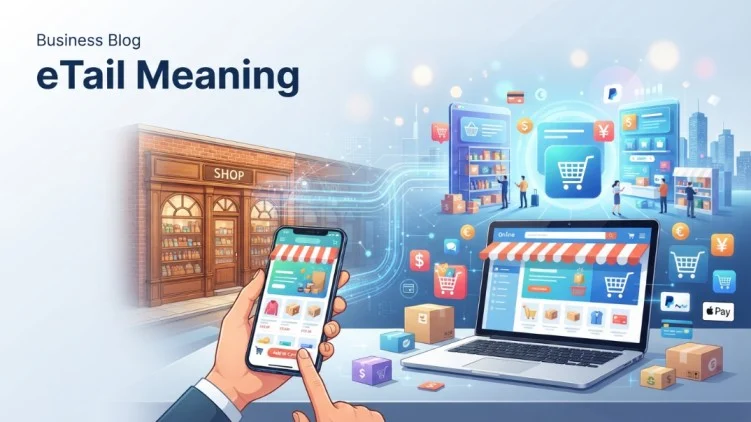
eTail means electronic retailing, or selling retail products and services online.
It describes online shopping through websites, apps, marketplaces, and other digital channels.
Imagine buying clothes, ordering a phone, or purchasing a gift without stepping inside a store. That simple online shopping experience is closely connected to eTail meaning. The word eTail is short for electronic retailing, and it refers mainly to selling retail goods or services through the internet.
If you are a student, shopper, business owner, marketer, online seller, gamer, or social media user, you may come across this term more often than you think. You can see it in business articles, ecommerce discussions, online marketplaces, technology blogs, and digital marketing conversations.
Understanding eTail matters because online shopping is now part of everyday life. It also helps you understand the difference between eTail, ecommerce, online retail, and traditional retail. Once you know what the term means, many digital business conversations become much easier to follow.
Definition & Meaning
The eTail meaning is simple: eTail refers to the selling of retail products or services through electronic channels, especially the internet. It is also written as e-tail or eTailing. The term combines the idea of electronic activity with retail.
Simple definition
eTail = selling retail products online.
For example, imagine a clothing company with a physical shop. Customers can visit the store and buy clothes in person. If the company also creates a website where customers can browse products, place orders, and buy clothes online, that online retail activity is eTail.
Customer: “Can I buy this jacket online?”
Seller: “Yes. Our website has the full collection.”
Customer: “So that is eTail?”
Seller: “Exactly. It is online retail.”
What does eTail stand for?
eTail is commonly understood as electronic retailing. The “e” points to electronic or internet-based activity, while “tail” comes from retail.
You may see the term written in several ways:
- eTail
- e-tail
- eTailing
- electronic retailing
- online retailing
These terms are closely related.
Examples of eTail
Common examples include:
- Buying clothes from an online fashion store
- Ordering electronics from an online retailer
- Purchasing books through a website
- Buying digital products from an online shop
- Ordering household items through a shopping app
- Purchasing products through an online marketplace
The main idea is that the retail transaction happens through a digital channel rather than only inside a physical store.
However, eTail is not exactly the same as ecommerce. Ecommerce is a broader concept that can include many types of online business activity, while eTail focuses more specifically on online retail selling.
Background & History
The idea behind eTail grew with the rise of the internet and online shopping. Traditional retail depended heavily on physical stores, where customers walked in, looked at products, spoke with sellers, and paid at a checkout.
As internet access became more common, businesses started creating digital storefronts. Customers could browse products from home instead of traveling to a physical shop. This created a new form of retail activity that became known as electronic retailing or e-tailing.
From retail to eTail
Traditional retail generally follows a simple path:
Store → Customer → Purchase
eTail changes the environment:
Website or app → Customer → Online order
The product may still come from a warehouse or physical store, but the customer interacts with the business digitally.
Traditional shopper: “I need to visit the store.”
Online shopper: “I can order it from my phone.”
This shift changed how businesses think about selling.
The growth of online stores
As websites, online payment systems, smartphones, and digital marketplaces developed, eTail became increasingly important. Businesses could reach customers beyond their local area.
A small shop could potentially sell to customers in other cities or countries without opening physical stores everywhere.
Modern eTail can happen through:
- Brand websites
- Shopping apps
- Online marketplaces
- Social commerce platforms
- Mobile shopping channels
- Digital storefronts
The line between eTail and broader ecommerce can sometimes be blurry. Many businesses use the terms in similar ways, but eTail generally focuses more narrowly on online retail sales, while ecommerce covers a much wider range of electronic business activity.
Today, eTail is a normal part of the digital retail world.
Usage in Various Contexts
The word eTail is mainly used in business, retail, technology, and marketing conversations. It is less common in casual texting than everyday phrases such as online shopping or shopping online.
In business
Companies may use eTail when discussing their online sales strategy.
Manager: “How are our eTail sales performing?”
Analyst: “They increased this quarter.”
Here, eTail sales means sales made through online retail channels.
In marketing
Marketing professionals may discuss eTail when planning campaigns for online shoppers.
Marketer: “We need a stronger eTail strategy.”
Manager: “Let’s improve product pages and mobile checkout.”
On social media
The word may appear in posts about online shopping and digital stores.
“Our new collection is now available through our eTail store.”
Social media can also send customers directly to online stores.
In gaming
eTail can apply to online stores that sell gaming-related products.
For example, a gaming company might sell:
- Digital game codes
- Gaming accessories
- Merchandise
- Gift cards
- Collectibles
Player A: “Where did you buy that controller?”
Player B: “I got it from an online retailer.”
The word eTail would be more likely in a business discussion than in normal gamer chat.
In everyday conversation
Most people simply say online shopping.
Friend: “Where did you get those headphones?”
You: “I bought them online.”
A business article might describe the same activity as eTailing.
Common Misconceptions & Clarifications
The term eTail is easy to understand, but several common misconceptions can cause confusion.
Misconception 1: eTail and ecommerce mean exactly the same thing
They are closely related, but eTail is more specific.
eTail mainly refers to online retail selling.
Ecommerce is broader and can include online transactions, digital services, electronic business processes, and other activities beyond retail.
Misconception 2: eTail only means selling physical products
Physical products are a major part of eTail, but online retail can also involve certain services and digital offerings depending on how the term is being used.
Misconception 3: eTail means a physical store
No. Traditional retail usually involves a physical shopping location.
eTail focuses on electronic or online retail channels.
Misconception 4: Every online business is eTail
Not necessarily.
An online bank is an ecommerce-related digital service, but it is not normally described as eTail because it is not primarily an online retail store.
Similarly, a company that provides software subscriptions may operate online but may not fit the narrow meaning of eTail.
Misconception 5: eTail is internet slang
The term may occasionally appear casually online, but its main meaning is business and retail terminology, not typical internet slang.
If you see eTail in a business article, it almost certainly relates to electronic retailing.
Similar Terms & Alternatives
Several terms are closely connected to eTail.
| Term | Meaning | Main focus |
|---|---|---|
| eTail | Electronic retailing | Selling retail products online |
| Ecommerce | Electronic commerce | Broad online business activity |
| Online retail | Retail through the internet | Online shopping |
| E-tailing | The activity of eTail | Online retail operations |
| Retail | Selling goods or services to customers | Physical or digital |
| M-commerce | Mobile commerce | Buying and selling through mobile devices |
| Social commerce | Commerce through social platforms | Social media shopping |
eTail vs online retail
These are very close.
Online retail is the simpler everyday term.
eTail is more common in business, technology, and industry discussions.
eTail vs m-commerce
M-commerce specifically focuses on commerce through mobile devices, such as smartphones and tablets.
eTail can happen through computers, smartphones, tablets, apps, and websites.
eTail vs social commerce
Social commerce focuses on shopping through social platforms or social experiences.
For example, someone may discover a product through a social media post and purchase it through an integrated shopping feature.
How to Respond to This Term
If someone uses eTail in a conversation, your response should depend on the setting.
Casual response
“Do you mean online shopping?”
This is a simple way to confirm the meaning.
Curious response
“Is eTail different from ecommerce?”
This can start a useful business conversation.
Professional response
“Are you referring specifically to our online retail sales?”
This is useful during meetings because it confirms exactly what the speaker means.
Funny response
“So basically, retail moved into my phone?”
That can work in a casual conversation.
Business-focused response
“Which eTail channel are you referring to, our website or marketplace sales?”
This is better when the conversation involves multiple online sales channels.
If you are unsure, asking for clarification is better than guessing.
Regional or Cultural Differences
The concept of eTail is widely understood across global business and technology industries, but the word itself may not be equally common in everyday speech everywhere.
In English-speaking business environments, you may see terms such as:
- eTail
- e-tailing
- online retail
- ecommerce
- digital retail
However, ordinary shoppers are more likely to say online shopping.
American English
In the United States, ecommerce and online retail are extremely common. eTail is more likely to appear in business or industry discussions.
British English
British businesses also use e-tail and online retail, while consumers commonly say online shopping.
Other countries
International companies may use e-commerce as the more familiar global term. Local translations can vary, but the concept remains similar: selling goods or services through digital channels.
Why wording differs
Business language often uses specialized terms, while everyday language favors simpler expressions.
A businessperson might say:
“Our eTail channel is growing.”
A shopper might say:
“Our online sales are growing.”
Both can describe a similar activity.
Comparison with Similar Terms
Understanding related terms makes the meaning of eTail much clearer.
| Expression | What it means | Example |
|---|---|---|
| eTail | Retail selling through electronic channels | “The brand expanded its eTail business.” |
| Ecommerce | Broad electronic business activity | “The company has a strong ecommerce platform.” |
| Online shopping | Buying products through the internet | “I enjoy online shopping.” |
| Online retail | Retail sales conducted online | “Online retail is growing.” |
| M-commerce | Commerce using mobile devices | “Most orders come through m-commerce.” |
| Traditional retail | Selling through physical stores | “The brand still has many retail locations.” |
| Social commerce | Shopping through social platforms | “Social commerce helped the product go viral.” |
The easiest way to remember it
Think of the terms as levels:
Retail = selling to customers.
eTail = retail selling online.
Ecommerce = a much broader category of electronic business.
M-commerce = commerce through mobile devices.
This simple distinction can prevent a lot of confusion.
Usage in Online Communities & Dating Apps
The word eTail is not usually a major dating-app term. On platforms such as Tinder, people generally use everyday phrases like online shopping, shopping, or online store instead.
However, eTail can appear indirectly in online communities where people discuss:
- Shopping
- Online businesses
- Product recommendations
- Digital stores
- Side hustles
- Ecommerce
- Entrepreneurship
- Marketing
For example:
User 1: “I started selling handmade products online.”
User 2: “Nice. Are you building an eTail business?”
In gaming communities, the term may also appear when people discuss online stores or digital product sales.
Tips for responding online
If someone says eTail and you are unsure what they mean, ask:
“Do you mean online retail?”
That is better than assuming the term refers to something else.
Also remember that etail is not normally a dating slang term. If someone uses it in an unusual dating conversation, context matters.
Hidden or Offensive Meanings
The standard term eTail does not have a common hidden, sexual, or offensive meaning. Its normal meaning is connected to electronic retailing.
Still, context matters online because unusual abbreviations can sometimes develop separate meanings within small communities.
If someone sends:
“I work in eTail.”
The likely meaning is that they work in online retail.
If someone uses the term in a strange or unrelated context, you can simply ask what they mean.
Don’t confuse similar-looking words
People may also confuse eTail with:
- retail
- ecommerce
- detail
- online shopping
- e-commerce
The spelling matters.
eTail is connected to electronic retailing.
Detail is a completely different English word referring to a small part or piece of information.
Tone also matters
In a professional conversation, eTail sounds like industry language.
In a casual conversation, someone might find the term overly technical.
For example:
“I work in eTail.”
This sounds professional.
“I work in online shopping.”
This sounds more casual and easier for everyday listeners to understand.
Suitability for Professional Communication
eTail is appropriate for professional communication, especially when discussing online retail, digital commerce, marketing, business strategy, or retail technology.
You may see it in:
- Business reports
- Marketing plans
- Retail presentations
- Ecommerce discussions
- Industry research
- Sales meetings
- Technology articles
- Business websites
For example:
“Our eTail revenue increased during the holiday season.”
This is suitable for a business report.
Professional alternatives
Depending on your audience, you can use:
- online retail
- ecommerce
- online sales
- digital retail
- electronic retailing
- online commerce
Which term is best?
If your audience understands industry terminology, eTail is perfectly suitable.
If you are speaking to a general audience, online retail may be clearer.
For example:
Technical:
“We are improving our eTail infrastructure.”
Simple:
“We are improving our online retail system.”
The second version may be easier for customers or new employees to understand.
FAQs
1. What does eTail mean?
eTail means electronic retailing, or selling retail products and services through online or electronic channels.
2. What does eTail stand for?
eTail is commonly used as a shortened form of electronic retailing. The “e” refers to electronic activity, while “tail” comes from retail.
3. Is eTail the same as ecommerce?
Not exactly. eTail is more specific, focusing on online retail. Ecommerce is broader and includes many other forms of electronic business activity.
4. What is an example of eTail?
Buying clothes from an online store, ordering electronics through a shopping website, or purchasing products through an online marketplace are common examples of eTail.
5. Is eTail a slang word?
Usually, no. eTail is mainly a business and technology term, although it may appear casually in online discussions.
6. What is an eTailer?
An eTailer is a business or seller that sells retail products through online channels.
7. What is the difference between eTail and online shopping?
Online shopping describes the customer’s activity. eTail describes the broader retail business activity of selling products online.
Conclusion
The simplest way to remember eTail meaning is this: eTail is online retail, or the electronic selling of retail products and services. It is closely connected to ecommerce, but the two terms are not always identical. eTail focuses more specifically on retail sales through digital channels, while ecommerce covers a much wider range of online business activities.
You may see eTail, e-tail, or eTailing in business reports, marketing discussions, technology articles, and retail strategies. In everyday conversation, people are more likely to say online shopping or online retail.
Knowing the difference is useful if you work with digital marketing, ecommerce, retail, business, or online selling. It also makes industry language easier to understand. When you see the term again, simply think: retail + electronic = eTail.
Discover More Post:
Insatiable Meaning | Definition, Examples, Synonyms, Uses …
Spontaneous Meaning | What It Really Means Easy Examples …
What Does GOAT Mean in Text, Slang & Social Media in 2026