Quick answer:
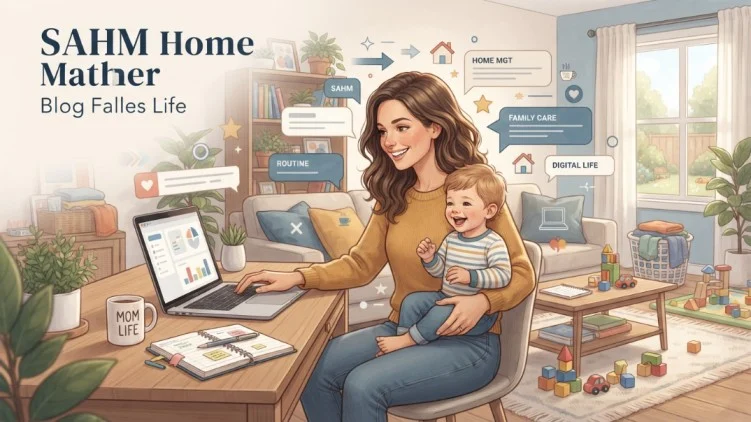
SAHM means “Stay-at-Home Mom” or “Stay-at-Home Mother.”
It usually describes a mother who mainly stays home to care for her children and manage the household.
You may have seen SAHM meaning in a text, parenting post, dating profile, or social media comment and wondered what those four letters actually mean. SAHM stands for Stay-at-home Mom, a common abbreviation used to describe a mother whose main role is caring for her children and managing home life.
If you are a student, parent, social media user, texter, blogger, or someone learning modern English, this abbreviation is useful to know. You can find SAHM in parenting groups, online forums, family discussions, and casual conversations. It can also appear beside terms such as SAHD, which means Stay-at-Home Dad.
Understanding SAHM helps you read online conversations without confusion. It also helps you respond in the right way because the term can describe someone’s daily role, family choice, or lifestyle. Let’s look at its meaning, history, uses, examples, and common misunderstandings.
Definition & Meaning
The SAHM meaning is “Stay-at-Home Mom.” It is an abbreviation made from the first letters of the phrase:
- S = Stay
- A = At
- H = Home
- M = Mom
A SAHM is generally a mother who stays at home to care for her children and handle household responsibilities rather than working in a traditional outside job.
Simple definition
SAHM = Stay-at-Home Mom.
For example:
Friend: “What does your sister do?”
You: “She is a SAHM.”
Friend: “Oh, she stays home with her kids?”
Here, SAHM gives a short way to describe her role.
Being a SAHM does not mean a woman does nothing all day. Childcare, cooking, cleaning, planning, school routines, appointments, shopping, and many other tasks can take a lot of time.
SAHM in texting
The abbreviation is especially common online because short forms make conversations faster.
Person A: “Are you working right now?”
Person B: “No, I’m a SAHM.”
Person A: “That must keep you busy!”
The term can also appear in profile descriptions.
“SAHM to three amazing kids.”
This means the person is a stay-at-home mother of three children.
SAHM does not always mean “never works”
A SAHM may also:
- run a small business
- work remotely
- freelance
- sell products online
- study from home
- create content
- work part-time
The label usually describes the person’s main role or lifestyle, not every activity they perform.
Background & History
The idea behind Stay-at-Home Mom is much older than the abbreviation itself. For generations, families have used different arrangements for earning money, raising children, and managing the home.
The phrase stay-at-home mother became increasingly common as people needed a simple way to describe mothers whose main work took place at home.
The abbreviation SAHM became especially popular with the growth of internet forums, parenting websites, blogs, social media, and online communities.
Why abbreviations became popular
Online communication created a strong need for short expressions.
People began using abbreviations such as:
- SAHM = Stay-at-Home Mom
- SAHD = Stay-at-Home Dad
- DH = Dear Husband
- DD = Dear Daughter
- DS = Dear Son
- LO = Little One
Parenting communities played a major role in making these terms familiar.
SAHM in modern culture
Today, SAHM is widely understood in English-language online spaces. You may see it in parenting groups, Reddit discussions, Facebook communities, blogs, forums, and social media captions.
The term has also become more flexible.
A mother may identify as a SAHM while doing remote work or running a small home-based business. Modern family life does not always fit into one simple category.
The term also appears in conversations about:
- childcare
- family finances
- work-life balance
- parenting
- education
- household responsibilities
- gender roles
So, SAHM is more than just a texting abbreviation. It is also a common label for a particular family role.
Usage in Various Contexts
SAHM can appear in many types of conversations.
In texting
People often use SAHM when discussing work or family life.
Alex: “Does your wife work outside the home?”
Ben: “She’s a SAHM.”
Alex: “Got it.”
It saves time compared with typing the full phrase.
On social media
Parents may use SAHM in captions and profiles.
“Coffee, cartoons, and chaos. #SAHM”
A person might also write:
“Being a SAHM is exhausting but rewarding.”
Here, the abbreviation describes the person’s lifestyle.
In parenting groups
SAHM is very common in parenting discussions.
User 1: “Any SAHM here with a toddler and newborn?”
User 2: “Yes! It’s busy, but you’re not alone.”
In casual conversation
People may use the abbreviation after explaining it once.
Friend: “I’m a stay-at-home mom.”
Friend 2: “So you’re a SAHM?”
Friend: “Exactly.”
In professional settings
The full phrase may be clearer in formal writing.
Instead of:
“I am a SAHM.”
A person might write:
“I have been a stay-at-home mother while caring for my children.”
The best choice depends on the audience.
Common Misconceptions & Clarifications
SAHM is simple, but some assumptions about the term can cause confusion.
Misconception 1: SAHM means unemployed
Not necessarily.
A SAHM may choose to focus on childcare and household responsibilities. Calling someone “unemployed” can miss the reason behind their role.
Misconception 2: SAHM means a mother never leaves home
This is obviously not required.
A SAHM may take children to school, visit family, shop, exercise, travel, attend appointments, or participate in community activities.
“Stay-at-home” refers mainly to the person’s primary role, not a strict rule that they remain indoors.
Misconception 3: Every mother who stays home is a SAHM
Not always.
Some mothers may work remotely, work part-time, study, or have another primary role. They may or may not choose the SAHM label.
Misconception 4: SAHM tells you everything about a person
It does not.
SAHM only describes one part of someone’s life. It does not tell you about their education, personality, career goals, interests, or abilities.
Misconception 5: SAHM is offensive
The abbreviation itself is not normally offensive.
Still, tone matters. Statements that suggest staying home is “easy” or that a mother is “not working” can feel dismissive.
A respectful conversation focuses on the person’s actual responsibilities.
Similar Terms & Alternatives
Several terms are related to SAHM.
| Term | Meaning |
|---|---|
| SAHM | Stay-at-Home Mom |
| SAHD | Stay-at-Home Dad |
| Stay-at-home parent | A parent who mainly stays home to care for children |
| Full-time parent | A parent who focuses heavily on childcare |
| Homemaker | A person who manages household responsibilities |
| Working mom | A mother who has paid employment |
| Work-from-home mom | A mother who works remotely from home |
SAHM vs. homemaker
These terms can overlap, but they are not exactly identical.
SAHM specifically highlights the mother’s role in staying home and caring for children.
Homemaker focuses more broadly on managing the household.
A person can identify as both.
SAHM vs. working mom
A working mom usually has paid employment.
A SAHM usually describes childcare and home management as her main daily role.
However, real life can overlap. A SAHM may also earn money from home.
How to Respond to This Term
If someone uses SAHM in a conversation, your response depends on the context.
Casual response
“Oh, nice! How old are your kids?”
This keeps the conversation friendly.
Supportive response
“That sounds like a full-time job in itself.”
This recognizes the work involved in childcare.
Funny response
“So your office is home, and your coworkers are tiny humans?”
This can work with someone who enjoys light humor.
Professional response
If someone mentions being a SAHM in a professional conversation, you can respond respectfully.
“Thanks for sharing. What kind of work or projects are you interested in now?”
This avoids making assumptions about their career.
Privacy-conscious response
You should not pressure someone to share family details.
Person A: “I’m a SAHM.”
Person B: “That’s nice. I hope you’re enjoying it.”
You do not need to ask about children’s names, ages, schools, or other private information.
Regional or Cultural Differences
The abbreviation SAHM is most common in English-speaking online communities, especially in the United States, Canada, the United Kingdom, Australia, and other places where English internet slang is widely used.
However, the exact phrase may vary.
American English
In American English, Stay-at-Home Mom is very common.
The abbreviation SAHM is also widely recognized online.
British English
British speakers may use stay-at-home mum instead of “stay-at-home mom.”
You may therefore see:
SAHM = Stay-at-Home Mum
The abbreviation stays the same because the first letters do not change.
Other cultures
Different cultures may have different views about parenting, employment, childcare, and household roles.
Some families may use terms closer to:
- homemaker
- full-time parent
- caregiver
- parent at home
The abbreviation may not be familiar to everyone outside English-language online communities.
If you are speaking with someone who may not know the abbreviation, simply write stay-at-home mom instead.
Comparison with Similar Terms
Here is a quick comparison of common family and parenting terms.
| Term | Main Meaning | Focus |
|---|---|---|
| SAHM | Stay-at-Home Mom | Mother staying home for childcare |
| SAHD | Stay-at-Home Dad | Father staying home for childcare |
| Homemaker | Manages household | Home responsibilities |
| Working mom | Has paid employment | Career and family |
| Work-from-home mom | Works remotely | Paid work from home |
| Stay-at-home parent | Parent caring for children at home | Gender-neutral role |
| Caregiver | Provides care | Broader caregiving role |
SAHM vs. SAHD
The difference is simple.
SAHM refers to a mother.
SAHD refers to a father.
Person A: “Who’s looking after the kids today?”
Person B: “Their dad is a SAHD.”
Both terms describe a parent whose main role involves staying home and caring for children.
Usage in Online Communities & Dating Apps
SAHM is common in online communities where people discuss relationships, parenting, family life, and lifestyle choices.
On parenting forums, someone might write:
“I’m a new SAHM and I’m struggling to create a daily routine.”
Other parents may respond with advice and encouragement.
Dating apps
A person may mention SAHM in a dating profile to explain their current lifestyle.
For example:
“SAHM of two, coffee lover, and weekend hiker.”
Someone reading the profile can understand that childcare is a major part of the person’s life.
On a dating app such as Tinder, the abbreviation may also appear in conversations about family expectations, work, and future plans.
How to respond
If someone says:
“I’m a SAHM.”
You can reply:
“That’s great. What do you enjoy doing in your free time?”
This is better than immediately asking intrusive questions about money or childcare.
In online communities, remember that family details can be private. Avoid requesting children’s names, school locations, photographs, or other personal information.
Hidden or Offensive Meanings
SAHM does not normally have a hidden offensive meaning. It is a standard abbreviation for Stay-at-Home Mom.
Still, the word can become sensitive depending on how someone uses it.
For example:
“She’s just a SAHM.”
The word “just” can make the statement sound dismissive. It may suggest that staying home and raising children is not meaningful work.
A more respectful statement would be:
“She’s a SAHM who takes care of her children full-time.”
Context matters
The abbreviation itself is neutral.
The attitude behind the sentence can change how it feels.
Avoid using SAHM as an insult or making assumptions about someone’s financial situation, intelligence, ambition, or value.
It is also important to remember that family choices differ. Some parents work outside the home. Others work remotely. Some stay home. There is no need to turn the abbreviation into a judgment.
Suitability for Professional Communication
SAHM is understandable, but it is more common in casual and online communication than in formal professional writing.
For a text message, it is perfectly normal:
“I’m a SAHM right now.”
For a formal application or professional biography, the full phrase may sound clearer.
Instead of:
“I have been a SAHM for five years.”
You could write:
“I have spent the past five years as a stay-at-home mother while caring for my children.”
Professional alternatives
Depending on the situation, you can use:
- stay-at-home mother
- full-time parent
- primary caregiver
- homemaker
- parent focused on childcare
- family caregiver
Resume context
If someone has developed useful skills while being a SAHM, they can describe those skills without relying only on the abbreviation.
For example:
“Managed complex household schedules, coordinated appointments, organized family activities, and handled multiple competing priorities.”
This presents practical skills in professional language.
FAQs
1. What does SAHM mean in texting?
SAHM means “Stay-at-Home Mom” or “Stay-at-Home Mother.” It describes a mother whose main role is caring for children and managing home responsibilities.
2. What does SAHM stand for?
SAHM stands for Stay-at-Home Mom.
3. Is SAHM slang?
SAHM is best described as an abbreviation rather than traditional slang. It is widely used in online parenting and family communities.
4. What is the male version of SAHM?
The male equivalent is SAHD, meaning Stay-at-Home Dad.
5. Is SAHM offensive?
No. SAHM is normally neutral and respectful. However, using it in a judgmental way can make a statement sound offensive.
6. Can a SAHM work from home?
Yes. Someone may identify as a SAHM while also doing freelance work, running a business, creating content, or earning money from home.
7. What is another word for SAHM?
Depending on the context, alternatives include stay-at-home mother, full-time parent, homemaker, and primary caregiver.
Conclusion
The SAHM meaning is simple: Stay-at-Home Mom. It is a common abbreviation used in texts, social media, parenting groups, online communities, and casual conversations. It usually describes a mother whose main role involves caring for children and managing household responsibilities.
SAHM does not automatically mean unemployed, inactive, or completely disconnected from work. A stay-at-home mother may also study, run a business, freelance, or work remotely. The abbreviation simply describes an important part of her current lifestyle.
You may also see related terms such as SAHD, homemaker, and stay-at-home parent. The right term depends on the person’s situation and preference.
Most importantly, remember that SAHM is normally a neutral term. Use it respectfully, avoid assumptions, and consider the context before asking personal questions. Once you know the meaning, this common online abbreviation becomes very easy to understand and use.
Discover More Post:
Insatiable Meaning | Definition, Examples, Synonyms, Uses …
Spontaneous Meaning | What It Really Means Easy Examples …
What Does GOAT Mean in Text, Slang & Social Media in 2026