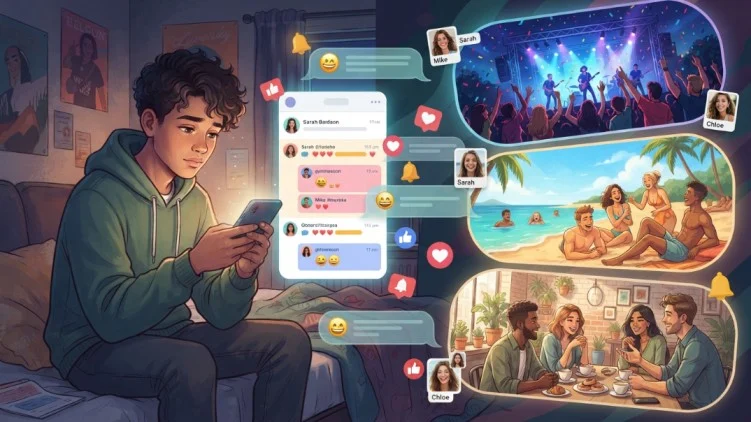
You open a group chat and see everyone talking about an event you missed. Someone replies with, “Sounds like you’ve got FOMO!” If you’re unsure what that means, you’re not alone. FOMO meaning in text is one of the most common internet expressions used in chats, social media, and everyday conversations.
FOMO usually describes the feeling of missing out on something exciting or important. However, its exact meaning can change slightly depending on the conversation and platform. Understanding how people use it helps you interpret messages correctly, respond naturally, and avoid misunderstandings.
What Does FOMO Mean?
FOMO stands for Fear Of Missing Out.
It describes the anxious or uneasy feeling that other people are having enjoyable experiences while you are not. In text messages and social media, people often use FOMO to express regret about missing an event, trend, trip, or conversation.
| Detail | Explanation |
|---|---|
| Most Common Meaning | Fear Of Missing Out |
| Full Form | Fear Of Missing Out |
| Tone | Casual, relatable, sometimes humorous |
| Common Platforms | Text messages, Instagram, TikTok, Snapchat, WhatsApp |
| Formal or Informal | Informal |
What Does FOMO Stand For?
The full form of FOMO is Fear Of Missing Out.
In texting, FOMO is a quick way to describe the feeling that you’re missing an exciting experience, opportunity, or social event. It doesn’t always mean someone is seriously upset. Many people use it jokingly when friends post vacation photos, attend concerts, or try a popular restaurant without them.
Example
Friend: “We all went to the beach yesterday.”
You: “Now I’ve got serious FOMO!”
Meaning: You wish you had been there because it looked fun.
FOMO usually carries a lighthearted tone, although it can also reflect genuine disappointment depending on the situation.
Alternative Meanings of FOMO
In most online conversations, Fear Of Missing Out is by far the most common meaning of FOMO. Unlike many internet abbreviations, FOMO rarely changes meaning across platforms.
There are a few specialized uses in business or psychology discussions, but they all relate to the same core idea of feeling left out or worrying about missing opportunities.
| Meaning | Context | Tone | Example |
|---|---|---|---|
| Fear Of Missing Out | Texting and social media | Casual | “I’m getting FOMO from your vacation posts.” |
| Fear Of Missing Out | Marketing | Informative | “Limited offers create FOMO among shoppers.” |
| Fear Of Missing Out | Psychology | Educational | “Social media can increase FOMO in some people.” |
The meaning stays remarkably consistent, making FOMO one of the easier slang terms to understand.
How Context Changes the Meaning
Although FOMO almost always means Fear Of Missing Out, the emotion behind it depends on the conversation.
Friends Planning an Event
“You all went without me? Major FOMO!”
Here, FOMO expresses disappointment about missing a fun activity.
Social Media Posts
“These travel pictures are giving me FOMO.”
The speaker feels inspired and slightly jealous after seeing someone else’s experience.
Shopping
“That sale ends tonight. Don’t get FOMO later.”
Here, FOMO encourages someone not to miss a limited-time opportunity.
Small details such as emojis, punctuation, and wording can also influence the tone.
- “FOMO 😂” sounds playful.
- “I have serious FOMO…” feels more genuine.
- “You’re giving me FOMO!” is usually lighthearted and friendly.
FOMO Meaning on Different Platforms
Text Messages and WhatsApp
In personal chats, FOMO almost always means feeling left out of an event, conversation, or activity.
Example:
“I saw your camping photos. Total FOMO!”
The tone is friendly and conversational.
Instagram and TikTok
People often use FOMO when reacting to travel videos, food posts, concerts, or trending experiences.
Example:
“These vacation reels are giving me FOMO.”
It expresses admiration mixed with a wish to be part of the experience.
Snapchat
On Snapchat, FOMO commonly appears after seeing Stories from parties, hangouts, or celebrations.
Example:
“I missed everyone’s Story yesterday. I’ve got FOMO.”
The meaning remains exactly the same but often feels more immediate because Stories disappear after a short time.
Real Conversation Examples
Friends
Person A: “We finally tried that new pizza place.”
Person B: “Now I’ve got FOMO!”
Meaning: They wish they had joined.
Family
Person A: “Everyone’s coming over for game night.”
Person B: “Don’t make me get FOMO.”
Meaning: They don’t want to miss the family gathering.
Group Chat
Person A: “The concert was incredible!”
Person B: “You’re giving me serious FOMO.”
Meaning: The photos and messages make them wish they had attended.
Social Media
Person A: “Weekend road trip complete!”
Person B: “These pictures are pure FOMO.”
Meaning: The post makes others wish they had the same experience.
Workplace
Person A: “The team went out for lunch.”
Person B: “Looks like I missed all the fun. FOMO!”
Meaning: They feel left out in a lighthearted way.
Tone and Emotional Meaning
FOMO is generally a friendly expression rather than a negative one. It often communicates curiosity, excitement, or mild disappointment without sounding harsh.
Is FOMO Rude?
No. FOMO is not considered rude in normal conversations.
Someone saying, “You’re giving me FOMO,” is usually complimenting your experience while expressing that they wish they could have joined.
Is FOMO Funny?
Often, yes.
People frequently exaggerate FOMO for humorous effect.
Example:
“I’ve got FOMO because everyone except me ordered dessert.”
This playful use adds humor rather than genuine frustration.
Is FOMO Offensive?
No.
The term itself is not offensive. However, repeatedly showing off experiences to intentionally make others feel excluded may come across as insensitive, even though the word FOMO remains neutral.
How to Reply to FOMO
Friendly Replies
- “You should come next time!”
- “We’ll save you a spot.”
- “Don’t worry, we’re doing it again soon.”
- “You’ll love it when you join us.”
- “Next adventure is yours.”
Funny Replies
- “Too late, the fun meter is already full!”
- “We’ll send extra pictures just for you.”
- “You definitely missed the best snack.”
- “Time machine required!”
- “Start planning for the next one.”
When to Use FOMO
FOMO fits naturally into casual conversations where people are talking about experiences, events, or opportunities they wish they hadn’t missed.
Some common situations include:
- Texting friends about weekend plans
- Reacting to vacation photos on Instagram
- Commenting on TikTok travel or food videos
- Chatting in family or group conversations
- Talking about concerts, sporting events, or parties
- Discussing limited-time sales or special offers
Because most people recognize the term, it feels natural in informal conversations. Even so, think about your audience. Someone unfamiliar with internet slang may understand a clearer phrase like “I wish I hadn’t missed it.”
When to Avoid the Term
Although FOMO is widely understood, there are situations where plain language is a better choice.
Avoid using FOMO in:
- Professional emails
- Job applications
- Business presentations
- Academic papers
- Official announcements
- Conversations where the other person may not know internet slang
For example, instead of writing:
“Customers may experience FOMO.”
A formal message could say:
“Customers may feel they are missing an opportunity.”
Choosing the appropriate wording helps your message stay clear and professional.
Common Mistakes
| Common Mistake | Correct Understanding |
|---|---|
| Thinking FOMO means excitement | It describes the feeling of missing out. |
| Believing it only relates to social media | It also applies to events, opportunities, shopping, and everyday life. |
| Using it in formal writing | It is best suited to casual conversations. |
| Assuming it always expresses serious anxiety | Many people use it jokingly or playfully. |
Similar Slang Terms
| Term | Meaning | Main Difference |
|---|---|---|
| YOLO | You Only Live Once | Encourages taking opportunities rather than missing them. |
| Hype | Excitement around something | Describes popularity, not the feeling of missing out. |
| JOMO | Joy Of Missing Out | The opposite of FOMO, enjoying staying away from events. |
| IMO | In My Opinion | Shares an opinion and is unrelated to missing experiences. |
| HBU | How About You? | Continues a conversation and has no connection to FOMO. |
Origin and Popularity
The exact origin of the phrase Fear Of Missing Out is difficult to pinpoint, but it became widely recognized as social media platforms made it easier for people to see what friends, influencers, and communities were doing in real time.
Today, FOMO is common in everyday conversations, online chats, marketing discussions, and even psychology. While the setting may change, the meaning remains remarkably consistent.
Quick Recap
- FOMO stands for Fear Of Missing Out.
- It describes the feeling of wishing you had been part of an experience or opportunity.
- The meaning stays almost the same across text messages, Instagram, TikTok, Snapchat, and WhatsApp.
- Most people use FOMO casually, humorously, or to express mild disappointment.
- Understanding the conversation and tone helps you interpret the message correctly and reply naturally.
Frequently Asked Questions
What does FOMO mean in text?
FOMO means Fear Of Missing Out, describing the feeling of wishing you had joined an enjoyable experience or opportunity.
What does FOMO stand for?
FOMO stands for Fear Of Missing Out, a common expression used in casual conversations and social media.
What does FOMO mean on TikTok?
On TikTok, FOMO usually expresses wishing you were part of a trend, trip, event, or experience shown in a video.
How should you reply to FOMO?
Reply by inviting the person next time, reassuring them they did not miss everything, or keeping the conversation lighthearted.
Can FOMO have different meanings?
While FOMO appears in several contexts, it almost always refers to Fear Of Missing Out rather than a completely different meaning.
Final Thoughts
Understanding the FOMO meaning in text makes it easier to follow modern conversations and social media posts. In almost every situation, FOMO stands for Fear Of Missing Out, describing the feeling of missing an enjoyable event, opportunity, or experience. The term is friendly, informal, and widely recognized across messaging apps and social platforms. Paying attention to the surrounding conversation, emojis, and tone helps you understand exactly how it’s being used. Once you know the context, you’ll be able to use FOMO naturally and respond confidently whenever it appears in a chat.
Discover More Post:
MBN Meaning in Text Messages| Definition, Examples, and …
IMO Meaning in Text| What It Means and How to Use It