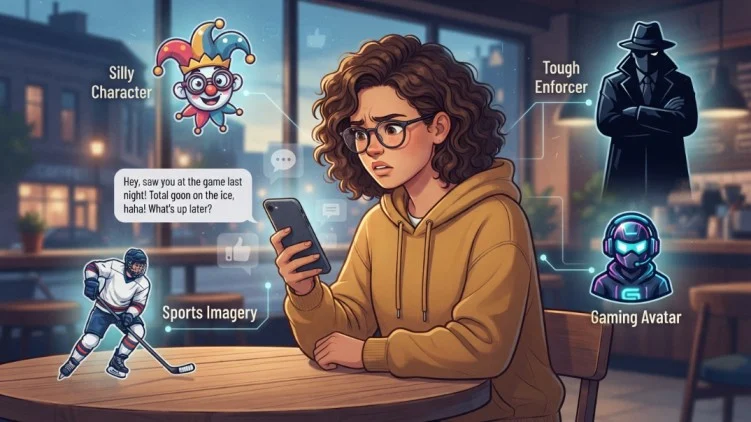
Quick answer:
“Goon” traditionally means a foolish person, thug, or hired enforcer. Online, however, newer slang uses related words like “gooning” with a sexual meaning, so context matters.
One small word can have several very different meanings, and goon is a perfect example. You may see it in a text, TikTok comment, gaming chat, sports discussion, meme, or casual conversation and wonder what the person actually means.
If you are a student, social media user, gamer, writer, parent, or anyone trying to understand modern internet slang, knowing the meaning of “goon” can save you from a very awkward misunderstanding. The traditional meaning describes a foolish or silly person or a tough person hired to intimidate others.
But internet culture has added newer meanings around “goon” and “gooning.” So, before using the word yourself, look at the sentence, platform, and people involved.
Goon Meaning and Definition
The word goon is an informal English noun with more than one established meaning.
The most common traditional meanings are:
- A foolish person
- A thug or enforcer
- A person used to frighten or hurt others
- In some sports, especially hockey, a player known for aggressive or fighting behavior
For example:
Friend 1: “I forgot my keys again.”
Friend 2: “You absolute goon!”
Here, “goon” is playful. It means something close to “silly person” or “idiot.”
In a more serious setting:
Detective: “Who were those men?”
Witness: “They were the boss’s goons.”
Here, the word means hired tough guys or enforcers.
The important point is that “goon” does not always mean something offensive or dangerous. Friends may use it as a joke. However, calling a stranger a goon can sound insulting.
There is also a newer internet meaning connected to “gooning.” This is sexual slang referring to prolonged masturbation, often involving pornography.
That meaning is very different from the traditional noun “goon,” so context is essential.
Background and History of “Goon”
“Goon” is not a brand-new internet word. Its older use goes back to the early 20th century, with dictionaries connecting it to older words such as “gooney,” meaning a simpleton or foolish person.
The word was also influenced by Alice the Goon, a large and intimidating character from the Thimble Theatre comic strip associated with Popeye.
Over time, “goon” developed another strong meaning: a hired thug or enforcer. This is why old crime movies often show a powerful character described as a “goon.”
Today, the traditional meanings remain in dictionaries. At the same time, internet communities have created newer uses. The sexual meaning of “gooning” appeared in online communities years ago and later became more visible through memes and social media.
So the meaning has shifted from simpleton → thug/enforcer → modern internet slang, depending on context.
How Is “Goon” Used in Different Contexts
Texting and Casual Chats
Among friends, “goon” can simply mean silly person.
Alex: “I walked into the wrong classroom.”
Sam: “Bro, you’re such a goon 😂”
This is usually teasing rather than serious abuse.
Social Media
On social platforms, the meaning can be harder to identify. A meme might use “goon” to describe someone acting ridiculous, while “gooning” can refer to the newer sexual slang meaning.
Gaming
Gamers may use “goon” for a foolish teammate, an aggressive player, or a group of intimidating enemies.
Player 1: “That goon keeps rushing us.”
Player 2: “Ignore him and take the objective.”
Sports
In hockey, “goon” can describe an aggressive player whose role historically centered more on fighting or intimidating opponents.
Common Misconceptions and Clarifications
A major misconception is that “goon” has only one meaning.
It does not.
- If someone says, “You are such a goon,” they may simply be calling you silly.
- If someone says, “The gangster sent his goons,” they mean hired enforcers.
- If you see “gooning” in an online conversation, the meaning may be sexual instead.
Another mistake is assuming that every use of “goon” is offensive. Tone matters. Between close friends, it can be playful. From a stranger, boss, or hostile person, it may be an insult.
The safest approach is to examine the surrounding words before deciding what the speaker means.
Similar Terms and Alternatives
Depending on the intended meaning, several words can replace “goon.”
| Meaning | Similar term |
|---|---|
| Foolish person | Fool |
| Silly person | Goof |
| Stupid person | Idiot |
| Hired tough | Thug |
| Enforcer | Muscle |
| Aggressive person | Bully |
| Violent criminal | Henchman |
For example, “goof” is usually softer than “goon,” while “thug” sounds more serious.
How to Respond to “Goon”
Your response should match the situation.
Casual
“Haha, fair enough 😂”
Funny
“A goon with excellent life skills, thank you.”
If You Are Unsure
“What do you mean by goon?”
This is often the best choice because the word has several meanings.
Professional
Avoid responding with slang. If someone uses “goon” in a work conversation, simply focus on the actual issue.
Privacy-Conscious
If someone uses “goon” in a sexual context and you do not want to discuss it:
“I’d rather not talk about that.”
Regional and Cultural Differences
“Goon” does not mean exactly the same thing everywhere.
In North American English, the word can refer to a criminal hired to intimidate someone. In older or British usage, it can mean a silly person.
Australia has another unusual meaning: “goon” can refer to cheap boxed wine, especially the wine bag inside the box.
This makes regional context especially important.
A person from one country may hear “goon” and think thug, while an Australian listener may think of boxed wine.
Goon vs. Similar Expressions
| Term | Main meaning | Tone |
|---|---|---|
| Goon | Fool, thug, or enforcer | Informal |
| Goof | Silly person | Usually playful |
| Thug | Violent or intimidating person | Negative |
| Henchman | Person working for a powerful criminal | Negative |
| Bully | Person who intimidates others | Negative |
| Idiot | Very foolish person | Insulting |
The right interpretation depends on the sentence.
Goon in Online Communities and Dating Apps
Online communities have made the word more complicated. On gaming forums, “goon” may simply describe a foolish or aggressive player. On meme pages, it can be used humorously.
Dating apps are different. If someone uses “gooning” or related terms, they may be referring to sexual internet slang. The term has become more visible in online communities and social media culture.
If you see it on Tinder or another dating platform and do not understand the meaning, ask rather than guess.
You: “What do you mean by ‘goon’ here?”
Them: “I mean it as a joke.”
That simple question can prevent an embarrassing misunderstanding.
Hidden or Offensive Meanings
The traditional word itself is not automatically offensive. However, it can become insulting when aimed at someone directly.
The bigger issue is the related term “gooning.” In modern internet slang, it has an explicitly sexual meaning.
That means phrases such as “goon,” “gooning,” and “gooner” should not automatically be treated as innocent slang when they appear online.
If the conversation is public, family-friendly, educational, or professional, it is better to avoid using the newer sexual sense unless the context clearly calls for it.
Is “Goon” Appropriate for Professional Communication
Generally, no.
“Goon” is informal slang and can sound insulting. In professional communication, choose a more precise word.
Instead of:
“Those guys are goons.”
Use:
“Those individuals were acting aggressively.”
Instead of:
“He is a goon.”
Use:
“He behaved irresponsibly.”
Professional language removes ambiguity and reduces the chance of offending someone.
FAQs
1. What does goon mean in slang?
It usually means a foolish or silly person, though it can also mean a thug or enforcer.
2. Is calling someone a goon an insult?
It can be. Between friends, it may be playful, but it can sound insulting when directed at a stranger.
3. What does goon mean in gaming?
It can describe a foolish, aggressive, or intimidating player, depending on the community.
4. Does goon have a sexual meaning?
The newer term “gooning” does have a sexual meaning involving prolonged masturbation.
5. What does “goon” mean in hockey?
It traditionally refers to an aggressive player associated with fighting or intimidating opponents.
6. Is goon a bad word?
Not always. It is informal and can be insulting, but friends may use it playfully.
7. What is a safer alternative to goon?
Use silly person, fool, goof, aggressive person, thug, or enforcer, depending on the intended meaning.
Conclusion
The meaning of goon depends heavily on context. Traditionally, it can describe a foolish person, thug, or hired enforcer. In sports, it can refer to an aggressive player, while Australian English has its own usage for boxed wine.
Online culture has added another layer because “gooning” now has an explicit sexual meaning.
So, if you see “goon” in a text, comment, game, or dating conversation, do not assume the meaning immediately. Read the surrounding message, consider the speaker, and check the context. That small step can help you understand modern slang without falling into an awkward misunderstanding.
Read More Related Articles:
What It Really Means in Messages and Online Chats
IDM Meaning in Text | Why Everyone Is Using This Popular …
IG Meaning in Text Messages | Definition, Uses, and Real …