Text messages are full of short forms that can confuse anyone, especially when a new abbreviation suddenly appears in a chat. idm meaning in text is one of those terms people often notice but are not always sure how to interpret. Its meaning depends on the conversation, making it important to understand the context before replying or using it yourself.
From casual texting and social media to online gaming and group chats, idm meaning in text comes up in many everyday conversations. Knowing what it means helps you avoid misunderstandings and communicate more naturally. The examples below show how this abbreviation is used in real messages, along with the situations where it fits best.
What Does IDM Mean in Text?
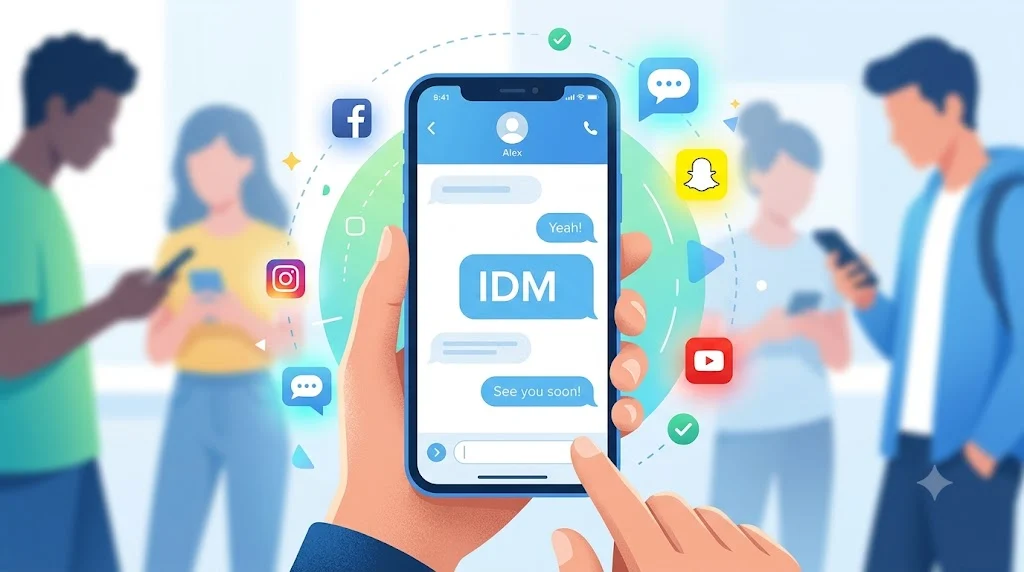
The most common IDM meaning in text is “I Don’t Mind.”
People use it when they want to say they are fine with a decision, don’t have a preference, or are happy to let someone else choose.
| Detail | Explanation |
|---|---|
| Most Common Meaning | I Don’t Mind |
| Full Form | I Don’t Mind |
| Tone | Friendly, Neutral, Flexible |
| Common Platforms | Text Messages, WhatsApp, Snapchat, Instagram, Discord |
| Formal or Informal | Informal |
For example:
Friend: “Pizza or burgers?”
You: “IDM.”
This simply means you’re happy with either option.
What Does “I Don’t Mind” Mean?
When someone types IDM, they are saying they don’t have a strong opinion about the choice being discussed.
Instead of making the decision themselves, they leave it open to the other person. It usually sounds polite rather than careless.
For example:
Alex: “Do you want to watch a movie tonight or tomorrow?”
Sam: “IDM. Whatever works for you.”
Here, Sam isn’t avoiding the question. They’re simply happy with either choice.
People often use IDM to:
- Show flexibility
- Avoid unnecessary debate
- Let someone else decide
- Keep conversations relaxed
- Agree politely
Unlike saying “I don’t care,” which can sometimes sound rude, IDM usually feels softer and more considerate.
Other Meanings of IDM
Although I Don’t Mind is the most common meaning in texting, IDM can have different meanings in specific industries or communities.
| Meaning | Context | Tone | Example |
|---|---|---|---|
| I Don’t Mind | Texting and social media | Friendly | “IDM where we eat.” |
| Identity Management | Information technology | Professional | “The company upgraded its IDM system.” |
| Intelligent Dance Music | Music community | Neutral | “I enjoy listening to IDM artists.” |
When you’re chatting with friends or on social media, I Don’t Mind is almost always the intended meaning.
How Context Changes the Meaning
Context is the easiest way to understand what IDM means.
In Casual Chats
If friends are discussing plans, IDM almost always means I Don’t Mind.
“Want to meet at 6 or 7?”
“IDM.”
Meaning: Either time is fine.
In Technology Discussions
If someone talks about cybersecurity, software, or business systems, IDM usually means Identity Management.
“We’re updating the IDM platform.”
Meaning: Identity Management software.
In Music Conversations
If someone is discussing electronic music, IDM refers to the music genre Intelligent Dance Music.
“I’ve been listening to classic IDM albums lately.”
Meaning: Electronic music.
Knowing the topic of the conversation makes the meaning clear almost every time.
IDM Meaning on Different Platforms
Text Messages and WhatsApp
On messaging apps, IDM almost always means I Don’t Mind.
Example
Friend: “Coffee or tea?”
You: “IDM 😊”
The tone is friendly and easygoing.
Snapchat and Instagram
On Snapchat and Instagram, people also use IDM to show flexibility.
Example
“Want to call later?”
“IDM.”
It simply means the other person is happy with your choice.
Discord and Gaming Chats
During gaming conversations, IDM usually keeps its meaning of I Don’t Mind, although tech communities may occasionally use it for Identity Management.
Example
“Which map should we play?”
“IDM.”
Meaning: Any map is fine.
Real Conversation Examples
Friends
Person A: “Should we order sushi or tacos?”
Person B: “IDM.”
Meaning: Either choice works.
Family
Person A: “Do you want to leave now or after dinner?”
Person B: “IDM.”
Meaning: They’re comfortable with either plan.
Classmates
Person A: “Should we work on the project tonight?”
Person B: “IDM. Whatever fits your schedule.”
Meaning: They’re flexible.
Group Chat
Person A: “Who’s picking the movie?”
Person B: “IDM. You choose.”
Meaning: They’re letting others decide.
Workplace Chat
Coworker: “Morning meeting or afternoon?”
You: “IDM, whichever works best for everyone.”
Meaning: You’re being cooperative.
Tone and Emotional Meaning
The tone of IDM depends on how it’s written and the conversation around it.
Friendly
Most of the time, IDM sounds relaxed and cooperative.
“IDM 😊”
The emoji makes the response feel warm.
Neutral
Without emojis or extra words, IDM simply shows flexibility.
“IDM.”
This is straightforward and polite.
Can IDM Sound Rude?
Sometimes.
A short reply like “IDM.” without any context may sound uninterested if the other person expected enthusiasm.
Compare these:
- “IDM 😊” feels friendly.
- “IDM, your choice!” feels positive.
- “IDM.” can sound a little distant, depending on the relationship.
How to Reply to IDM
Friendly Replies
- Great! Let’s go with pizza.
- Awesome, I’ll choose then.
- Thanks! I’ll make the reservation.
- Sounds good to me too.
- Perfect, let’s do that.
Polite Replies
- Thanks for being flexible.
- I’ll decide and let you know.
- I appreciate that.
- We’ll go with the first option.
- Thanks, that makes it easier.
Replies When You’re Confused
- Do you mean you don’t have a preference?
- Just checking, are you okay with either option?
- So you’re fine with whichever we choose?
When to Use IDM
IDM is best used in casual conversations where you’re comfortable letting someone else make the decision. It shows flexibility without sounding demanding.
Good situations include:
- Text messages with friends
- Family group chats
- WhatsApp conversations
- Snapchat and Instagram DMs
- Casual workplace chats
- Gaming conversations
- Making plans with classmates
Examples:
- “IDM where we eat.”
- “IDM if we start later.”
- “IDM, you can choose.”
Using IDM keeps conversations relaxed and shows you’re open to different options.
When to Avoid IDM
Although IDM is common in casual chats, it’s not suitable for every situation.
Avoid using it in:
- Professional emails
- Job applications
- Academic papers
- Client communication
- Official announcements
- Sensitive conversations where clarity matters
For example, instead of replying “IDM” in a business email, it’s usually better to write:
- “Either option works for me.”
- “I don’t have a preference.”
- “I’m happy with whichever option you choose.”
These responses sound more professional and leave less room for misunderstanding.
Common Mistakes
| Common Mistake | Correct Understanding |
|---|---|
| Thinking IDM always has one meaning | It usually means “I Don’t Mind,” but context can change the meaning. |
| Assuming IDM is rude | It’s generally polite and flexible unless the tone makes it seem dismissive. |
| Using IDM in formal writing | Spell out “I don’t mind” or use a more professional response instead. |
| Confusing IDM with another slang term | Read the surrounding conversation before deciding what it means. |
Similar Slang Terms
| Term | Meaning | Main Difference |
|---|---|---|
| IDC | I Don’t Care | Can sound more dismissive than IDM. |
| IMO | In My Opinion | Shares an opinion rather than showing flexibility. |
| TBH | To Be Honest | Introduces an honest opinion or statement. |
| HBU | How About You? | Asks for the other person’s opinion. |
| NVM | Never Mind | Ends or dismisses a topic instead of accepting a choice. |
While these abbreviations appear in similar conversations, they don’t carry the same meaning as IDM.
Origin and Popularity
The exact origin of IDM as “I Don’t Mind” isn’t clearly documented. Like many texting abbreviations, it became common as people looked for quicker ways to communicate in text messages, instant messaging apps, and social media chats.
Outside casual conversations, IDM has long been used in specialized fields such as information technology for Identity Management and in electronic music to refer to Intelligent Dance Music. The intended meaning is almost always clear from the topic being discussed.
Quick Recap
- IDM most commonly means I Don’t Mind in text messages and online chats.
- It expresses flexibility and shows you have no strong preference.
- In technology, IDM can mean Identity Management.
- In music discussions, IDM can refer to Intelligent Dance Music.
- Always use the conversation and platform to identify the correct meaning.
- Friendly replies work best when someone uses IDM during casual planning.
Frequently Asked Questions
What does IDM mean in text?
IDM most commonly means I Don’t Mind, showing that someone is happy with either choice or has no strong preference.
What does IDM stand for?
In texting, IDM usually stands for I Don’t Mind, though it has different meanings in technology and music contexts.
Is IDM rude?
No, IDM is generally polite and flexible, but a very short reply may seem distant without additional context.
How should you reply to IDM?
Acknowledge the flexibility by making the choice or confirming the plan in a friendly and clear way.
Can IDM have different meanings?
Yes, IDM can mean I Don’t Mind, Identity Management, or Intelligent Dance Music, depending on the conversation.
Final Thoughts
The most common IDM meaning in text is “I Don’t Mind,” making it a simple and friendly way to show you’re flexible about a decision. While the abbreviation has other meanings in technology and music, those are usually limited to specific discussions. Looking at the conversation, platform, and topic will help you understand the intended meaning. When used in casual chats, IDM keeps conversations easygoing and cooperative, making it a useful abbreviation to recognize and use naturally.
Discover More Post:
EYP Meaning in Text | What It Means in Messages and Social …
TB Meaning in Text | What It Means in Chats and Social Media
MBN Meaning in Text Messages| Definition, Examples, and …