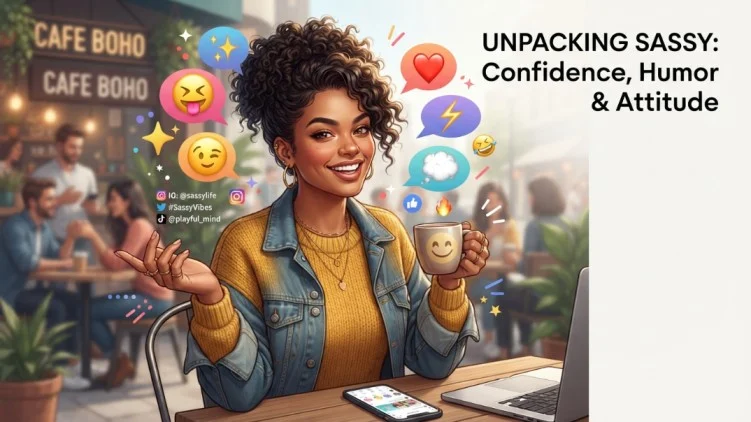
Quick answer:
Sassy means confident, lively, bold, and sometimes a little cheeky in the way someone speaks or behaves.
It can be playful and positive, but depending on tone, it can also sound rude or disrespectful.
A single word can make a conversation feel playful, bold, or even a little spicy. Sassy meaning is a great example. When someone calls you “sassy,” they may be praising your confidence, joking about your attitude, or pointing out that your reply was a little too bold.
If you are a student, writer, teacher, social media user, gamer, content creator, or everyday texter, you will likely see this word often. It appears in casual conversations, captions, comments, memes, dating chats, and pop culture.
Understanding what sassy means helps you read the mood behind a message. It also helps you know when the word is a compliment and when it may be a mild criticism. The key is context, tone, and the relationship between the people speaking. Let’s explore its meaning, history, examples, and modern uses.
Definition & Meaning
The basic sassy meaning is bold, lively, confident, and slightly cheeky in speech or behavior.
A sassy person often has a strong personality. They may answer quickly, make clever comments, or show confidence without being afraid to express their opinion.
Simple definition
Sassy = confident, bold, cheeky, and sometimes slightly disrespectful.
For example:
Mom: “Did you clean your room?”
Daughter: “I was going to, but my room said it liked the way it looked.”
Mom: “That was a very sassy answer.”
The daughter is not necessarily being seriously rude. Her answer is playful and cheeky.
Sassy as a compliment
In many modern conversations, sassy is positive.
Someone may say:
“She has such a sassy personality.”
This can mean she is:
- confident
- funny
- lively
- outspoken
- playful
- quick-witted
- stylish
A person might also describe an outfit as sassy when it looks bold, fun, or full of personality.
Sassy as criticism
The word can also describe behavior that crosses the line.
Teacher: “Please put your phone away.”
Student: “Why? Are you worried it might learn more than I do?”
Teacher: “That answer was a little sassy.”
Here, sassy suggests the student was being cheeky or disrespectful.
Sassy does not always mean rude
This is important.
Sassy and rude are not exactly the same.
A sassy comment can be funny and harmless. A rude comment is usually disrespectful or offensive.
The difference often depends on tone, intention, and context.
Background & History
The word sassy has a long history in English. It developed from the word saucy, which has been used for centuries to describe someone who is bold, lively, or cheeky.
Over time, sassy became its own common word, especially in American English.
Originally, describing someone as sassy could carry a stronger negative meaning. It often suggested that a person was being disrespectful, overly bold, or impudent.
As language changed, the word became more flexible.
Today, sassy can be:
- playful
- confident
- humorous
- stylish
- outspoken
- cheeky
- slightly rude
The meaning often depends on who says it and how they say it.
Sassy in modern culture
Modern entertainment and social media helped make sassy much more positive and playful.
You may see phrases such as:
“Feeling sassy today!”
This usually means the person feels confident, energetic, playful, or ready to make clever comments.
Social media captions also use sassy to describe bold personalities and humorous attitudes.
For example:
“Too glam to care. Feeling sassy today.”
The word here expresses confidence rather than disrespect.
Sassy in modern English
Today, sassy is common in everyday American English and is understood by many English speakers around the world.
It appears in:
- conversations
- movies
- television
- social media
- memes
- fashion
- advertising
- dating apps
- texting
- online communities
Its modern meaning is often much lighter than its older sense.
Usage in Various Contexts
The meaning of sassy can change based on the situation.
In texting
Friends often use sassy when someone sends a clever or bold reply.
Lena: “You ignored my message for three hours.”
Chris: “I was giving you time to miss me.”
Lena: “Wow, someone is feeling sassy today.”
This is playful rather than genuinely angry.
On social media
The word is popular in captions and comments.
“Serving looks and a little attitude.”
Someone might comment:
“Okay, sassy!”
This can mean the person looks confident or is making a bold statement.
In gaming
Gamers may call a player sassy when they make a funny comeback after winning.
Player A: “You got lucky.”
Player B: “Luck seems to like me.”
Player A: “That was a sassy comeback.”
Here, sassy describes confidence mixed with humor.
In casual conversations
Friends may use the word when someone responds with attitude.
Friend 1: “Are you going to help me?”
Friend 2: “Sure, right after you ask nicely.”
Friend 1: “Why are you so sassy?”
Again, the tone determines whether the exchange is funny or irritating.
In captions
People may use sassy to create a confident mood.
Examples include:
- “A little classy, a little sassy.”
- “Sassy but still sweet.”
- “Confidence with a side of sass.”
- “Too sassy to stress.”
These phrases usually present sassy as a fun personality trait.
Common Misconceptions & Clarifications
There are several common misunderstandings about the word sassy.
Misconception 1: Sassy always means rude
It does not.
A person can be sassy without being genuinely disrespectful.
For example:
“Oh, look who finally decided to arrive.”
If said between close friends, this may be playful teasing.
Misconception 2: Sassy always means confident
Confidence is often part of the modern meaning, but not always.
A person can be called sassy because they are being:
- cheeky
- argumentative
- sarcastic
- outspoken
- playful
Misconception 3: Sassy and sarcastic mean the same thing
They overlap, but they are different.
Sarcastic usually describes speech that says something different from the intended meaning, often for humor or criticism.
Sassy describes an attitude or style that is bold, cheeky, or lively.
Someone can be both sarcastic and sassy, but one does not automatically mean the other.
Misconception 4: Sassy is always positive
Context matters.
“Your little sister is so sassy!”
This may sound affectionate.
But:
“Stop being sassy with me.”
This is usually a warning.
Misconception 5: Sassy is an insult
It can be mildly negative, but it is often playful.
If someone calls you sassy with a smile or laughing emoji, they may be teasing you rather than insulting you.
Similar Terms & Alternatives
Several words are related to sassy, but each has its own meaning.
| Term | Meaning | Example |
|---|---|---|
| Cheeky | Playfully disrespectful | “That was a cheeky answer.” |
| Bold | Confident and willing to take risks | “She made a bold statement.” |
| Confident | Sure of yourself | “He sounds very confident.” |
| Spirited | Energetic and lively | “She has a spirited personality.” |
| Outspoken | Open about opinions | “He is very outspoken.” |
| Sarcastic | Uses irony for humor or criticism | “Her reply was sarcastic.” |
| Snarky | Mocking or sharply critical | “That was a snarky comment.” |
| Bratty | Behaving in an annoying or spoiled way | “The child was being bratty.” |
Choosing the right word
- Use sassy when someone has a bold, cheeky attitude.
- Use confident when you want a clearly positive description.
- Use rude when the behavior is genuinely disrespectful.
- Use sarcastic when the main feature is ironic or mocking language.
- Use snarky when the comment has a sharper, more critical edge.
How to Respond to This Term
Someone may call you sassy in a friendly conversation, a disagreement, or an online comment. Your response should match the tone.
Casual response
“Maybe just a little!”
This works when someone is teasing you.
Funny response
“I prefer the term professionally dramatic.”
This turns the comment into a joke.
Confident response
“I call it confidence.”
This works when you want to own the description.
Playful response
“You haven’t seen my full sassy mode yet.”
This keeps the conversation light.
Professional response
If someone uses sassy at work, you can stay calm.
“If my comment came across too strongly, that wasn’t my intention.”
This is useful when the word is being used as criticism.
If you feel uncomfortable
You can simply say:
“I’d rather you describe what I said directly.”
This keeps the conversation respectful.
Regional or Cultural Differences
The word sassy is especially common in American English. It is also understood in other English-speaking regions, but the tone can vary.
American English
In the United States, sassy is often playful and positive.
It can describe:
- personality
- clothing
- comments
- children
- celebrities
- social media posts
For example:
“She has a sassy attitude.”
This may be a compliment.
British English
British speakers understand sassy, but words such as cheeky may sometimes feel more natural.
For example:
“That was a cheeky answer.”
This can express a similar idea.
Australian English
Australian English also uses sassy, particularly in modern media and online communication. Cheeky is another common alternative.
Cultural context
The same comment may sound playful in one culture and disrespectful in another.
For this reason, consider:
- age
- relationship
- setting
- tone
- cultural expectations
A joking response between friends may not be appropriate in a formal conversation with a teacher or manager.
Comparison with Similar Terms
Understanding similar words makes the meaning of sassy easier to recognize.
| Expression | Main meaning | Tone |
|---|---|---|
| Sassy | Bold and cheeky | Playful or mildly negative |
| Cheeky | Playfully disrespectful | Usually light |
| Rude | Disrespectful | Negative |
| Confident | Self-assured | Positive |
| Sarcastic | Ironic or mocking | Neutral to negative |
| Snarky | Sharp and mocking | Usually negative |
| Outspoken | Open about opinions | Neutral or positive |
| Bratty | Spoiled or difficult | Negative |
Sassy vs. cheeky
These are very close.
“He gave a sassy answer.”
means his answer was bold or cheeky.
“He gave a cheeky answer.”
usually suggests playful disrespect.
Sassy vs. rude
This distinction is especially important.
Sassy can be charming.
Rude usually is not.
A sassy comment might make everyone laugh. A rude comment may hurt someone.
Sassy vs. confident
A confident person believes in themselves.
A sassy person often shows that confidence through attitude, humor, or bold replies.
Usage in Online Communities & Dating Apps
The word sassy appears frequently in online spaces because short, clever replies are popular.
On dating apps such as Tinder, someone might describe themselves as:
“Sweet, funny, and a little sassy.”
This usually means they want to appear confident, playful, and fun.
A match might also say:
“I like your sassy attitude.”
That can be a compliment.
On social media
On X, users may call a clever response sassy.
User 1: “That comeback was brutal.”
User 2: “Sassy, but deserved.”
In gaming communities
A player may receive the label after making a funny victory comment.
“That was a sassy win.”
Tips for responding online
If someone calls you sassy, look for clues.
A laughing emoji, wink, or playful wording usually suggests friendliness.
A hostile conversation may give the word a negative meaning.
When unsure, you can ask:
“Sassy in a good way?”
It is simple and avoids unnecessary misunderstanding.
Hidden or Offensive Meanings
The word sassy does not normally contain a hidden offensive meaning. It is a standard adjective used to describe attitude or behavior.
However, its meaning can become negative depending on context.
Calling someone sassy may suggest that they are:
- disrespectful
- argumentative
- difficult
- overly confident
- sarcastic
Gender and age can affect interpretation
Historically and culturally, sassy has sometimes been used more often to describe girls and women. Because of this, some people may feel that the word is being used to judge assertive behavior differently depending on who is speaking.
That does not make the word automatically offensive. Context matters.
For children, adults may use sassy affectionately:
“My little brother is getting sassy!”
For an adult employee, the same word can sound dismissive:
“She is too sassy in meetings.”
The second example may unfairly focus on personality instead of the person’s actual behavior.
Tone matters
A friendly:
“You are so sassy!”
can be a compliment.
A frustrated:
“Stop being so sassy.”
is usually criticism.
The surrounding conversation tells you which meaning is intended.
Suitability for Professional Communication
The word sassy is generally too informal for most professional communication when describing someone’s behavior.
You may hear it in casual workplace conversations, but it is usually better to choose precise language in emails, reports, reviews, and formal discussions.
Instead of:
“She was being sassy during the meeting.”
A professional version could be:
“Her response came across as dismissive.”
Or:
“Her tone was more confrontational than expected.”
These statements describe the behavior more clearly.
Professional alternatives
Depending on the situation, you can use:
- confident
- direct
- assertive
- outspoken
- informal
- dismissive
- sarcastic
- confrontational
- disrespectful
Be careful with these words because each has a different meaning.
If someone is simply confident, calling them sassy may make a professional description sound judgmental.
FAQs
1. What does sassy mean in simple words?
Sassy means bold, confident, lively, or cheeky. It can be positive or negative depending on the context.
2. Is being sassy a good thing?
Often, yes. Many people use sassy to describe someone who is funny, confident, and full of personality. In other situations, it can mean disrespectful or argumentative.
3. Is sassy the same as rude?
No. Sassy can be playful, while rude is usually disrespectful. A sassy comment does not necessarily hurt anyone.
4. What does it mean when a girl is called sassy?
It usually means she has a bold, confident, lively, or cheeky personality. The exact meaning depends on the speaker’s tone.
5. What does “sassy” mean in texting?
In texting, sassy often means someone gave a clever, bold, playful, or slightly cheeky reply.
6. Is sassy a compliment?
It can be. Phrases such as “You are so sassy!” are often playful compliments. However, “Stop being sassy” usually sounds negative.
7. What is another word for sassy?
Depending on the context, alternatives include cheeky, bold, confident, spirited, outspoken, sarcastic, or snarky.
Conclusion
Understanding sassy meaning is mostly about understanding attitude. The word usually describes someone who is bold, lively, confident, cheeky, or playful, but it can also suggest mild disrespect. That is why context matters so much.
A friend saying “You are so sassy” may be laughing and giving you a compliment. A teacher saying “Stop being sassy” may be asking you to change your attitude. On social media and dating apps, sassy often creates a fun image of confidence and personality.
Remember the simplest rule: sassy is not automatically rude, and it is not always positive either. Listen to the tone, consider the relationship, and look at the situation before deciding what the speaker means. Once you understand these small differences, you can recognize and use sassy naturally in texting, conversations, online communities, and everyday English.
Discover More Post:
What Does “Petite” Mean? Simple Definition & Examples in …
What Does “Cringe” Mean in Text, Slang & Social Media in 2026
What Does Soursop Mean and What Is This Fruit – Similixy.com