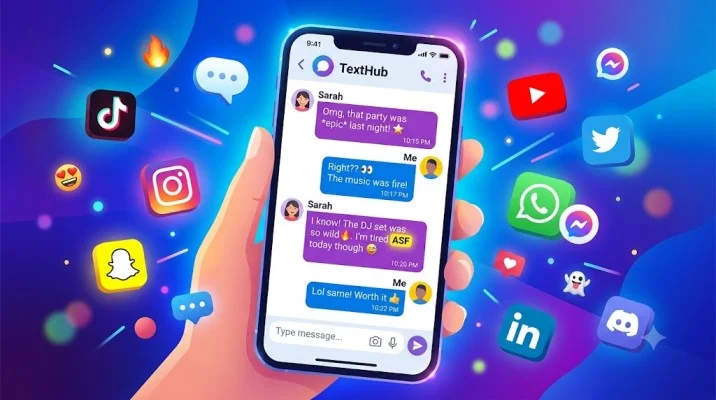
You might receive a message that says, “I’m tired ASF” or “That movie was funny ASF,” and wonder what ASF meaning in text actually is. In most online conversations, ASF means “as f*,”** an informal slang expression people use to strongly emphasize an adjective or feeling. The exact wording is often censored in writing, but the intention is simply to add extra emphasis.
Understanding the context is important because ASF is almost always used in casual conversations, social media posts, and text messages. Below, you’ll learn what ASF means, how people use it across different platforms, when it’s appropriate, and how to respond naturally.
What Does ASF Mean?
The most common ASF meaning in text is “as f*.”** It is an internet slang abbreviation used to emphasize how strong, intense, or noticeable something is.
| Detail | Explanation |
|---|---|
| Most Common Meaning | As f*** |
| Full Form | As f*** |
| Tone | Casual, emphatic, expressive |
| Common Platforms | Text messages, TikTok, Snapchat, Instagram, X |
| Formal or Informal | Informal |
For example:
“I’m hungry ASF.”
This simply means the person is extremely hungry, not that they’re using a separate word or phrase.
The Main Meaning of ASF
ASF is shorthand for “as f*.”** Rather than writing the full phrase, many people shorten it to ASF in texts, comments, captions, and chats.
People typically place ASF after an adjective.
Examples include:
- Cold ASF
- Funny ASF
- Busy ASF
- Happy ASF
- Loud ASF
The abbreviation adds emphasis in the same way someone might say “really,” “super,” or “extremely,” but with a stronger and more casual tone.
Example
Friend: “That test was hard ASF.”
Meaning: The speaker thought the test was extremely difficult.
Because the phrase contains profanity in its full form, many people prefer writing ASF instead of spelling it out.
Alternative Meanings of ASF
In everyday texting and social media, ASF almost always means “as f*.”** However, in other contexts, the same letters can represent different organizations or technical abbreviations.
| Meaning | Context | Tone | Example |
|---|---|---|---|
| As f*** | Texting and internet slang | Casual | “I’m excited ASF.” |
| Organization abbreviations | Professional or official contexts | Neutral | Depends on the organization name |
Unless you’re reading a document, business email, or technical discussion, the slang meaning is usually the correct interpretation.
How Context Changes the Meaning
Context tells you exactly how ASF is being used.
Pay attention to:
- The words immediately before ASF
- The platform
- Your relationship with the sender
- Emojis
- Overall tone
Example 1
“I’m sleepy ASF 😴”
Meaning: Extremely tired.
Example 2
“That concert was loud ASF.”
Meaning: The concert was extremely loud.
Example 3
“She’s happy ASF 😂”
Meaning: She is very happy, with the laughing emoji adding a playful tone.
A simple adjective followed by ASF almost always indicates emphasis rather than a different definition.
ASF Meaning on Different Platforms
Although the meaning of ASF stays mostly the same, the way people use it can vary slightly depending on the platform.
Text Messages
In text conversations, ASF usually emphasizes an emotion, opinion, or situation.
Example:
Friend: “I’m bored ASF.”
Meaning: They’re saying they’re extremely bored.
Tone: Casual and conversational.
TikTok, Instagram, and X
On social media, ASF often appears in captions, comments, and memes to exaggerate reactions or experiences.
Example:
“This outfit is cute ASF.”
Meaning: The person thinks the outfit is extremely cute.
Tone: Expressive, trendy, and informal.
Snapchat
On Snapchat, ASF is commonly used in private chats or story replies.
Example:
“You look tired ASF.”
Meaning: The sender thinks you look very tired.
Tone: Usually playful, though it can sound rude if you aren’t close.
Discord and Gaming Chats
Gamers often use ASF to describe gameplay, teammates, or reactions.
Example:
“That boss is hard ASF.”
Meaning: The boss is extremely difficult to defeat.
Tone: Casual and expressive.
Real Conversation Examples
Friends
Person A: “That pizza was good ASF.”
Person B: “I know. We should order it again.”
Meaning: The pizza tasted extremely good.
Classmates
Person A: “This homework is confusing ASF.”
Person B: “Let’s figure it out together.”
Meaning: The assignment is very confusing.
Family
Person A: “It’s cold ASF outside.
Person B: “Grab a jacket before you leave.”
Meaning: The weather is extremely cold.
Social Media
Person A: “Vacation was relaxing ASF.”
Person B: “Now I want a trip too.”
Meaning: They found the vacation extremely relaxing.
Gaming Chat
Person A: “That final level is hard ASF.
Person B: “It took me five tries.”
Meaning: The level is extremely difficult.
Tone and Emotional Meaning
ASF isn’t automatically rude. Its tone depends on the conversation, your relationship with the other person, and the words surrounding it.
Is ASF Rude?
Not necessarily.
Among friends, it’s usually just a way to add emphasis.
Example:
“I’m tired ASF.”
This normally sounds casual rather than offensive.
However, using ASF with insults can make a message sound much harsher.
Example:
“You’re annoying ASF.”
That comes across as much more aggressive.
Is ASF Funny?
Often, yes.
People frequently use ASF in memes, jokes, and exaggerated reactions.
Examples include:
- “I’m broke ASF.”
- “This cat is lazy ASF.”
- “That movie was scary ASF.”
The exaggeration is part of the humor.
Is ASF Offensive?
Because ASF stands for “as f*,”** it contains implied profanity.
Many people don’t mind seeing it in casual chats, but it’s best avoided when speaking with:
- teachers
- managers
- clients
- strangers
- professional contacts
How to Reply to ASF
Your reply should match the conversation instead of responding to the abbreviation itself.
Friendly Replies
- “Haha, I can tell!”
- “Same here.”
- “I don’t blame you.”
- “That sounds rough.”
- “I’d feel the same.”
Funny Replies
- “That’s an understatement.”
- “You’re not kidding.”
- “Tell me something I don’t know.”
- “Sounds like a skill issue.”
- “You survived though.”
Replies When You’re Confused
If you don’t understand what someone means, simply ask.
- “What do you mean by ASF?”
- “Can you explain that?”
- “I’m not familiar with that abbreviation.”
When to Use ASF
ASF works best in relaxed, informal conversations where everyone understands internet slang.
Good situations include:
- Text messages with friends
- Group chats
- TikTok comments
- Instagram captions
- Snapchat conversations
- Gaming chats
- Casual social media posts
If you’re unsure whether the other person knows the slang, writing “really” or “extremely” may be clearer.
When to Avoid ASF
Even though ASF is common online, there are situations where clearer language is a better choice.
Avoid using it in:
- Professional emails
- Job applications
- Business communication
- Academic papers
- Customer support messages
- Formal announcements
- Serious conversations where profanity could seem disrespectful
Replacing ASF with words like very, really, or extremely creates a more professional tone.
Common Mistakes
| Common Mistake | Correct Understanding |
|---|---|
| Thinking ASF has only one universal meaning | It usually means “as f***” in slang but may represent organizations in other contexts. |
| Using ASF in professional communication | It is best reserved for casual conversations. |
| Assuming ASF is always rude | It is often friendly or humorous among people who know each other. |
| Ignoring context | The surrounding words usually reveal the intended meaning. |
Similar Slang Terms
| Term | Meaning | Main Difference |
|---|---|---|
| AF | As f*** | More common spelling than ASF |
| FR | For real | Shows agreement instead of emphasis |
| NGL | Not gonna lie | Introduces an honest opinion |
| IMO | In my opinion | Expresses a personal viewpoint |
| TBH | To be honest | Signals honesty rather than intensity |
Origin and Popularity
The exact origin of ASF as internet slang is unclear, but it developed as a shortened way to write “as f*”** in online conversations.
Over time, it became common in texting, memes, gaming chats, and social media because it’s quick to type and instantly recognizable to many internet users.
Although the abbreviation is widely understood, not everyone is familiar with it, so considering your audience is always a good idea.
Quick Recap
Here are the key things to remember about ASF meaning in text:
- ASF most commonly means “as f*”** and is used to add strong emphasis to an adjective or feeling.
- You’ll most often see it in text messages, TikTok, Snapchat, Instagram, X, and gaming chats.
- The meaning usually stays the same across platforms, but the context and surrounding words tell you exactly how it’s being used.
- ASF is best suited for casual conversations and should generally be avoided in formal or professional communication.
- When replying, respond to the message itself rather than the abbreviation unless you need clarification.
Frequently Asked Questions
What does ASF mean in text?
ASF most commonly means “as f*,”** an informal slang expression used to emphasize a feeling, opinion, or description.
What does ASF stand for?
ASF usually stands for “as f*”** in texting and social media, although it can represent different organizations in non-slang contexts.
What does ASF mean on TikTok?
On TikTok, ASF usually means “as f*”** and is used to make captions, comments, or reactions sound stronger or more expressive.
Is ASF rude?
ASF is generally casual rather than rude, but because it implies profanity, it may be inappropriate in formal or professional conversations.
Can ASF have different meanings?
Yes, ASF can represent organizations or technical abbreviations outside texting, but in casual online conversations it almost always means “as f*.”**
Final Thoughts
The ASF meaning in text is straightforward once you understand the context. In most messages, ASF stands for “as f*”** and simply adds extra emphasis to a word or feeling, making expressions sound stronger and more emotional. you see it in a text, TikTok comment, Snapchat message, or gaming chat, the surrounding conversation usually makes its meaning clear. Use ASF when you’re chatting casually with people who understand internet slang, and choose clearer, more formal language when the situation calls for it. Knowing when and where to use it helps you communicate naturally while avoiding misunderstandings.