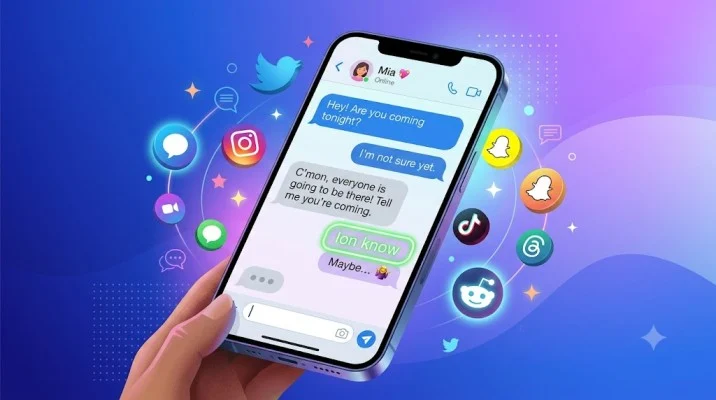
You might receive a message saying “ion know,” “ion care,” or “ion think so” and wonder if “ion” has something to do with science. In most text messages and social media conversations, it does not. The ion meaning in text is usually a casual way of writing or saying “I don’t.” Understanding the context helps you avoid confusion because “ion” can also refer to a scientific term in other situations.
This guide explains the most common meaning, where you’ll see it, how people use it, suitable replies, and the few alternative meanings you should know.
What Does Ion Mean in Text?
In texting and online slang, ion most commonly means “I don’t.” It is not an official acronym or abbreviation with a fixed full form. Instead, it is a phonetic spelling that reflects how many people casually pronounce “I don’t” in fast speech.
| Detail | Explanation |
|---|---|
| Most Common Meaning | I don’t |
| Full Form | None. It represents the spoken phrase “I don’t.” |
| Tone | Casual and informal |
| Common Platforms | Text messages, TikTok, Snapchat, Instagram, X, Discord |
| Formal or Informal | Informal |
For example:
Person A: “You going tonight?”
Person B: “Ion know yet.”
Meaning: “I don’t know yet.”
This style of writing is popular because it feels quick, conversational, and natural in casual chats.
Understanding the Main Meaning of Ion
When someone types ion, they are usually replacing the words “I don’t.” The pronunciation of “I don’t” often sounds like “ion” in casual speech, especially in fast conversations. Online, that pronunciation has become a common written slang term.
Here are a few examples:
- Ion care.
Meaning: I don’t care. - Ion think that’s true.
Meaning: I don’t think that’s true. - Ion wanna go.
Meaning: I don’t want to go.
Notice that ion is almost always followed by another word such as know, care, think, want, or see. That pattern makes it easy to recognize its meaning.
The tone is usually relaxed, friendly, and conversational rather than rude.
Alternative Meanings of Ion
Although ion usually means “I don’t” in texting, it can have completely different meanings depending on the conversation.
| Meaning | Context | Tone | Example |
|---|---|---|---|
| I don’t | Texting and social media slang | Casual | “Ion know.” |
| Electrically charged atom or molecule | Science and chemistry | Technical | “An ion carries a positive or negative charge.” |
The slang meaning is far more common in casual online conversations, while the scientific meaning appears in educational or technical discussions.
How Context Changes the Meaning
Context tells you whether ion is slang or a scientific word.
If someone says:
“Ion know what happened.”
They clearly mean “I don’t know.”
If someone says:
“Sodium forms a positive ion.”
They are talking about chemistry.
Here are three more examples:
Example 1
“Ion care what they said 😂”
Meaning: The person means “I don’t care,” and the laughing emoji keeps the tone light.
Example 2
“Ion think that’s a good idea.”
Meaning: The speaker politely disagrees.
Example 3
“The ion moved through the solution.”
Meaning: This is scientific language, not internet slang.
Context, surrounding words, and the topic of conversation make the intended meaning clear.
[Internal Link: Add a related slang article here]
Ion Meaning on Different Platforms
Text Messages and WhatsApp
On text messages and WhatsApp, ion almost always means “I don’t.”
Example:
“Ion remember what time it starts.”
The tone is casual and suitable for conversations with friends or family.
TikTok and Instagram
On TikTok and Instagram, users often write ion in captions, comments, and replies because it matches casual speech.
Example:
“Ion think anyone noticed.”
The meaning remains “I don’t think.”
Snapchat
Snapchat users commonly use ion in quick conversations because messages are short and informal.
Example:
“Ion got time today.”
The message simply means “I don’t have time today.”
Discord and Gaming Chats
In gaming communities and Discord servers, ion still usually means “I don’t.”
Example:
“Ion know where the boss spawned.”
Players use it to type quickly during fast conversations.
Real Conversation Examples
Friends
Person A: “Did you finish the movie?”
Person B: “Ion even start it.”
Meaning: The speaker hasn’t started watching it.
Family
Person A: “Want pizza tonight?”
Person B: “Ion feel like pizza.”
Meaning: The person doesn’t want pizza.
Group Chat
Person A: “Who’s bringing snacks?”
Person B: “Ion got anything at home.”
Meaning: The speaker doesn’t have snacks available.
Social Media
Person A: “That ending was amazing.”
Person B: “Ion agree.”
Meaning: The person respectfully disagrees.
Gaming
Person A: “Where are we landing?”
Person B: “Ion care. You choose.”
Meaning: The player has no preference.
Tone and Emotional Meaning
The word ion is not automatically rude. Its tone depends on the rest of the message.
Is Ion Rude?
Usually, no.
Messages like “Ion know” or “Ion think so” sound neutral and casual.
However, messages like “Ion care” may sound dismissive if they are sent without explanation or empathy.
Is Ion Funny?
Sometimes.
People often use it in memes, jokes, and humorous posts because it mimics everyday speech and gives messages a relaxed, conversational feel.
Is Ion Offensive?
No.
The word itself is not offensive. Any negative feeling comes from the overall message rather than the slang term itself.
How to Reply to Ion
Friendly Replies
- “No worries.”
- “That’s okay.”
- “Let me know later.”
- “Sounds good.”
- “I understand.”
Replies When You Need Clarification
- “What do you mean?”
- “Can you explain a little more?”
- “Are you saying you don’t know?”
Funny Replies
- “Fair enough 😂”
- “Guess we’ll figure it out.”
- “That’s one way to answer.”
When to Use Ion
The slang ion works best in casual conversations where everyone understands informal texting language.
Good situations include:
- Texting friends
- Group chats
- Snapchat conversations
- TikTok comments
- Instagram captions and replies
- Discord and gaming chats
- Casual conversations with classmates
For example:
Friend: “You coming later?”
You: “Ion know yet. I’ll text you.”
This feels natural because the conversation is informal.
Remember that not everyone is familiar with internet slang. If you’re talking to someone older, a teacher, or a new acquaintance, writing “I don’t know” instead of “ion know” is usually clearer.
[Internal Link: Add a related slang article here]
When to Avoid Ion
Although ion is common online, there are situations where standard English is a better choice.
Avoid using ion in:
- Professional emails
- Job applications
- Business communication
- Academic essays
- School assignments
- Formal presentations
- Customer support messages
- Conversations where clarity is important
For example:
❌ “Ion think the report is finished.”
✅ “I don’t think the report is finished.”
Using complete words in formal settings makes your writing appear more professional and avoids confusion.
Common Mistakes
Many people misunderstand ion meaning in text because the same word exists in science.
| Common Mistake | Correct Understanding |
|---|---|
| Thinking ion is always scientific | In texting, it usually means “I don’t.” |
| Assuming it is an acronym | It is a phonetic spelling, not an official abbreviation. |
| Using it in formal writing | It is best reserved for casual conversations. |
| Ignoring the conversation topic | Context quickly reveals whether it means slang or chemistry. |
Similar Slang Terms
If you’ve seen ion, you’ve probably come across similar texting slang.
| Term | Meaning | Main Difference |
|---|---|---|
| IDK | I don’t know | Standard internet abbreviation |
| IDC | I don’t care | Specifically expresses indifference |
| IMO | In my opinion | Introduces a personal opinion |
| FR | For real | Shows agreement or sincerity |
| NGL | Not gonna lie | Introduces an honest opinion |
While these terms are abbreviations, ion is different because it represents how “I don’t” sounds when spoken casually.
Origin and Popularity
The exact origin of ion as internet slang is uncertain. It likely developed from the natural pronunciation of “I don’t” in casual spoken English before becoming common in online conversations.
Today, you’ll often see it in text messages, memes, social media comments, and short-form conversations where people write the way they naturally speak.
Unlike the scientific word ion, this slang version has no official full form.
Quick Recap
- Ion most commonly means “I don’t” in text messages and online chats.
- It is a phonetic spelling rather than an acronym.
- Context tells you whether someone means internet slang or the scientific term.
- It works best in casual conversations with people familiar with online slang.
- In formal writing, use “I don’t” instead of “ion.”
Frequently Asked Questions
What does ion mean in text?
It usually means “I don’t” and is an informal spelling based on casual pronunciation.
What does ion stand for?
It does not officially stand for anything because it is a phonetic spelling rather than an acronym.
What does ion mean on TikTok?
On TikTok, ion almost always means “I don’t” in captions, comments, and replies.
How should you reply to ion?
Reply based on the conversation, treating it as “I don’t” and responding naturally to the person’s message.
Can ion have different meanings?
Yes, it usually means “I don’t” in texting, while in science it refers to an electrically charged atom or molecule.
Final Thoughts
The ion meaning in text is usually simple once you recognize the context. In most online conversations, it means “I don’t,” making it a casual way to write the phrase exactly as it sounds in everyday speech. The same word also exists in chemistry, but surrounding words make the intended meaning easy to identify. If you’re chatting with friends on social media or through text messages, you’ll likely see ion used naturally. For formal communication, however, writing the complete phrase “I don’t” remains the clearer and more professional choice.