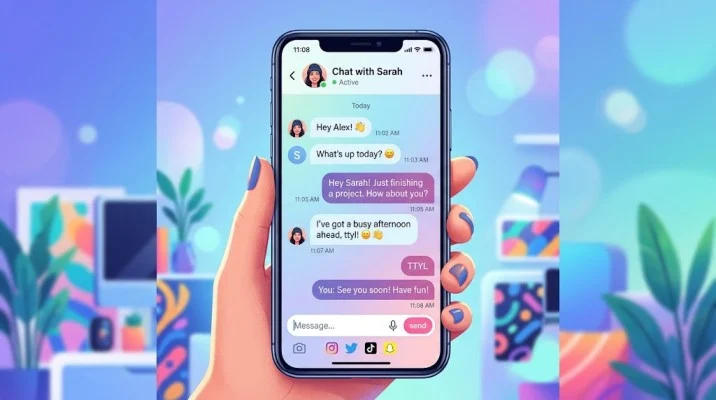
One short message can end a conversation without sounding rude, and that is exactly why abbreviations have become a big part of online communication. TTYL meaning in text is one of the most searched phrases because people often come across it in chats, social media, games, or text messages and want to know what it really means. Understanding TTYL meaning in text helps you reply with confidence and avoid awkward misunderstandings when chatting with friends, family, or coworkers.
Internet slang changes quickly, but some expressions remain popular for years because they are simple, friendly, and save time. TTYL meaning in text is one of those timeless abbreviations that appears across different platforms and conversations. Once you know when and how to use it, you’ll recognize it instantly and communicate more naturally wherever it appears.
What Does TTYL Mean?
The TTYL meaning in text is “Talk To You Later.” People use it when ending a conversation without implying that the relationship or discussion is over. It simply means they plan to chat again in the future.
| Detail | Explanation |
|---|---|
| Most Common Meaning | Talk To You Later |
| Full Form | Talk To You Later |
| Tone | Friendly, casual, polite |
| Common Platforms | Text messages, WhatsApp, Snapchat, Instagram, Discord |
| Formal or Informal | Informal |
Unlike a simple “bye,” TTYL suggests that the conversation is only paused, not finished.
What Does TTYL Stand For?
TTYL is the abbreviation for “Talk To You Later.”
People usually send it when they:
- Need to leave the conversation
- Are going to work or school
- Are busy with something else
- Want to end the chat politely
- Expect to message again soon
For example:
Alex: “I have a meeting in five minutes. TTYL!”
Here, Alex is simply letting the other person know they have to leave but intends to continue chatting later.
The tone is friendly and reassuring rather than abrupt.
How People Normally Use TTYL
TTYL works as a casual sign-off between people who already know each other. Friends, classmates, siblings, partners, and coworkers who communicate informally often use it instead of typing a full goodbye.
You might see messages like:
- “I have to finish my homework. TTYL!”
- “Heading to bed. TTYL 😊”
- “My phone is dying. TTYL.”
Each message ends the conversation politely while keeping the connection open.
Alternative Meanings of TTYL
For most people, TTYL almost always means “Talk To You Later.” Unlike many internet abbreviations, it has very few widely recognized alternative meanings.
In some niche communities or internal workplace chats, people may create temporary meanings for TTYL, but these are not common and usually rely on specific context. If you see TTYL in everyday texting or social media, you can safely assume it means Talk To You Later.
How Context Changes the Meaning
Although the definition stays the same, the emotional tone of TTYL changes depending on the conversation.
Friendly Conversation
Friend: “I’m going to the gym now. TTYL!”
Meaning: They’ll message you after they’re finished.
After a Long Chat
Person A: “Thanks for listening today.”
Person B: “Anytime. TTYL ❤️”
Meaning: The conversation ends warmly and positively.
During a Busy Day
Coworker: “Need to jump into another meeting. TTYL.”
Meaning: They’re ending the chat because they’re busy, not because they’re upset.
[Internal Link: Add a related slang article here]
TTYL Meaning on Different Platforms
Text Messages and WhatsApp
The meaning stays exactly the same. It’s simply a casual goodbye.
Example:
“I have dinner now. TTYL!”
The tone is friendly and relaxed.
Snapchat and Instagram
People often send TTYL before leaving a chat or ending a conversation in direct messages.
Example:
“Going offline. TTYL 😊”
Adding an emoji usually makes the message feel warmer.
Discord and Gaming Chats
Gamers often use TTYL when leaving a voice chat or game session.
Example:
“Great match everyone. TTYL.”
Here it means they are signing off but expect to play again later.
Real Conversation Examples
Friends
Person A: “Want to watch a movie tonight?”
Person B: “Sure! I have class first. TTYL.”
Meaning: They’ll continue planning later.
Family
Mom: “Drive safely.”
You: “Will do. TTYL.”
Meaning: A warm goodbye until later.
Classmates
Student A: “Did you finish the assignment?”
Student B: “Almost. I’ll send it later. TTYL.”
Meaning: The conversation is paused until they’re available.
Group Chat
Friend: “I’ve got to get back to work. TTYL everyone!”
Meaning: They’re leaving the conversation politely.
Dating Conversation
Person A: “Sweet dreams!”
Person B: “Thanks 😊 TTYL.”
Meaning: A friendly goodbye with the expectation of talking again.
Tone and Emotional Meaning
TTYL is generally seen as a positive and friendly expression, but the tone can shift slightly based on context.
Is TTYL Rude?
No. TTYL is not considered rude when used in casual conversations.
However, sending only “TTYL” without responding to an important message may seem abrupt.
For example:
“I can’t answer right now. TTYL!”
sounds much warmer than simply sending:
“TTYL”
Is TTYL Friendly?
Yes. Most people use TTYL as a polite way to end a conversation while showing they expect to speak again.
Emojis such as 😊, ❤️, or 👋 often make the tone even friendlier.
Is TTYL Flirty?
Not by itself.
In romantic conversations, the flirtiness usually comes from the surrounding messages rather than the abbreviation itself.
For example:
“Can’t wait to see you tomorrow ❤️ TTYL”
feels much more affectionate than:
“TTYL.”
How to Reply to TTYL
Your reply depends on your relationship with the sender and the conversation. Since TTYL usually means “Talk To You Later,” a simple, friendly response is often the best choice.
Friendly Replies
- “Sounds good. Talk to you later!”
- “See you later!”
- “Have a great day!”
- “Catch you later!”
- “Take care!”
Polite Replies
- “No problem. Talk soon.”
- “Good luck with everything!”
- “See you when you’re free.”
- “Thanks for letting me know.”
- “Have a nice evening!”
Replies When You’re Confused
If you’re unfamiliar with the abbreviation, it’s perfectly fine to ask.
- “Sorry, what does TTYL mean?”
- “Do you mean we’ll talk later?”
- “I haven’t seen that abbreviation before.”
These responses keep the conversation natural without making assumptions.
When to Use TTYL
TTYL works best in casual conversations where both people are comfortable using texting abbreviations.
Good situations include:
- Text messages with friends
- Family conversations
- WhatsApp chats
- Snapchat messages
- Instagram direct messages
- Discord conversations
- Group chats
- Casual conversations with classmates
It’s a simple way to end a conversation while suggesting you’ll reconnect later.
When to Avoid TTYL
Although TTYL is widely understood, it’s not suitable everywhere.
Avoid using it in:
- Professional emails
- Job applications
- Client communication
- Academic reports
- Formal business messages
- Messages to someone unfamiliar with internet slang
- Sensitive conversations where a clear response is more appropriate
In these situations, writing “I’ll talk to you later” is often clearer and more professional.
Common Mistakes
| Common Mistake | Correct Understanding |
|---|---|
| Thinking TTYL means goodbye forever | It usually means you’ll talk again later. |
| Using it in formal emails | It’s intended for casual conversations. |
| Assuming it’s rude | It’s generally friendly unless the surrounding conversation suggests otherwise. |
| Believing it has many common meanings | “Talk To You Later” is by far the most recognized meaning. |
[Internal Link: Add a related slang article here]
Similar Slang Terms
| Term | Meaning | Main Difference |
|---|---|---|
| BRB | Be Right Back | Suggests a very short break. |
| GTG | Got To Go | Focuses on leaving immediately. |
| CYA | See You | A casual goodbye without specifically mentioning another conversation. |
| BBL | Be Back Later | Implies returning later, usually after a longer break. |
| CU | See You | A shorter casual farewell. |
These abbreviations are all used when ending conversations, but each carries a slightly different expectation about when you’ll return.
Origin and Popularity
The exact first use of TTYL is difficult to verify, but it became widely recognized through early internet chat rooms, instant messaging services, and SMS texting. As mobile messaging and social media grew, the abbreviation remained popular because it saved time while sounding friendly.
Today, TTYL continues to appear across texting apps, messaging platforms, and online communities, even though many people also type the full phrase “Talk to you later.”
Quick Recap
- TTYL stands for Talk To You Later.
- It’s a casual, friendly way to end a conversation.
- The meaning is consistent across most texting and social media platforms.
- Context, emojis, and previous messages can influence the tone.
- A simple, warm reply is usually the most natural response.
Frequently Asked Questions
What does TTYL mean in text?
TTYL means Talk To You Later and is commonly used as a friendly way to end a casual conversation.
What does TTYL stand for?
TTYL stands for Talk To You Later, showing that the conversation is ending for now but may continue later.
Is TTYL rude?
No, TTYL is generally polite and friendly, though sending it alone during a serious discussion may seem abrupt.
How should you reply to TTYL?
A friendly response such as “Talk to you later,” “See you soon,” or “Take care” fits most casual conversations.
Can TTYL have different meanings?
In everyday texting, TTYL almost always means Talk To You Later, while other meanings are uncommon and highly context specific.
Final Thoughts
The TTYL meaning in text is straightforward: Talk To You Later. It’s a friendly, informal way to pause a conversation while showing that you expect to chat again. you’re texting friends, messaging classmates, or chatting on social media, TTYL keeps conversations relaxed and polite. As with most internet slang, paying attention to the surrounding messages, tone, and relationship helps you understand the intended meaning. Once you know the context, using and replying to TTYL becomes simple and natural.
Discover More Post:
22+ Similes Examples for Grade 4: Fun and Creative …
20+ Similes and Metaphors for Excited: Creative Ways to …