Quick answer:
Luxor most commonly refers to a historic city in Egypt, famous for ancient temples, tombs, and monuments.
It can also appear as a name, place name, brand, or cultural reference, depending on the context.
The word Luxor meaning can be confusing when you see it outside a travel guide or history book. For most people, Luxor is the name of a famous city in southern Egypt. It is known for its ancient temples, royal tombs, and strong connection to the history of ancient Egypt.
If you are a student, traveler, history fan, writer, social media user, or someone who came across “Luxor” online, knowing the context can help you understand the word correctly. You may see Luxor used in conversations about Egypt, tourism, archaeology, movies, games, hotels, or even business names.
Understanding the word is useful because Luxor is more than just a modern city name. It is closely linked to the ancient city of Thebes and some of the world’s most famous Egyptian monuments. Let’s explore its meaning, history, uses, cultural importance, and common misunderstandings.
Definition & Meaning
The most common Luxor meaning is the name of a city in southern Egypt, located along the Nile River.
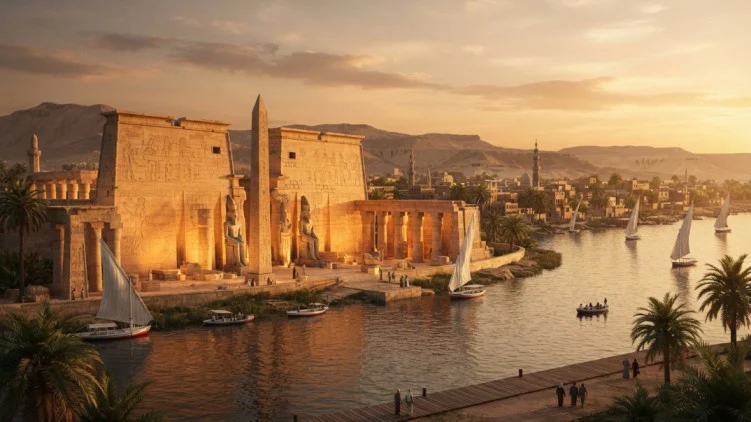
Luxor is famous for its connection to ancient Thebes, one of the most important cities in ancient Egyptian history. The area contains major archaeological sites, including temples, tombs, and monuments.
What does Luxor mean?
The modern name Luxor comes from the Arabic word al-Uqsur or al-Qusur, commonly understood as meaning “the palaces” or “the castles.” The name reflects the impressive ancient buildings and ruins found in the area.
The city’s ancient name was Thebes.
For example:
Person A: “Where are you going on vacation?”
Person B: “Luxor, Egypt.”
Person A: “Isn’t that the place with the ancient Egyptian temples?”
Person B: “Exactly. It’s famous for them.”
Luxor in simple words
You can think of Luxor as:
- A historic city in Egypt
- A major archaeological destination
- The location of ancient Thebes
- A place filled with temples and tombs
- A famous center of ancient Egyptian history
Luxor and ancient Egypt
Luxor is especially important because many famous monuments connected to ancient Egyptian civilization are located in and around the city.
These include:
- Karnak Temple
- Luxor Temple
- Valley of the Kings
- Valley of the Queens
- Colossi of Memnon
So, when someone says “Luxor,” they may not simply mean a modern city. They may be referring to the wider archaeological landscape associated with ancient Egyptian civilization.
Background & History
The history behind Luxor is much older than the modern name suggests.
The region was once part of Thebes, a powerful ancient Egyptian city. Thebes became an important political and religious center, especially during periods when it served as a capital of ancient Egypt.
The ancient city developed around the Nile and became closely connected with the worship of important Egyptian gods.
From Thebes to Luxor
Ancient Thebes was known in Egyptian language as Waset. Greek writers later used the name Thebes.
Over many centuries, the area changed as different rulers, religions, and cultures influenced Egypt.
The modern name Luxor developed from Arabic terminology used after the Arab conquest of Egypt.
The Arabic name was associated with the area’s impressive ancient structures.
Why is Luxor historically important?
Luxor contains an unusually large concentration of ancient Egyptian monuments.
The eastern side of the Nile was associated mainly with temples and city life, while the western side became famous for royal burial sites.
This gives the region a fascinating historical pattern.
Student: “Why are there so many tombs around Luxor?”
Teacher: “Because the area was closely connected with ancient Egyptian royal and religious traditions.”
Luxor today
Modern Luxor is both a living Egyptian city and a major archaeological destination.
Visitors travel there to see ancient temples, explore tombs, learn about pharaohs, and experience the Nile landscape.
The city’s historical importance has also made Luxor a familiar name around the world.
Usage in Various Contexts
The word Luxor can appear in many different contexts. Its meaning usually becomes clear from the words around it.
In travel conversations
Luxor is commonly mentioned when people discuss trips to Egypt.
Alex: “Which Egyptian city are you visiting?”
Sara: “I’m spending a few days in Luxor.”
Alex: “Are you visiting the Valley of the Kings?”
Sara: “Yes, that’s one of my main plans.”
On social media
People may use Luxor in captions about Egyptian history, travel, photography, or archaeology.
For example:
“Sunrise over the Nile in Luxor was unforgettable.”
A hashtag or location tag may also identify Luxor as the place where a photo was taken.
In education
Teachers and students often mention Luxor when studying:
- Ancient Egypt
- Pharaohs
- Egyptian temples
- Archaeology
- Ancient religions
- Historical architecture
In gaming
Luxor can also appear in video games or online communities that use Egyptian themes.
Player A: “This level has a Luxor-style Egyptian setting.”
Player B: “Yeah, the temples and desert theme make it feel ancient.”
Here, Luxor may be used as a reference to Egyptian culture rather than the actual city.
In casual conversation
Someone may simply use Luxor as a travel destination or historical reference.
“I’d love to see Luxor someday.”
In this case, the intended meaning is straightforward: the Egyptian city.
Common Misconceptions & Clarifications
Several misunderstandings can arise when people first encounter the word Luxor.
Misconception 1: Luxor was the name of an ancient pharaoh
No. Luxor is not the name of a pharaoh.
It is the modern name of a city in Egypt.
The region has strong connections with many pharaohs, which may cause confusion.
Misconception 2: Luxor and Thebes are completely different places
Not exactly.
Modern Luxor is closely associated with the location of ancient Thebes.
The names belong to different historical and linguistic periods.
Misconception 3: Luxor means “pharaoh”
It does not.
The name is associated with Arabic terminology referring to palaces or castles, while the ancient city had different names.
Misconception 4: Luxor is only a tourist attraction
Luxor is a real modern city where people live and work.
Tourism is very important, but the city is not simply an archaeological site.
Misconception 5: Every use of “Luxor” refers to Egypt
Usually, the Egyptian city is the main reference. However, Luxor can also be used as a name for businesses, hotels, products, games, or other places.
Context matters.
Similar Terms & Alternatives
Several names and terms are closely connected to Luxor.
| Term | Meaning | Connection to Luxor |
|---|---|---|
| Luxor | Modern Egyptian city | Main modern name |
| Thebes | Ancient Egyptian city | Historical name associated with the region |
| Waset | Ancient Egyptian name | Ancient name for Thebes |
| Karnak | Temple complex | Located in Luxor |
| Luxor Temple | Ancient temple | Major monument in the city |
| Valley of the Kings | Royal burial area | Located near Luxor |
| Ancient Egypt | Historic civilization | Luxor was a major center |
| Nile | Major Egyptian river | Luxor lies along it |
Luxor vs. Thebes
These names are closely connected, but they should not be treated as identical in every context.
Thebes is the ancient historical name.
Luxor is the modern city name.
So, if someone says:
“Thebes was an important city in ancient Egypt.”
They are discussing history.
If someone says:
“I’m traveling to Luxor.”
They are talking about the modern Egyptian city.
How to Respond to This Term
If someone says Luxor in a conversation, your response depends on what they mean.
Casual response
“Oh, Luxor in Egypt? That’s famous for its ancient temples!”
This works when someone mentions the city.
Travel response
“That sounds amazing. Are you planning to visit the Valley of the Kings?”
This keeps the conversation going.
Educational response
“Luxor is closely associated with ancient Thebes, right?”
This is useful during a history discussion.
Curious response
“What made you interested in Luxor?”
This works when you are unsure why the person mentioned it.
If you are unsure
“Do you mean Luxor, Egypt?”
This is the safest option when Luxor could refer to something else.
Regional or Cultural Differences
The meaning of Luxor is generally stable because it is a proper place name.
However, pronunciation and related historical names can differ across languages.
English speakers commonly pronounce it roughly as “LUK-sor.”
Arabic speakers use the Arabic name connected with the city’s historical naming tradition.
Different languages may also use their own versions of the name Thebes when discussing the ancient city.
Why cultural context matters
Luxor is strongly connected with Egyptian heritage.
For Egyptians and people familiar with Egyptian history, the word may immediately suggest:
- Ancient temples
- Pharaohs
- The Nile
- Archaeological discoveries
- Royal tombs
- Ancient Thebes
For someone unfamiliar with Egypt, it may simply sound like a foreign place name.
Luxor as a cultural symbol
Around the world, Luxor has become a symbol of ancient Egyptian history and archaeology.
That is why the name frequently appears in tourism, documentaries, books, games, museums, and cultural discussions.
Comparison with Similar Terms
It helps to compare Luxor with other famous Egyptian locations.
| Name | Main identity | Famous for |
|---|---|---|
| Luxor | City | Ancient temples and Thebes |
| Cairo | Capital city | Modern Egypt and historic sites |
| Giza | City/area | Pyramids and Great Sphinx |
| Alexandria | Coastal city | Mediterranean history and ancient heritage |
| Aswan | Southern Egyptian city | Nile scenery and ancient sites |
| Abu Simbel | Archaeological site | Monumental temples |
Luxor vs. Giza
Giza is best known for the famous pyramids and Sphinx.
Luxor is best known for its temples, tombs, and ancient Theban heritage.
Both are major destinations for people interested in ancient Egypt, but their archaeological highlights are different.
Usage in Online Communities & Dating Apps
The word Luxor may appear online in travel groups, history forums, gaming communities, social media posts, and dating profiles.
On platforms such as Tinder, someone might mention Luxor as part of their travel history or dream destinations.
For example:
Match: “What’s your favorite place you’ve visited?”
You: “Luxor. I loved the history.”
Match: “That sounds incredible. What did you see?”
In travel communities, users may discuss:
- Luxor hotels
- Nile cruises
- Ancient temples
- Archaeological sites
- Travel experiences
- Photography
On platforms such as X, people may share photographs, historical facts, or travel stories connected to Luxor.
Tips for responding online
If someone mentions Luxor, do not assume they are discussing the city unless the context supports it.
You can ask:
“Do you mean Luxor in Egypt?”
That short question can prevent confusion.
Hidden or Offensive Meanings
Luxor does not have a widely recognized offensive or hidden meaning in standard English.
It is primarily a proper name associated with the Egyptian city.
However, context can change how any word is used online.
Someone might use Luxor as:
- A username
- A brand name
- A fictional location
- A game reference
- A hotel or business name
- A nickname
In those cases, the intended meaning may have nothing to do with Egypt.
Be careful with cultural references
Luxor is strongly connected with Egyptian history and culture. When discussing it, respectful language is important.
Avoid assuming that every Egyptian person has a personal connection to ancient Egyptian sites simply because they are from Egypt.
Also remember that ancient Egyptian civilization and modern Egyptian culture are related historically but are not exactly the same thing.
Suitability for Professional Communication
Luxor is completely appropriate in professional communication when you are referring to the city, historical region, tourism, archaeology, or another clearly identified proper name.
For example:
“Our research team will travel to Luxor next month.”
This is clear and professional.
You may also see the word in:
- Academic papers
- Travel documents
- Museum materials
- Archaeological reports
- Tourism websites
- Business communications
- Historical research
Use context when needed
If your audience may not recognize the place, provide additional information.
Instead of:
“The conference will be held in Luxor.”
You could write:
“The conference will be held in Luxor, Egypt.”
This is especially helpful for international readers.
Professional alternatives
There is no direct synonym for Luxor because it is a proper place name.
Depending on the historical context, you might use:
- Luxor, Egypt
- Ancient Thebes
- The Theban region
- The ancient Egyptian city of Thebes
Choose the term based on the time period you are discussing.
FAQs
1. What does Luxor mean?
Luxor is primarily the name of a city in southern Egypt. The modern name comes from Arabic terminology associated with palaces or castles.
2. Is Luxor the same as Thebes?
Luxor is the modern city associated with the location of ancient Thebes. The names belong to different historical and linguistic contexts.
3. Is Luxor a person’s name?
It can be used as a personal or fictional name, but its most famous meaning is the Egyptian city.
4. What is Luxor famous for?
Luxor is famous for ancient Egyptian temples, tombs, monuments, and archaeological sites, including the Karnak Temple complex, Luxor Temple, and Valley of the Kings.
5. Is Luxor a city in Egypt?
Yes. Luxor is a city in southern Egypt on the Nile River.
6. Does Luxor mean Pharaoh?
No. Luxor does not mean pharaoh. It is a modern place name with Arabic linguistic roots and strong connections to the ancient city of Thebes.
7. Why is Luxor important?
Luxor is important because the region contains some of the world’s most significant remains of ancient Egyptian civilization and was closely connected with ancient Thebes.
Conclusion
The Luxor meaning is simple at its core, but the history behind the name is fascinating. Luxor is a modern Egyptian city strongly connected with ancient Thebes, making it one of the world’s most important places for understanding ancient Egyptian civilization.
The name comes from Arabic terminology associated with palaces or castles, while the region has much older Egyptian and Greek historical names. Today, Luxor is known for its temples, royal tombs, archaeological sites, and Nile setting.
When you see Luxor online, in a conversation, or in a history lesson, context is still important. Most of the time, it refers to the Egyptian city, but it can also appear as a brand, username, fictional reference, or cultural name. Understanding these differences helps you recognize exactly what someone means and use the word correctly in both casual and professional communication.
Discover More Post:
What Does “Petite” Mean? Simple Definition & Examples in …
What Does “Cringe” Mean in Text, Slang & Social Media in 2026
What Does Soursop Mean and What Is This Fruit – Similixy.com