Quick Answer:
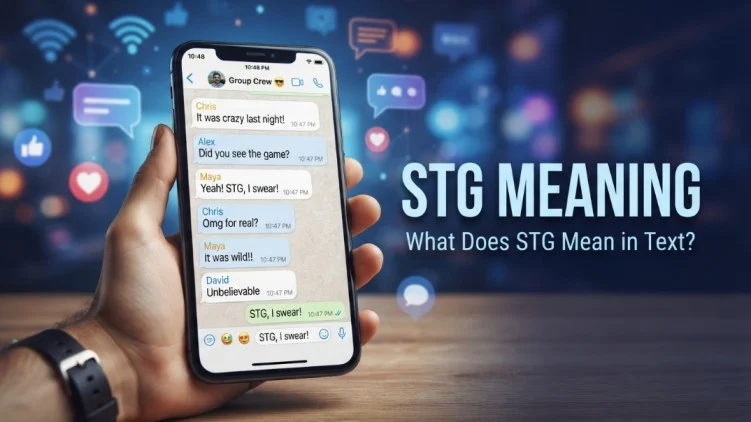
STG usually means “Swear to God” in texting and online slang. It is used to show that you are being serious, telling the truth, or strongly emphasizing a feeling.
You are texting a friend when they suddenly send, “STG, I didn’t do it!” You may know every other word in the sentence, but those three letters can make you stop and wonder what they mean. If you have seen STG on TikTok, Snapchat, Instagram, Discord, gaming chats, or in a group text, you are not alone.
For most people, STG means “Swear to God.” It is a short way to make a statement sound more serious, honest, emotional, or intense. Sometimes it sounds frustrated. Other times, it is playful or dramatic. The meaning depends on the conversation around it.
This guide is for anyone who wants to understand internet slang without guessing. Whether you are a student, parent, social media user, gamer, or someone chatting with friends online, knowing STG meaning can help you understand the tone behind a message.
Definition & Meaning
STG is most commonly an abbreviation for “Swear to God.” It is used in informal conversations to add strong emphasis to what someone is saying.
Think of it as a digital way to say:
- “I swear.”
- “I’m serious.”
- “I promise.”
- “Honestly, I’m telling the truth.”
- “I really mean it.”
For example:
“STG I left my phone on the table.”
The person is emphasizing that they are sure they left it there.
Another example:
“STG this is the best pizza I’ve ever had.”
Here, STG adds excitement and emphasis. The person is not necessarily making a formal oath. They are simply saying that they really mean what they are saying.
STG can appear at the beginning, middle, or end of a message. It can also be written in lowercase as “stg.” Both forms usually mean the same thing.
STG in Simple Sentences
“STG, I wasn’t there.”
Meaning: “I swear, I wasn’t there.”
“That movie was amazing stg.”
Meaning: “That movie was seriously amazing.”
“STG you scared me!”
Meaning: “I swear, you really scared me!”
The abbreviation can communicate several emotions. Someone may use it to show honesty, frustration, excitement, disbelief, or strong agreement.
It is important to remember that STG is mainly an informal expression. You are much more likely to see it in a text, DM, comment, or group chat than in a formal email or business report.
Background & History
The phrase “swear to God” is much older than the abbreviation STG. People have used expressions involving swearing or making an oath to emphasize truth for a very long time.
The abbreviation developed later as digital communication became more common. Texting created a need for shorter ways to express familiar phrases. Instead of typing the entire sentence “I swear to God,” users could simply type STG.
As texting and social media grew, abbreviations became a normal part of online communication. STG joined other short forms such as LOL, OMG, IDK, NGL, FR, and TBH.
Today, STG is especially common in casual digital communication. Recent slang references consistently identify “Swear to God” as its main texting meaning.
Interestingly, people do not always use STG as a literal religious oath. In many online conversations, it works more like an emphasis marker.
For example:
“STG this homework never ends.”
The person may simply be expressing frustration.
Likewise:
“STG that was hilarious 😂.”
The person is emphasizing how funny something was.
So, while the phrase comes from “Swear to God,” its modern online use is often casual rather than deeply religious.
The abbreviation has also become familiar among younger internet users and appears in social media comments, gaming discussions, memes, and everyday texting. Community examples show people using it naturally in casual online speech.
Usage in Various Contexts
STG can change tone depending on where it appears. Here are some common situations.
STG in Texting
Texting is probably the easiest place to encounter it.
“STG I didn’t eat your leftovers.”
The speaker is strongly denying something.
“I stg, you’re making me laugh too much.”
Here, the expression is playful.
STG on Social Media
You may see STG in comments or captions.
“STG this outfit looks perfect.”
The person is strongly emphasizing their opinion.
A TikTok comment might say:
“STG I watched this 20 times 😂.”
It means the person found the video extremely entertaining.
STG in Gaming
Gamers often use STG when reacting strongly to a game.
“STG that player was hiding behind the door the whole time.”
Or:
“STG this game hates me 😭.”
Here, STG adds frustration or humor. Gaming communities show examples of the abbreviation being used this way.
STG in Group Chats
Group chats can make the expression even more dramatic.
Friend 1: “Who ate my cake?”
Friend 2: “STG it wasn’t me.”
Friend 3: “You were literally standing next to it.”
Friend 2: “Okay… maybe it was me 😂.”
In this example, STG creates a playful sense of seriousness.
STG in Casual Conversation
Although it is primarily associated with texting, someone may also say “I swear to God” aloud. STG is simply the shortened written form.
Common Misconceptions & Clarifications
STG is easy to understand once you know its main meaning, but several misconceptions can cause confusion.
STG Does Not Always Mean Anger
Some people assume STG means someone is angry. Not necessarily.
“STG that puppy is adorable.”
This expresses excitement, not anger.
STG Does Not Always Mean a Literal Religious Oath
The phrase comes from “Swear to God,” but many people use the abbreviation casually.
“STG this sandwich is incredible.”
The person is probably emphasizing their opinion rather than making a serious religious statement.
STG Is Not the Same as ISTG
You may also see ISTG, which usually means “I Swear to God.”
The two expressions are closely related.
- STG = Swear to God
- ISTG = I Swear to God
STG Is Not Automatically Offensive
The word “God” may make the expression uncomfortable for some people because of their personal or religious beliefs. However, the abbreviation itself is not generally considered an offensive slang term.
Still, context matters.
Capital Letters Do Not Change the Meaning
These generally mean the same thing:
- STG
- stg
- Stg
People often use lowercase letters because casual texting does not follow formal capitalization rules.
Similar Terms & Alternatives
Several internet expressions can perform a similar job as STG.
I Swear
This is one of the closest alternatives.
“I swear I didn’t take it.”
ISTG
ISTG means “I Swear to God.”
It is slightly more explicit than STG because it includes the word “I.”
FR
FR means “For Real.”
It is often used to show agreement or seriousness.
“That test was hard.”
“FR.”
NGL
NGL means “Not Gonna Lie.”
It introduces an honest opinion.
“NGL, that movie was boring.”
No Cap
No cap means “I’m not lying” or “I’m being honest.”
“No cap, that was the best concert ever.”
| Term | Meaning | Main purpose |
|---|---|---|
| STG | Swear to God | Strong emphasis |
| ISTG | I Swear to God | Strong emphasis or frustration |
| FR | For Real | Agreement or seriousness |
| NGL | Not Gonna Lie | Honest opinion |
| No cap | No lie | Emphasize truth |
| I swear | I swear | Promise or emphasis |
How to Respond to This Term
The best response depends on the tone of the message.
Casual Response
If your friend says:
“STG that was hilarious.”
You could reply:
“FR 😂.”
Or:
“I know right?”
Funny Response
If someone says:
“STG I didn’t eat your fries.”
You could joke:
“The empty box says otherwise 😂.”
Serious Response
If someone uses STG to make a serious claim, you can respond directly:
“Okay, I believe you.”
Or:
“Got it. Thanks for being honest.”
If You Are Unsure
You can simply ask:
“What do you mean by STG?”
There is nothing wrong with asking. Slang changes quickly, and the same abbreviation can have different meanings in different communities.
Professional Response
If someone uses STG casually at work, you do not need to copy the slang. A neutral reply is better:
“Understood. Thanks for clarifying.”
This keeps the conversation professional.
Regional or Cultural Differences
STG is primarily an English-language abbreviation, but its use can spread far beyond English-speaking countries because of social media and online gaming.
Someone in Pakistan, India, the Philippines, Europe, or another part of the world may use STG while chatting in English.
The meaning usually remains “Swear to God.”
However, the cultural reaction can vary.
For some people, mentioning God in casual slang is completely normal. For others, religious language is more serious and should not be used casually.
That does not necessarily make STG offensive. It simply means that your audience matters.
For example, using STG with close friends may feel completely natural:
“STG bro, that was crazy.”
But using it in a formal religious discussion could sound too casual.
Another cultural difference is how much people rely on English internet slang. Someone who frequently uses TikTok, Discord, Instagram, or online games may understand STG immediately. Someone who rarely uses social media may not recognize it at all.
Comparison with Similar Terms
STG overlaps with several popular slang expressions, but each one has a slightly different feel.
| Expression | Meaning | Tone | Example |
|---|---|---|---|
| STG | Swear to God | Strong, casual | “STG I saw him there.” |
| ISTG | I Swear to God | Stronger/emotional | “ISTG, stop doing that.” |
| FR | For Real | Casual | “FR, that was amazing.” |
| NGL | Not Gonna Lie | Honest | “NGL, I liked it.” |
| No cap | No lie | Casual/slangy | “No cap, you’re right.” |
| I swear | I swear | General | “I swear I told you.” |
| Honestly | Honestly | Neutral | “Honestly, I agree.” |
If you want a softer alternative, “honestly” or “seriously” can work better.
If you want a very casual internet style, STG, FR, or no cap may fit better.
Usage in Online Communities & Dating Apps
STG can appear in online communities where people communicate quickly and casually.
TikTok
Comments may use STG to emphasize reactions:
“STG this is the funniest thing I’ve seen today 😂.”
Someone might comment:
“STG you look amazing.”
The abbreviation adds strong emphasis.
Snapchat
A friend could send:
“STG where are you? 😭”
This could express frustration or playful impatience.
Gaming Communities
Players may use STG when complaining about gameplay:
“STG my teammate stole my win.”
The phrase makes the complaint sound more emotional.
Dating Apps
On Tinder or other dating apps, STG may appear in playful conversation:
“STG your dog is the real reason I matched with you 😂.”
Here, it is clearly being used humorously.
Another person might say:
“STG I have the same favorite movie.”
That means they are strongly emphasizing that the statement is true.
Dating Tip
Do not automatically assume STG is flirtatious. It usually expresses emphasis, not romantic interest.
Look at the rest of the conversation before deciding what someone means.
Hidden or Offensive Meanings
The main meaning of STG is “Swear to God.” There is no widely recognized hidden sexual or offensive meaning attached to it in ordinary texting.
However, there are other meanings for the letters STG in specialized settings. For example, slang references list meanings such as “Security Threat Group” and other niche uses.
That does not mean those meanings are likely in your text conversation.
If someone sends:
“STG I can’t believe you did that.”
The intended meaning is almost certainly “Swear to God.”
The context is the best clue.
Can STG Be Disrespectful?
It can sound disrespectful if someone uses it aggressively.
For example:
“STG, if you do that again…”
Depending on the rest of the message, this could sound threatening or angry.
The abbreviation itself is not the problem. Tone and wording create the feeling.
Suitability for Professional Communication
STG is generally not appropriate for formal professional writing.
Avoid it in:
- Business emails
- Resumes
- Cover letters
- Academic papers
- Official reports
- Client communication
- Job applications
Instead of:
“STG, I sent the file yesterday.”
Write:
“I can confirm that I sent the file yesterday.”
Instead of:
“STG this information is correct.”
Write:
“I can confirm that this information is accurate.”
For professional settings, choose clear language such as:
- I can confirm
- I assure you
- I am certain
- I can verify
- Honestly
- To be clear
- I promise
STG works best when the conversation is relaxed and informal.
FAQs
What does STG mean in texting?
STG usually means “Swear to God.” People use it to emphasize honesty, seriousness, frustration, excitement, or another strong emotion.
What does STG mean on Snapchat?
On Snapchat, STG usually has the same meaning: “Swear to God.” It is commonly used to make a statement sound more serious or convincing.
What does STG mean on TikTok?
STG usually means “Swear to God” in TikTok comments, captions, and messages. It often adds emphasis to a strong reaction or opinion.
Is STG a bad word?
No. STG is not normally considered a swear word by itself. However, it comes from the phrase “Swear to God,” which some people may avoid because of personal or religious beliefs.
What is the difference between STG and ISTG?
STG means “Swear to God,” while ISTG means “I Swear to God.” Both are used to emphasize a statement, but ISTG includes the speaker directly.
What does lowercase “stg” mean?
Lowercase “stg” usually means exactly the same thing as uppercase “STG.” The lowercase form is common in casual texting.
How should I reply when someone says STG?
Match the context. You can say “I believe you,” “Seriously?” “FR,” “Okay 😂,” or simply respond to the actual statement. If they use STG after a claim, you do not have to repeat the abbreviation.
Conclusion
STG usually means “Swear to God” in texting, social media, gaming chats, and other casual online conversations. People use it to show that they are serious, honest, frustrated, excited, or strongly emphasizing something.
The expression does not always represent a literal religious oath. In modern internet language, it often works as a casual way to say “I swear,” “I’m serious,” or “I really mean it.” Its tone can range from sincere to funny or dramatic.
You may see STG on TikTok, Snapchat, Instagram, Discord, dating apps, or in a simple text from a friend. It is easy to understand once you look at the surrounding message.
For professional writing, however, it is better to use clear phrases such as “I can confirm,” “I assure you,” or “I am certain.” Knowing both the meaning and the tone helps you understand STG without misreading the conversation.
Read More Related Articles:
What Does “Mhm” Mean in Texting and Chat in 2026
What Does “Petite” Mean? Simple Definition & Examples in …
What Does “Cringe” Mean in Text, Slang & Social Media in 2026