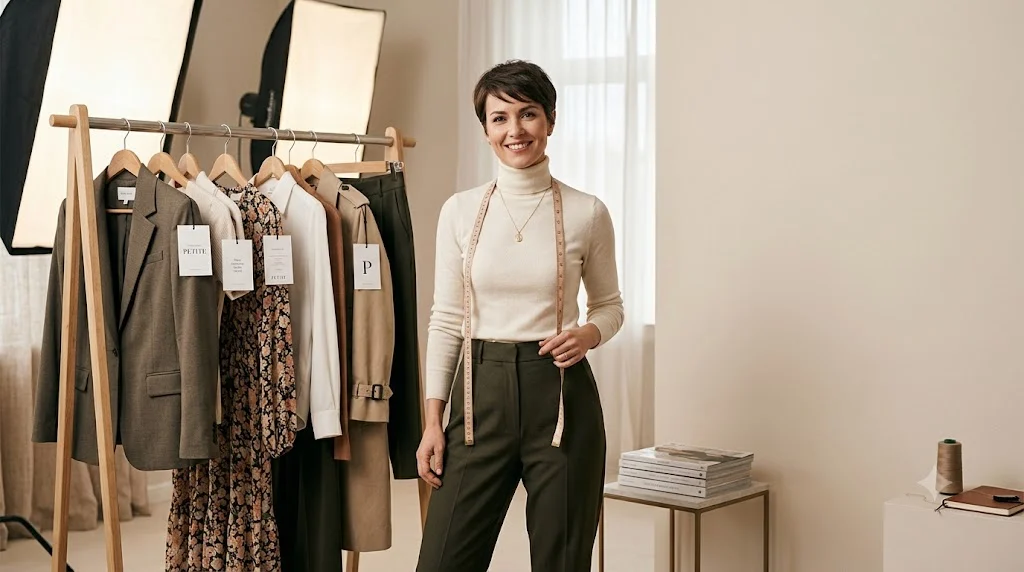
Quick Answer:
Petite means small and delicately built, especially when describing a person’s height or body frame. In clothing, “petite” usually refers to sizes made for shorter people.
Ever heard someone say, “She has a petite frame,” and wondered exactly what they meant? Petite meaning is simple, but the word can have slightly different uses depending on the situation. Most often, it describes a person who is small, short, or delicately built. It is also common in fashion, where petite clothing is designed for shorter body proportions.
If you are a student, writer, fashion shopper, social media user, or simply someone who wants to understand everyday English better, knowing this word can help you communicate more clearly. You may see it in text messages, clothing descriptions, dating profiles, social media posts, and casual conversations.
The word usually sounds polite and positive, but context matters. Let’s look at what petite really means, where it came from, and how people use it today.
Definition & Meaning
The word petite means small in size or delicate in appearance. When used to describe a person, it often refers to someone who is short and has a small or slender frame.
For example:
“My sister is petite, so regular jeans are often too long for her.”
Here, “petite” describes her physical build and height.
The word is also widely used in the fashion industry. A petite size is usually designed for people who are shorter than the standard height used for regular clothing. Petite clothing may have shorter sleeves, shorter trouser legs, and adjusted waist or shoulder proportions.
“Do you have this dress in a petite size?”
Petite does not automatically mean extremely thin. A petite person can have different body shapes and sizes. The main idea is usually a smaller or shorter overall frame.
It can also describe objects, although this use is less common when talking about people.
“The restaurant has a petite outdoor garden.”
In this sentence, petite simply means small.
The word can also be used as an adjective in descriptions:
- Petite woman
- Petite frame
- Petite figure
- Petite dress
- Petite size
- Petite person
In everyday English, it is often a softer and more flattering way to describe someone as small or short.
Background & History
Petite comes from French. In French, petit means small or little, while petite is the feminine form. English adopted the word and gradually developed its own common uses.
The word became especially popular in English when describing women who were small or short in stature. Over time, the fashion industry gave the term an even more specific meaning.
Today, “petite” is strongly connected with clothing and body proportions. Many clothing brands use separate petite collections so shorter customers can find clothes with better-fitting lengths and proportions.
The word has also become common in magazines, online shopping, social media, and lifestyle content.
For example:
“She is petite but loves oversized jackets.”
The word can describe someone without necessarily being negative. In many cases, it sounds more gentle than words such as “tiny” or “short.”
Its meaning has therefore expanded from the basic idea of “small” to a more specific description of shorter height, smaller proportions, or delicate appearance.
Usage in Various Contexts
The meaning of petite stays similar across most situations, but the purpose can change.
In Casual Conversation
“You’re so petite! That jacket looks huge on you.”
This is a casual observation about someone’s size.
In Texting
Friend: “What size should I order?”
You: “Maybe petite. You said regular pants are always too long.”
On Social Media
Someone may write:
“Petite girl problems: finding jeans that are not too long.”
Here, the word relates mainly to clothing and height.
In Fashion
“This collection has regular, tall, and petite sizes.”
In this context, petite is a clothing category.
In Dating Profiles
You might see:
“5’1″, petite, loves hiking and coffee.”
Here, the person is giving a basic description of their appearance.
In Gaming Communities
The word is less common in gaming itself, but players may use it when describing a character:
“My character is petite but surprisingly strong.”
So, the word is not limited to one type of conversation.
Common Misconceptions & Clarifications
One common mistake is thinking petite always means skinny. That is not correct.
Petite mainly relates to height and overall proportions, especially in fashion. A petite person can have a variety of body shapes.
Another misconception is that petite means “childlike.” It does not. An adult can be petite.
Some people also think the word is always a compliment. Usually, it is neutral or positive, but the speaker’s tone matters.
For example:
“She has a petite frame.”
This sounds neutral and polite.
But:
“You are so tiny!”
may sound uncomfortable or patronizing depending on the relationship.
It is also important to avoid assuming that every short person wants to be called petite. Some people prefer simply being described as short or prefer no comment about their body at all.
In fashion, petite has a more technical meaning. It does not simply mean that the clothes are “small.” A petite garment is usually designed around shorter body proportions.
Similar Terms & Alternatives
Several words are related to petite, but they are not exact replacements.
| Term | Meaning |
|---|---|
| Petite | Small or short in physical build |
| Small | General word for reduced size |
| Short | Mainly refers to height |
| Tiny | Very small |
| Delicate | Fine, gentle, or fragile-looking |
| Slender | Thin or narrow in build |
| Compact | Small but efficiently shaped |
| Little | Small, but can sound informal |
For example, slender focuses more on body shape, while short focuses mainly on height.
“Petite” often combines the ideas of shorter stature and smaller proportions.
How to Respond to This Term
Your response depends on the situation and your relationship with the person.
Casual Response
“Yep, I’m definitely on the petite side!”
Funny Response
“Petite, yes. Easy to carry, absolutely not!”
Fashion Response
“Yes, I usually buy petite sizes because regular lengths are too long.”
Professional Response
If someone uses petite when discussing clothing:
“Thanks. I’ll check the petite sizing options.”
Privacy-Conscious Response
If you do not want to discuss your body:
“I prefer not to talk about my body size, but thanks for understanding.”
You never have to discuss your appearance simply because someone asks.
Regional or Cultural Differences
“Petite” is widely understood in English-speaking countries, especially in the United States, United Kingdom, Canada, and Australia.
However, its use can vary. In fashion, the word is particularly common because many international clothing brands use petite as a size category.
The French word petit and its feminine form petite are also familiar to many English speakers because of French influence on English vocabulary.
Different cultures may prefer local words for “short,” “small,” or “delicate.” Some cultures may also have different social attitudes toward comments about height and body shape.
Because of this, it is best to consider the person’s culture and preferences before using the word to describe them personally.
Comparison With Similar Terms
Here is a quick comparison:
| Word | Main Focus | Example |
|---|---|---|
| Petite | Short, small frame | “She has a petite build.” |
| Short | Height | “He is short.” |
| Tiny | Very small size | “The kitten is tiny.” |
| Slender | Thin body shape | “She has a slender figure.” |
| Small | General size | “She wears a small size.” |
| Delicate | Fine or gentle appearance | “She has delicate features.” |
The biggest difference is that petite is often a softer description of a shorter, smaller-framed person, while “short” simply states height.
Usage in Online Communities & Dating Apps
The word petite appears frequently online, especially in fashion communities, social media bios, and dating profiles.
On dating apps, someone might write:
“Petite, 5’2″, book lover, and coffee addict.”
This simply gives readers an idea of the person’s physical appearance.
On social media, fashion creators may use terms such as:
“Petite outfit ideas”
or
“Best jeans for petite women.”
In gaming communities, the word may describe a character’s appearance rather than the player.
If someone uses “petite” to describe you online, a simple response is enough:
“Yes, I’m pretty petite.”
If you dislike comments about your appearance, you can politely change the subject.
Hidden or Offensive Meanings
Petite does not have a standard hidden offensive meaning. The word itself is generally neutral or positive.
Still, context and tone can change how it feels.
Calling an adult “petite” is usually acceptable when the person is comfortable with the description. However, repeatedly focusing on someone’s body can become uncomfortable.
For example:
“She is petite.”
is a simple physical description.
But repeatedly making jokes about someone’s size may feel disrespectful.
In dating conversations, the word can sometimes become overly focused on physical appearance. It is better to treat it as a simple descriptive word rather than making assumptions about someone’s personality, strength, age, or health.
Suitability for Professional Communication
The word petite can be appropriate in professional settings when it is relevant.
For example, fashion professionals may say:
“Our petite collection is designed for shorter body proportions.”
That is completely appropriate.
However, casually describing a coworker’s body as petite may not be necessary. In workplace communication, focus on relevant facts rather than personal appearance.
For clothing, use:
- Petite size
- Petite fit
- Petite collection
- Shorter proportions
For general professional writing, use “shorter” or “smaller-framed” only when the physical description is genuinely relevant.
FAQs
1. What does petite mean?
Petite means small or short in physical build. It is also a common clothing category for shorter body proportions.
2. Does petite mean skinny?
No. Petite does not necessarily mean skinny. It mainly refers to shorter height and smaller proportions.
3. Is petite a compliment?
It can be a compliment, but it depends on the speaker’s tone and the person’s feelings about the word.
4. What is a petite size?
A petite size is clothing designed for shorter body proportions, often with adjusted lengths and measurements.
5. Is petite only used for women?
In everyday English and fashion, petite is most commonly used for women, especially in clothing. The basic meaning of the word, however, is simply “small.”
6. What is another word for petite?
Depending on the context, alternatives include small, short, tiny, delicate, or slender. They do not all have exactly the same meaning.
7. Can petite describe objects?
Yes. Petite can describe something small or delicate, although this use is less common than its use for people and clothing.
Conclusion
Understanding petite meaning is easy once you know the main idea. The word usually describes someone who is short and small-framed, while in fashion it refers to clothing made for shorter proportions. It does not automatically mean skinny, weak, or childlike.
You may see petite in everyday conversations, text messages, social media posts, dating profiles, and clothing stores. The word is generally polite, but personal descriptions should always be used with care.
Remember the simple rule: petite means small or short in a graceful or delicate sense, while “petite size” usually refers to clothing made for shorter people. Context is the key to understanding exactly what the speaker means.
Read More Related Articles:
IG Meaning in Text Messages | Definition, Uses, and Real …
What Is OML in Text | Meaning, Examples, Snapchat, TikTok …
What It Really Means in Messages and Online Chats