Quick answer:
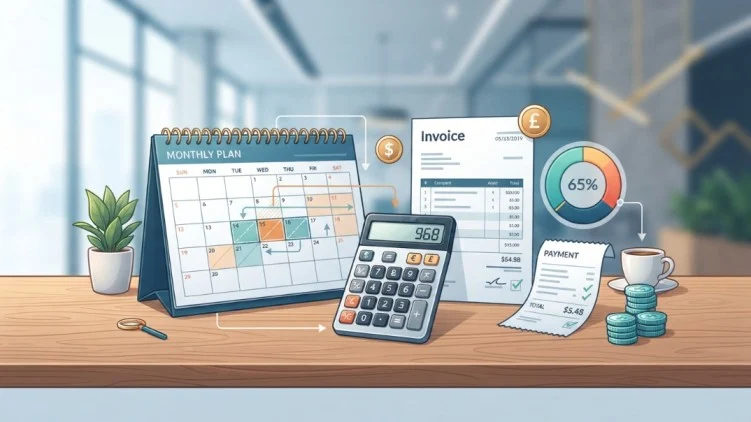
Prorated means an amount is divided or charged based on the exact portion of time, use, or service involved.
For example, if a monthly service costs $30 and you use it for half a month, a prorated charge may be $15.
A bill suddenly looks different, and you see the word prorated beside the charge. What does it mean? In simple terms, prorated means you pay or receive an amount based on the part you actually used or owed. It is common when a service starts, ends, or changes in the middle of a billing period.
If you are a student, employee, renter, business owner, online shopper, gamer, or everyday customer, you may come across this term more often than you think. It can appear on rent statements, salary slips, subscriptions, phone bills, insurance documents, and invoices.
Understanding the prorated meaning can help you avoid confusion when a bill is not the same as the usual full amount. It also helps you understand refunds, partial payments, wages, and service charges. Let’s break down this useful term with simple examples and real-life situations.
Definition & Meaning
The word prorated means calculated according to a proportion or partial amount.
In simple English, it means you do not pay or receive the full amount because you are using something for only part of the normal period.
The calculation is based on the portion you actually use or the amount of time involved.
Simple definition
Prorated = an amount adjusted fairly according to the part used, owed, or provided.
For example, imagine a streaming service costs $30 for a full month.
You start using it halfway through the month.
Instead of paying the entire $30, the company may charge you only for the days you used.
Customer: “Why is my first bill only $15?”
Support: “Your subscription started halfway through the billing cycle, so the first charge was prorated.”
The $15 represents part of the normal monthly cost.
Prorated salary
The word is also common in employment.
Suppose an employee normally earns $3,000 per month but starts work halfway through the month.
The company may pay only for the days the employee actually worked.
That payment is called a prorated salary.
Prorated rent
Rent can also be prorated.
If monthly rent is $1,200 and a tenant moves in halfway through a 30-day month, the landlord may charge only for the days the tenant occupies the property.
For example:
$1,200 ÷ 30 = $40 per day
If the tenant stays for 15 days:
$40 × 15 = $600
So, the prorated rent would be $600.
The exact calculation can vary based on the lease and local rules.
Why prorating is used
Prorating helps create a fair charge when someone uses only part of a service, period, or benefit.
It can apply to:
- rent
- salaries
- subscriptions
- utilities
- insurance
- memberships
- refunds
- invoices
- vacation benefits
- service plans
The central idea is simple: you pay or receive an amount that matches the portion involved.
Background & History
The idea behind prorated comes from the Latin phrase pro rata, which means “in proportion” or “according to the rate.”
The phrase pro rata has been used for centuries in legal, financial, and business language. It describes situations where something is divided according to a fair proportion.
Over time, English developed the word prorate, meaning to divide or calculate something proportionally. The forms prorated and prorating are now widely used in modern English.
From finance to everyday billing
Prorating became especially useful in financial and business settings because payments often do not happen in perfect full periods.
A person might:
- start a job halfway through a month
- leave an apartment before the month ends
- cancel a yearly service early
- join a membership partway through a billing cycle
- receive a partial refund
A full-period price would not always make sense in these situations.
Proration provides a way to calculate a partial amount.
Prorated in modern technology
Today, the term appears frequently in digital services.
Software companies, cloud platforms, phone providers, streaming services, and online memberships may use prorated charges when customers change plans.
For example:
Customer: “I upgraded my plan today. Why is my bill different?”
Support: “The system prorated the remaining days of your old and new plans.”
The customer may receive a credit for the unused portion of the old plan and a charge for the remaining portion of the new plan.
Common use today
You will most often see prorated in:
- billing statements
- payroll documents
- rental agreements
- contracts
- invoices
- subscription accounts
- insurance documents
- business transactions
Although it can sound technical, the basic idea is easy: calculate only the fair share of the total.
Usage in Various Contexts
The prorated meaning stays consistent across different situations, but the way it is applied can change.
In texting
People may use prorated when discussing bills or payments.
Alex: “Why did you only pay $40 this month?”
Sam: “My membership started late, so the first payment was prorated.”
It is not typical internet slang. It is a standard financial and business term that can appear in casual messages.
On social media
People may mention prorated charges when discussing subscriptions or services.
“I canceled before the renewal date and got a prorated refund.”
This means the refund was based on the unused portion of the service.
In gaming
Gaming communities may use the term when discussing memberships, battle passes, premium subscriptions, or plan upgrades.
Player A: “I upgraded today. Did I pay the whole price?”
Player B: “No, the upgrade was prorated for the rest of the month.”
Not every gaming platform uses proration, so the actual billing rules depend on the service.
At work
Prorated pay is very common in employment.
Manager: “Your first paycheck will be prorated because you started on the 15th.”
Employee: “So I will only be paid for the days I worked?”
Manager: “Correct.”
The same idea can apply to bonuses, leave, allowances, and other benefits.
In renting
A landlord may use proration when someone moves in or out during a billing period.
Tenant: “I moved in on the 20th. Why isn’t the rent the full monthly amount?”
Landlord: “Your first month’s rent was prorated for the days you occupied the property.”
Common Misconceptions & Clarifications
The word prorated is easy to misunderstand because it often appears on bills without much explanation.
Misconception 1: Prorated means discounted
Not necessarily.
A prorated amount is not automatically a discount.
It simply means the amount has been adjusted based on a portion of the total.
For example, if a monthly service costs $100 and you use it for half the month, a $50 charge may be prorated. The company did not necessarily give you a discount.
You simply paid for half the period.
Misconception 2: Prorated always means half price
No.
The amount depends on the proportion involved.
If you use 10% of a service period, the amount may be around 10% of the relevant price, depending on the provider’s calculation method.
Misconception 3: Every company prorates automatically
Not always.
Some companies have specific billing policies. A provider may charge the full amount, issue a credit, or use a different calculation.
Always check the terms of the service.
Misconception 4: Prorated always means daily billing
Not necessarily.
A company might calculate proration by:
- days
- hours
- units
- usage
- percentage
- another agreed method
The method depends on the situation.
Misconception 5: Prorated means refunded
A prorated amount can involve a refund, but the words do not mean the same thing.
A prorated refund is a refund calculated according to the unused portion.
Similar Terms & Alternatives
Several words and phrases are related to prorated, but they have different meanings.
| Term | Meaning | Example |
|---|---|---|
| Prorated | Calculated according to a proportion | “The rent was prorated.” |
| Partial | Less than the full amount | “I received a partial payment.” |
| Proportional | Based on a specific ratio | “Costs were divided proportionally.” |
| Adjusted | Changed to fit a situation | “The bill was adjusted.” |
| Allocated | Assigned or distributed | “The budget was allocated among teams.” |
| Discounted | Reduced from the original price | “The product was discounted.” |
| Refunded | Money was returned | “The unused amount was refunded.” |
| Reduced | Made smaller | “The fee was reduced.” |
Prorated vs. partial
These terms can overlap, but they are not identical.
Partial simply means less than the whole.
Prorated explains why or how the amount was calculated.
For example:
“I received a partial payment.”
This tells us the payment was incomplete.
“I received a prorated payment.”
This suggests the amount was calculated based on a specific proportion.
How to Respond to This Term
If someone tells you that a charge, payment, or refund is prorated, you can respond in different ways depending on the situation.
Casual response
“Got it. So I’m only paying for the days I used it?”
This is a simple way to confirm your understanding.
Funny response
“So my bill finally knows how to count days!”
This can work in a relaxed conversation.
Professional response
“Thank you for clarifying. Could you please provide the calculation used for the prorated amount?”
This is useful when reviewing an invoice or salary.
If you need more information
“Could you explain which dates were included in the prorated calculation?”
This is especially useful when the amount seems unexpected.
If the charge looks wrong
“I understand that the amount was prorated, but could you please review the calculation?”
This is polite and professional.
When asking about a refund
“Will the unused portion be refunded on a prorated basis?”
This makes your question clear.
Regional or Cultural Differences
The idea of proration is widely understood in English-speaking business and financial settings, but wording can vary between countries.
United States
In the United States, prorated is common in:
- rent
- payroll
- subscriptions
- utilities
- insurance
- business invoices
People may say:
“Your first month’s rent will be prorated.”
United Kingdom
British English also uses prorated, although pro rata is common in formal business and employment contexts.
For example:
“The employee receives a pro rata salary.”
This means the salary is calculated proportionally.
Canada and Australia
The terms prorated and pro rata are also common in business, employment, billing, and rental contexts.
Language differences
Other languages may use a phrase equivalent to proportional, partial, or according to the portion instead of directly translating prorated.
The exact wording changes, but the core concept remains the same: calculate a fair share according to the amount involved.
Comparison with Similar Terms
It helps to compare prorated with terms that often appear on bills and contracts.
| Expression | Main idea | Example |
|---|---|---|
| Prorated charge | Charge based on partial use or time | “Your first bill is prorated.” |
| Full charge | Entire standard amount | “The full monthly fee applies.” |
| Partial payment | Less than the total owed | “Only part of the invoice was paid.” |
| Discount | Price reduced intentionally | “You received a 20% discount.” |
| Credit | Amount applied against a bill | “The unused days generated a credit.” |
| Refund | Money returned to the customer | “The company issued a refund.” |
| Pro rata | In proportion | “Benefits are provided pro rata.” |
Prorated charge vs. discount
These are particularly easy to confuse.
A discount changes the price because a company chooses to reduce it.
A prorated charge changes the amount because only part of the relevant period or service applies.
For example:
Monthly fee = $60
Used for half the month = $30 prorated amount
If the company gives you a 20% discount, that is a separate adjustment.
Usage in Online Communities & Dating Apps
The word prorated is less common on dating apps than in financial or subscription discussions, but it can still appear when users discuss premium features.
On platforms such as Tinder, a user may ask about subscription upgrades or refunds.
User: “I changed my subscription halfway through the month. Is the new charge prorated?”
Support: “That depends on the subscription and billing terms.”
The same concept can appear in gaming communities when players upgrade memberships or premium services.
Online billing discussions
Users often ask:
- “Why was I charged a prorated amount?”
- “Do I get a prorated refund?”
- “Is the upgrade prorated?”
- “Why is my first month cheaper?”
- “Why did my bill change after upgrading?”
Tips for responding
If someone mentions a prorated charge, do not assume it means a discount.
Instead, ask:
“What period was used to calculate the amount?”
This helps you understand the actual charge.
When discussing payments online, avoid sharing sensitive information such as full card numbers, passwords, security codes, or account credentials.
Hidden or Offensive Meanings
Prorated does not normally have a hidden, slang, sexual, or offensive meaning.
It is a standard financial and business term.
Unlike some internet abbreviations, it is not generally used as secret slang on social media or dating apps.
However, confusion can happen if someone does not understand the financial meaning.
For example:
“Your payment was prorated.”
Someone unfamiliar with the term may think they were charged incorrectly.
The best response is to explain it clearly:
“It means the amount was calculated only for the part of the service you used.”
Tone still matters
The word itself is neutral, but the surrounding conversation can affect how it feels.
For example:
“Your salary was prorated.”
This is neutral if the employee worked only part of the pay period.
But if the employee expected a full salary, the statement may lead to frustration.
The solution is simple: explain how the amount was calculated.
Suitability for Professional Communication
Prorated is fully appropriate for professional communication.
It is common in:
- accounting
- payroll
- human resources
- banking
- property management
- insurance
- sales
- customer service
- contracts
- subscription billing
For example:
“Your final payment will be prorated based on your last working day.”
That is professional and precise.
Professional alternatives
Depending on the audience, you can also say:
- calculated proportionally
- adjusted based on usage
- calculated for the partial period
- based on the applicable days
- partial-period charge
- pro rata
For a general customer, calculated for the days used may be easier to understand than prorated.
For a formal contract, pro rata or prorated may be perfectly suitable.
Example professional email
“Your subscription began on August 15, so the initial invoice includes a prorated charge for the remaining days of the billing cycle.”
This is clear, polite, and professional.
FAQs
1. What does prorated mean in simple words?
Prorated means an amount is calculated according to the part of something that applies to you, such as the days you used a service.
2. Is prorated the same as discounted?
No. A discount reduces a price. A prorated amount is calculated according to the portion used or owed.
3. What does prorated rent mean?
Prorated rent means you pay for only the applicable portion of the rental period, such as when you move in or out during the middle of a month.
4. What is a prorated salary?
A prorated salary is pay calculated for only part of a normal pay period, such as when someone starts or leaves a job during the month.
5. How is a prorated amount calculated?
A common method is to divide the full amount by the number of days in the relevant period and multiply it by the number of applicable days. The exact method depends on the agreement or provider.
6. What does prorated refund mean?
A prorated refund is money returned based on the unused portion of a service or period.
7. Is prorated a formal word?
Yes. Prorated is a standard and professional word commonly used in billing, payroll, contracts, accounting, and business communication.
Conclusion
The prorated meaning is simple: an amount is calculated according to the portion that applies. Instead of charging or paying the full amount, the calculation considers factors such as time, usage, or proportion.
You may see the term on a rent statement, paycheck, subscription bill, invoice, or refund notice. A prorated amount is not automatically a discount. It simply reflects the part of the service, period, or benefit that applies to you.
Remember the basic example: if a monthly service costs $60 but you use it for only half of the billing period, you may receive a $30 prorated charge. The exact calculation can vary by company or agreement.
Once you understand this idea, bills and payment statements become much easier to read. When you see prorated, think: “I am being charged or paid according to my share of the total.”
Discover More Post:
The Simple Meaning Behind This Popular Word in 2026
Spontaneous Meaning | What It Really Means Easy Examples …
What Does GOAT Mean in Text, Slang & Social Media in 2026